Bruges has a preserved medieval centre, a very large number of visitors and an economy built almost entirely around them. Hotels, restaurants, chocolate, lace, boat trips, museums, guided tours: strip out the visitors and most of the client list disappears.
For a creator that is a single fact with a long list of consequences, and the biggest one is that your year does not look like a year in Ghent or Antwerp. It has two halves that want completely different things from you.
A city that lives from one thing
What that means for the client
A hotel, a restaurant or an attraction here is not trying to build a brand over five years. It is trying to fill rooms, tables and slots in a season that has a start and an end, and every marketing decision is measured against that.
So the brief is short-term by nature. Nobody wants a manifesto film. They want something that makes a person choose this hotel over the one two streets away, this week.
The other side for you
It concentrates the demand and makes it predictable. You know who buys, you know what they buy, and you know when they panic, which is a much easier market to plan around than a city where anybody might need anything.
It also means you are exposed to one sector. A quiet tourist year is a quiet year for you, and creators who work only Bruges tend to add a second city or a second sector to spread that.
The calendar is the real client
| Period | Who is buying | What they actually need |
|---|---|---|
| January to March | Hotels, restaurants, attractions | Next season's content, shot calmly, with no crowds |
| April to June | Everyone, in a hurry | Short clips, fast turnaround, event and menu updates |
| July and August | Almost nobody new | Nothing planned, occasional emergencies |
| September and October | Venues and culture | Autumn programme, Christmas market preparation |
| November and December | Retail and hospitality | Festive content, already too late if it starts in November |
The line that surprises creators is July and August. It looks like the busiest time and it is the worst time to sell: everyone is working, nobody is deciding, and the streets are unusable anyway.
The other line to read carefully is January to March. That is when clients have time, when the centre is empty enough to film properly, and when a whole year of content can be made in a handful of days.
Filming in a protected historic centre
This is the practical difference between Bruges and every other Belgian city, and it catches people out twice.
The crowds
From late morning until late afternoon, in any month with reasonable weather, the main streets and squares are full. Not busy, full. A shot you imagined with a quiet canal behind it will have forty people in it.
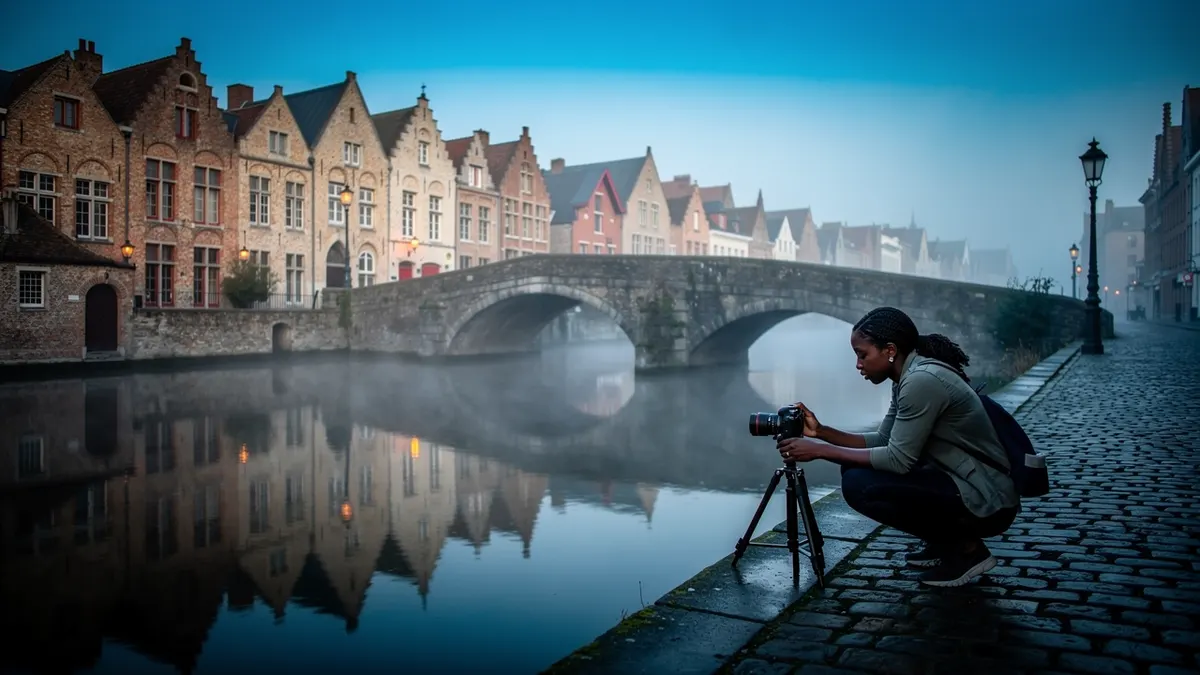
The answer is the hour rather than the location. Early morning is genuinely empty and the light is good, and the same square that is impossible at noon is yours at seven. Plan the outdoor part of a shoot for the first two hours of the day and the indoor part for the rest.
The permission question
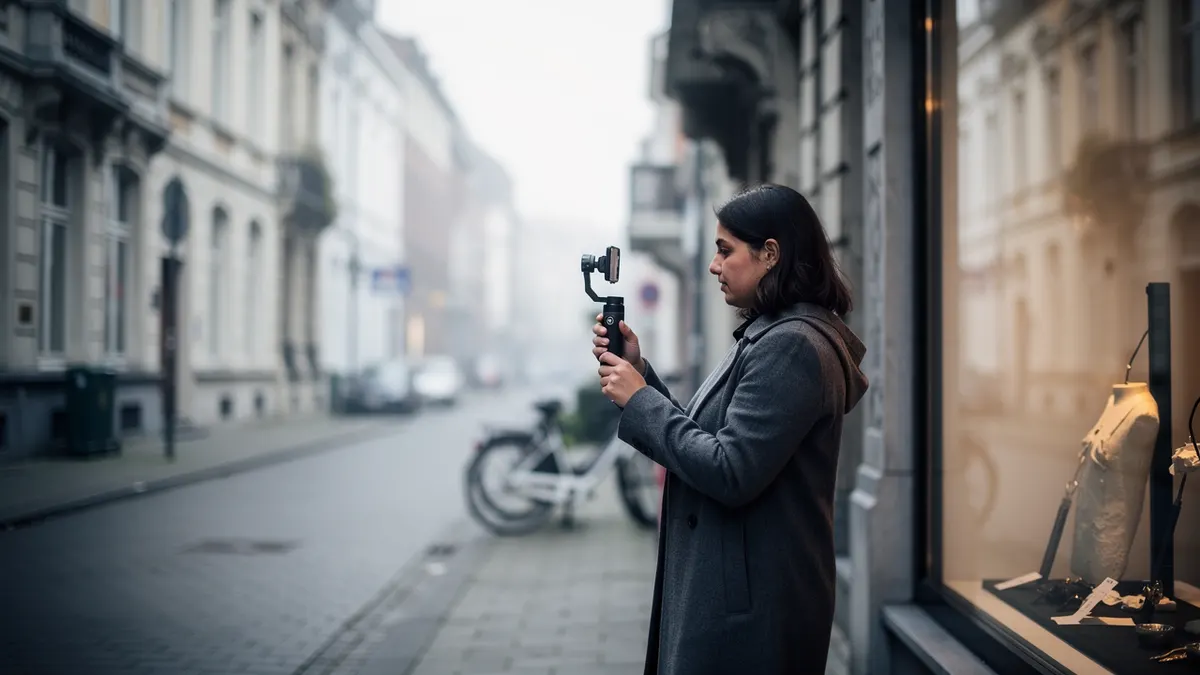
Filming professionally in a protected setting is not the same as filming as a visitor, and the answer depends on what you are doing, where exactly, and with what equipment. A phone in your hand and a full lighting setup on a tripod in a public square are not treated the same way by anyone.
The practical habit: ask the city or the venue in advance, in writing, and give yourself more time than feels necessary. Do not treat a client's assurance that it will be fine as an answer, because they are usually thinking of the inside of their own building.
The low season is the working season
Everything above points to the same conclusion, and it is the one thing worth reorganising a business around.
Sell in autumn, shoot in winter, deliver before the season starts. A hotel that films its rooms, its breakfast, its terrace and its neighbourhood in February has content for the entire year, shot without crowds, and it will pay for that once rather than five times in a panic.
That is also the offer that separates you from someone with a phone. Anyone can film a busy terrace in July. Very few people propose to a client in November that they plan the whole of next year, and the ones who do get the work that is worth having.