Leuven is a small city with a very large university, a dense research ecosystem around technology and life sciences, and a brewing industry older than either. It is compact, walkable, and the average client here is more educated about their subject than about video.
That combination produces a kind of work that barely exists elsewhere in Belgium: video whose job is to make something difficult understandable to someone who is not in the field.
The typical client is not a brand
Who decides
A researcher, a lab manager, a communications officer inside an institution, or the founder of a company with eleven employees and a technology nobody outside can describe. Rarely a marketing department, and almost never an agency.
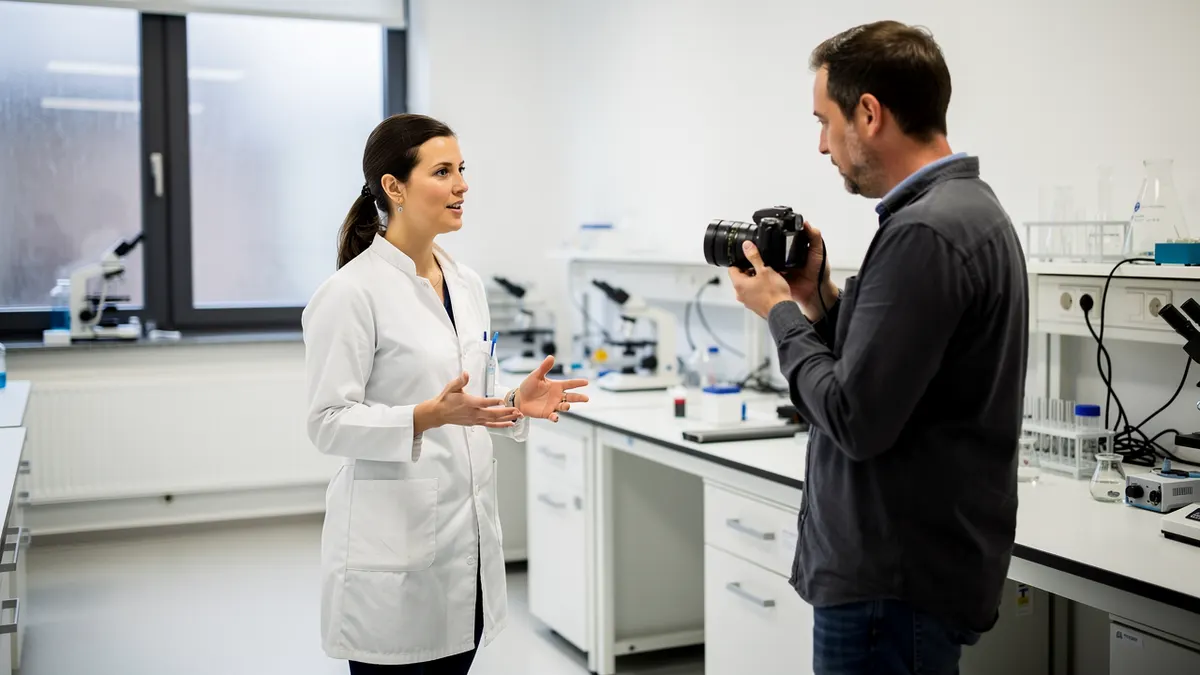
That means short approval chains and long conversations. The person who briefs you knows the subject completely and has no reference for what a video should look like, which is the opposite of the usual problem.
What they actually buy
Recruitment, above all. This is a market where the scarce resource is people, not customers, and a lab or a scaleup that cannot hire will spend money to be visible to engineers.
After that: explaining what the organisation does, to investors, to partners, to a public that funds it. And a steady stream of small internal and event work that never appears in a portfolio and pays perfectly well.
The work starts with a sentence, not a camera
The failure mode here is a beautiful video that leaves the viewer no better informed. It happens when a creator films what was said instead of first working out what it means.
The sentence test
Before you plan a single shot, write one sentence a stranger would understand, and read it back to the client. If they say almost, keep rewriting until they say yes. That sentence is the video, and everything after it is illustration.
This is the part clients here value most, and it is also the part they do not expect to be offered. A creator who arrives with questions rather than a treatment tends to get the second project without pitching for it.
What else the city buys
| Client type | What they need | What makes it work |
|---|---|---|
| A research group | Explaining a project to non-specialists | One idea, one sentence, no jargon |
| A deep-tech company | Recruitment and careers content | Real people, real rooms, no stock footage |
| A brewery or food producer | Product and process | Craft, hands, time-lapse of something slow |
| A student-facing service | Short seasonal campaigns | Speed and volume over polish |
| A cultural venue | Programme and audience content | Atmosphere, and dates that are correct |
The third row is the reminder that Leuven is not only laboratories. Brewing and food have been here far longer and buy video for entirely ordinary reasons.
What this changes about how you charge
Two things, and they pull in opposite directions.
The preparation is longer. A twenty-minute call before a science shoot is not optional, and neither is the hour spent reading what the client sent. Price the day so that this fits inside it rather than treating it as free.
The delivery is often simpler. These clients do not need eight variations for six platforms; they need one clear film and two short cuts. So the shoot day is calm, the edit is shorter, and the value is concentrated in the thinking rather than the volume.