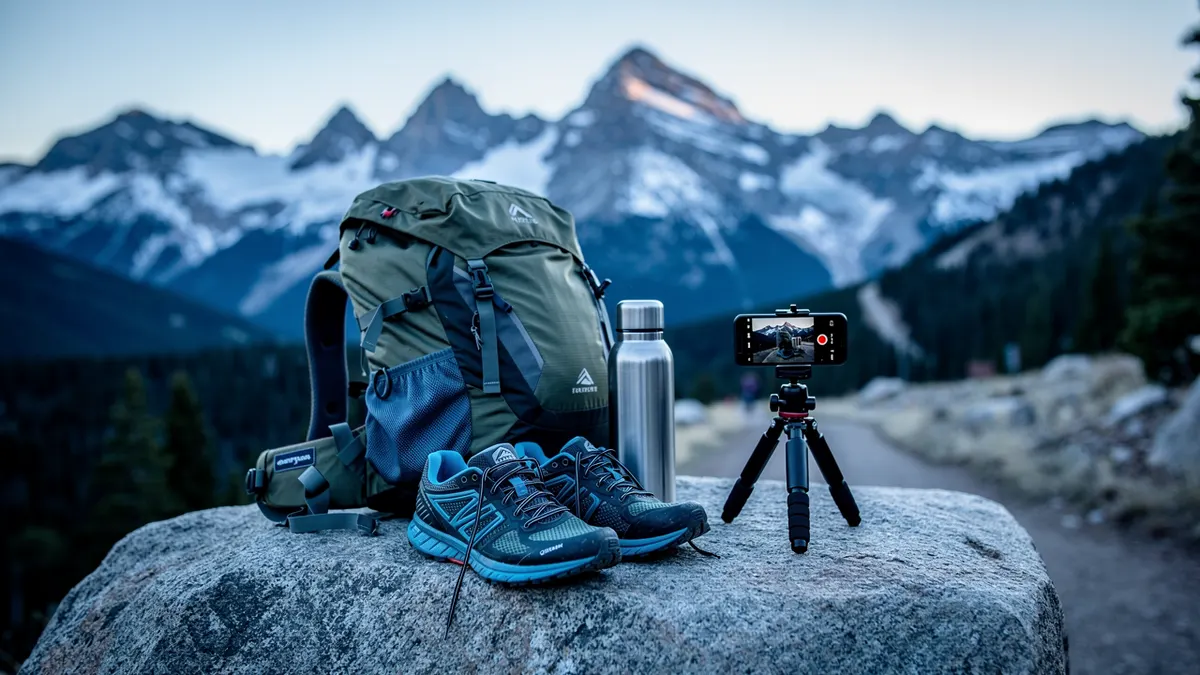
Drive west out of Denver at six in the morning and the trailheads are already full of people in the exact jackets, packs and shoes the region's brands sell. The creators among them are working: the jacket filmed at the trailhead in the cold, the water bottle at the summit, the trail shoe on the descent, with the light of a mile-high morning that nobody can reproduce in a studio. Denver's brands are outdoor, wellness, food built for the outdoors and the gear that goes with all of it, and the thing they buy from a creator is not a review. It is proof that the product was used where it was meant to be used.
Proof of use is what Denver buys, and it changes what a deliverable is, how the calendar works, and why the creator's own habits matter more than their equipment.
The deliverable is proof of use in conditions
Conditions are the point
A brand that makes a rain shell wants rain on it. A brand that makes an insulated bottle wants the bottle filmed in the cold with the temperature visible somehow. The video's credibility comes from the conditions being real, and the buyer can tell the difference between a jacket filmed on a trail in weather and one filmed in a park on a mild afternoon. That means the creator's product is partly their own outdoor life: a creator who already runs, climbs, skis or hikes in the region can deliver proof of use as a byproduct of a weekend, whereas one who has to stage it delivers a costume.
The season decides the calendar
Outdoor brands sell by season and brief a season ahead. Winter gear is filmed in winter for the following winter's campaign, or in late season for content that runs in the fall; summer trail and camp gear is filmed in summer. The practical consequence is that a Denver creator's income follows the mountain calendar, with the busy months being the ones when the conditions exist, and that a creator who can be in the snow in March and on a trail in July has two seasons of work a year. Briefs that miss the window get filmed the following year, which is why brands here reward creators who answer fast when the weather turns.
Altitude, light and the honest limits of a phone
The light at altitude is hard and bright, and a phone in direct mountain sun overexposes skin and burns out snow. Creators who work here learn to film in the early and late light, to use shade and a reflector, and to expose for the highlights; a brand that has seen enough burned-out footage will ask about it. Cold kills batteries, and a shoot at a winter trailhead is planned around that. None of this needs expensive equipment. It needs the creator to have done it before, which is what the portfolio should show.
Wellness, food and the claims that need care
Denver's second market is wellness and functional food and drink, much of it built around the outdoor life: supplements, recovery products, bars, hydration. That market brings claims, and a claim about what a product does to a body is the sentence a brand's lawyer reads first. The creator's job is to describe an experience, not a result the brand cannot support, and the Houston guide's point about regulated words applies with a Colorado accent. The region also has a category with advertising rules of its own, which this guide does not state; a brief in that category comes with rules the brand has to clear, and a creator should not accept one without seeing them in writing, because the rules are the brand's to know and the creator's to follow on camera.
Filming outside: the land has an owner
Much of the footage a Denver brand wants is filmed on public land, and public land in the region belongs to different owners: the city, the county, the state, and federal agencies for the national forests and parks. Each has its own rules for commercial filming, and this guide does not restate them: the owner's own page is the only version worth reading, and reading it is the brand's job before the shoot day. What a creator can rely on is that the owner of the land decides, that a solo creator with a phone on a trail is a very different case from a crew with a vehicle at a trailhead, and that the brand paying for the location is the party that should ask the land's owner before the shoot day. When a brand wants a named, recognizable location, put the question to the brand in writing and let its answer be part of the brief.
The gifting economy, and where it stops
Outdoor brands seed product generously, because a jacket on a real trail is worth more to them than a studio shot, and a creator in Denver will receive gear. Some of it is worth accepting to build a portfolio in a category that requires the gear to exist. The objection experienced creators raise is that gear is not payment, and they are right: a shell that retails for $300 does not license a year of paid social usage, and the guide to product seeding versus paid UGC explains why the two are different transactions. Gifted gear also carries the Federal Trade Commission's disclosure logic: free product received with the expectation of promotion puts the creator inside the endorsement guidance, and the post that shows the jacket says so. The Denver position that holds is to accept gear for a first piece, quote in dollars for usage, and never confuse the two on the invoice.
Sources
Checked on 20 September 2026. This guide is not legal or tax advice. Where this guide and the official source disagree, the official source prevails.