Namur is the seat of the Walloon institutions, and that single fact reorganises the local market. In most cities the public sector is one client among many. Here it is the largest, the most consistent and the one with the longest memory.
For a creator that is neither good nor bad news by itself. It is a different rhythm, and creators who arrive expecting the pace of a retail client leave frustrated for reasons that have nothing to do with their work.
The rhythm is not commercial
A shop decides on Tuesday and films on Friday. An institution decides in a cycle: a need appears, a budget exists or does not, a person has to ask someone, and the thing that was urgent in March happens in September.
What that changes for you
Two habits carry you through it. Never treat silence as a refusal, because it is usually a calendar. And never reorganise your month around a date an institutional client gave you casually, because that date belongs to a process rather than to them.
In exchange you get something the private market rarely offers: a client who does not disappear, pays without drama, and comes back next year because next year has a budget line too.
Getting in without being an agency
The assumption creators make is that this work is closed to individuals. It is not, and the way in is more ordinary than expected.
Being on the list
Most bodies keep a list of suppliers they can call for small jobs, and getting onto it is administrative rather than competitive: a clear description of what you do, prices, an invoice-capable status, and a contact who knows your name. Ask directly who maintains that list. People answer that question.
The quote they expect
Institutional clients need a quote they can defend to someone else. That means an itemised scope, an explicit number of deliverables, a stated delivery date and a total that does not move. A one-line price with a friendly note is harder for them to approve than a slightly higher price written properly.
What these clients actually buy
| Buyer | Typical need | What decides the yes |
|---|---|---|
| A regional or city department | Campaigns on a service or a programme | Clarity, and a message that survives translation |
| A public cultural venue | Season and event content | Reliability on dates more than style |
| A federation or a nonprofit | Awareness and testimony | Real voices, and consent handled carefully |
| A school or training body | Recruitment and open days | Speed, and a calm tone |
| A local business | Ordinary retail and service work | The same things as anywhere else |
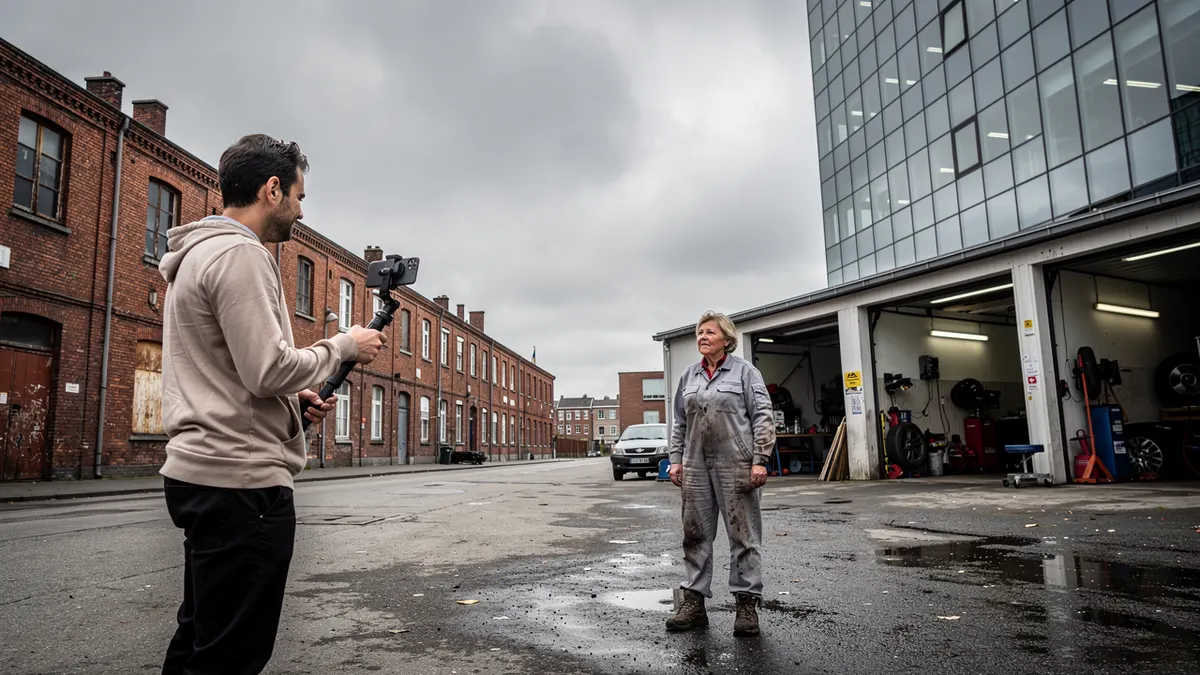
The third row deserves attention. Testimony work involves people who are not professionals and are sometimes in a fragile situation, and how you handle consent, framing and the option to withdraw is part of the job rather than an afterthought.
The rest of the city
Namur is not only institutions. It has a compact centre with real retail, a hospitality scene, a university college presence, and a citadel that dominates the skyline and makes almost any wide shot look composed.
It is also small, and word travels accordingly. A single job done cleanly for one department is worth more here than a portfolio, because the person who hired you will be asked about you by someone in another building.