Ostend has a beach, a promenade, hotels and everything that goes with a coastal resort, and in July it behaves exactly as you would expect. In February the same promenade has four people on it and a wind that pushes you sideways.
A creator looking only at that swing concludes the city is a summer market with a long dead season. That reading is wrong, and it is the reason many people leave. Ostend has a second economy that runs all winter, and it is the one that makes a full year here possible.
Two cities in one year
The summer city
Hotels, restaurants, ice cream, beach bars, apartment rentals, day trips, festivals. From May to September the demand is real and constant, and it is also entirely reactive: everyone needs something this week and nobody plans.
The work is short, fast and repeated. It rewards speed and availability far more than craft, and the creators who do well are the ones who can deliver in twenty-four hours without complaining about it.
The winter city
Twelve thousand fewer people on the seafront and the actual local economy still there: the fishing port, the shipyards, the offshore wind sector, the logistics that serve them, the hospital, the schools, the shops that serve residents rather than visitors.
None of that stops in November. It is also the half of the city that almost no creator bothers with, because the visible half is more attractive to film.
The economy that does not stop
Ostend is a working port before it is a resort. The fishing fleet lands here, ships are repaired here, and the harbour is one of the bases from which the North Sea wind farms are built and maintained.
That last sector is worth understanding, because it is growing, it is technical and it hires constantly. Companies servicing offshore wind need to recruit technicians, explain what they do to partners, and show clients that they can operate safely at sea.
What those clients buy
Recruitment above everything. This is a sector where a job is hard to picture from a text advert, and where showing the actual boat, the actual crew transfer, the actual workshop does more than any slogan.
Then process and safety explainers, trade fair material, and partner-facing films. It is unglamorous, it is well paid, and it happens in January.
The catch is access. You will not walk onto a quay or a vessel with a camera, and the answer is always a company that takes you. Plan for a briefing, a safety induction and limits on where you can stand, and price the day accordingly because half of it is procedure.
Fish is the real local specialism
If there is one subject a creator based here should master, it is seafood. The city sells it, cooks it, lands it and exports it, and almost every food client in the region touches it in some way.
| Client | What they film | What makes it good or bad |
|---|---|---|
| A quayside stall | Fresh catch, daily | Wet surfaces, cold light, no styling |
| A restaurant | Plates and the terrace | The moment of serving, not the finished plate |
| A processor or exporter | Facility and process | Hygiene, clean gowns, no shortcuts on the floor |
| A shop or a smokehouse | Product and craft | Hands, knives, smoke, time |
| A tourism body | Atmosphere and season | Weather that is real, people who are local |
Two practical notes that separate people who have filmed fish from people who have not. Fresh product looks best wet and cold and is ruined by a warm room and twenty minutes of waiting, so film it first and talk afterwards. And a processing floor is a hygiene environment: what you wear, where you put a bag and whether a tripod is allowed are decided by them and not by you.
Filming by the sea, and what nobody tells you
Salt and wind
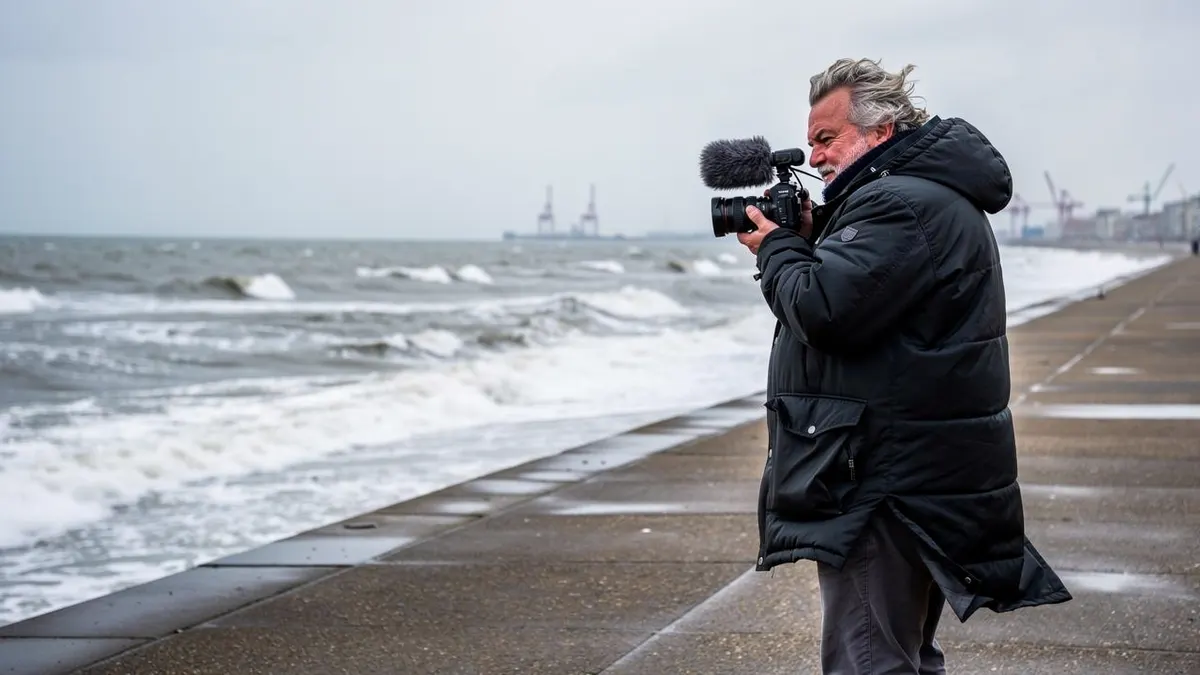
Salt air is corrosive and it gets everywhere. A camera that spends a season on the promenade without being wiped down develops problems that a camera in Ghent never has, and lens fronts collect a haze you will not see until you are editing.
Wind is worse. It ruins audio in a way no post-production fixes, and a light stand on a beach is an object waiting to fall over. Two habits solve most of it: a proper windshield on every microphone, and a plan that assumes you will not put anything tall on a tripod outdoors.
The light is genuinely different
Big skies, water and pale sand give you a lot of light bouncing upwards, which is flattering for faces and difficult for exposure. Skies blow out easily, and a subject with the sea behind them will be a silhouette unless you turn them.
The compensation is that the coast has long low light in the evening for most of the year, and it makes ordinary shots look expensive. Any shoot with an outdoor element should be planned around that hour rather than around lunchtime.
Rain is not the problem you think
Everyone plans around rain and almost nobody plans around wind, and it is the wrong way round. Rain on this coast is usually brief, it makes the promenade and the quays look better rather than washed out, and a client will accept a wet shot that looks like the place genuinely is.
What ruins a day is a steady wind with nothing to shelter behind, because it takes your audio, your stability and your patience in that order. Check the wind before the rain, and keep an indoor fallback for the days when the sea is white.
How to build a year here
The pattern that works is straightforward once the two cities are visible.
Sell the tourism side in spring, deliver it fast through the summer, and use the volume to build the client list. Then, from October, sell the industrial and municipal side, which has budgets, plans ahead and does not care that the beach is empty.
The mistake is to treat winter as a pause and spend it waiting for May. The clients who are still working in January are the ones who pay properly, decide quickly and come back, and a creator who is known to them is not seasonal at all.