Paris holds the headquarters, the agencies and the country's media budgets. It is where a national brand signs off a campaign, where an agency pulls together a creator list to test ten ad variations, and where most French digitally native brands keep their office. For anyone producing user generated content, that means the strongest demand in France and the toughest competition.
A capital that buys content all year
Scale drives it. Paris holds luxury and beauty, fashion, food, banks and fintechs, gyms, aesthetic clinics and an ecommerce sector that lives on Meta and TikTok advertising. All of those brands consume vertical video continuously, and very few have an in house team able to keep up.
The second engine is the agencies and media buyers. When an agency needs six variations of a creative to decide where a media budget goes, it does not call a production company: it opens its creator list. Getting on that list turns occasional jobs into monthly income.
The sectors that actually hire
- Beauty and pharmacy skincare: skincare, makeup, hair, dermocosmetics. Routines, honest before and after, close up application.
- Fashion and second hand: brands, ecommerce and resale platforms, with try on formats and outfits.
- Food and delivery: consumer brands, restaurants, fine grocery and delivery apps.
- Banking, insurance and fintech: simple explanations without jargon, which is exactly what the sector cannot do alone.
- Health and wellness: supplements, nutrition, gyms and clinics, with the care health advertising requires.
- Home and decor: furniture, appliances and renovation, where before and after sells itself.
How to find clients in Paris
Two routes coexist and the people who live off this use both. The direct one: a public portfolio, a short message to a brand you already use, with two samples and a clear price. Small brands and ecommerce answer fast.
The professional route fills the month: present yourself as a supplier. Auto entrepreneur status so you can invoice, the VAT exemption note while you are under the threshold, written rates, a portfolio sorted by sector and answers within twenty four hours. Marketing managers hire whoever invoices cleanly and delivers on time. A UGC marketplace profile makes you findable by niche and language with no referral at all.
What actually raises the rate here
In Paris the price is not justified by how pretty your feed is but by what the brand can do with the file. Usage rights are the real variable: a video posted once organically and the same video running for six months as paid media across three countries are not the same product.
Invoice the creation on one line and the licence on another, with a duration and a territory written down. That conversation is what separates a creator paid a hundred and fifty euros from one paid four hundred for the same shoot.
What creators charge
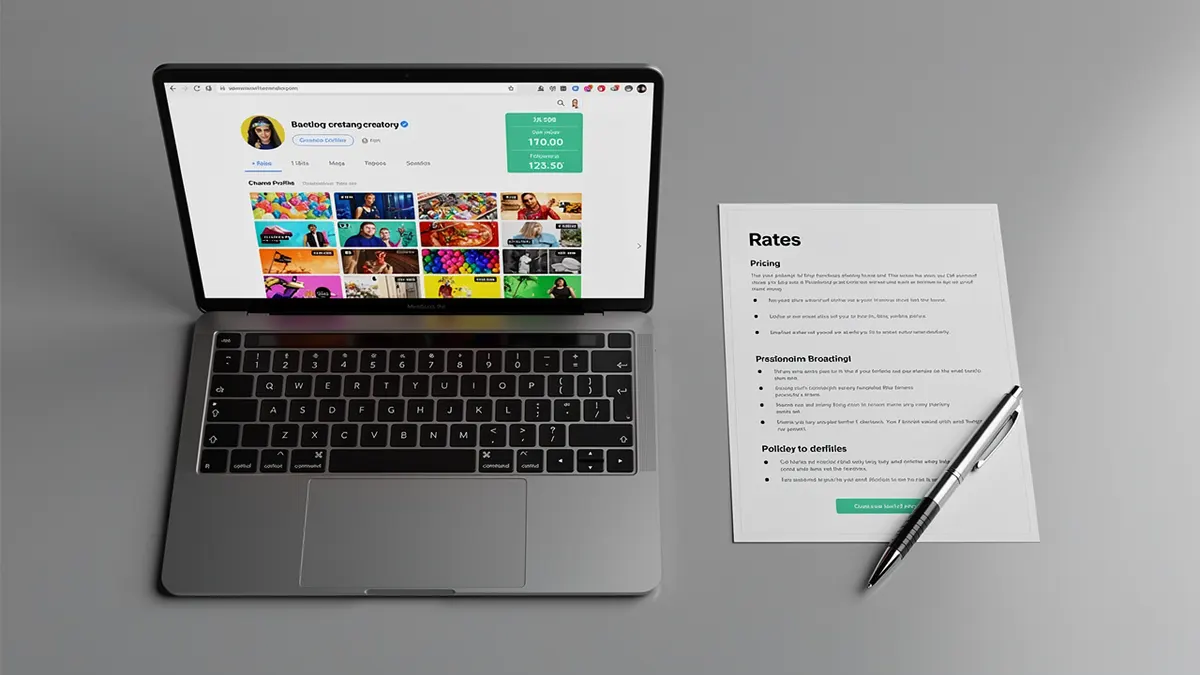
Rates depend on experience, rights and turnaround. As a French reference: a single video runs a hundred and fifty to two hundred and fifty euros at the start, and two hundred and fifty to five hundred euros with a strong portfolio. Packs of three to five videos sell between six hundred and fifteen hundred euros. Paid media rights, exclusivity and whitelisting are added on top, usually thirty to a hundred per cent of the base rate depending on duration and territory.
What the rights line changes
| Scope | What the agency gets | Effect on price |
|---|---|---|
| Client's channels, 6 months | Organic posting | Base |
| Paid advertising, 12 months | Running as an ad | Clearly above |
| Unlimited, worldwide | Any use, no return | Several times the base |
What is itemised in every quote
The duration, the territories, the media, paid advertising and any transfer to third parties.
What is politely refused
An unlimited transfer offered to win the contract, or unpaid category exclusivity.
You can see who is actually available right now among the UGC creators in Paris.
Where to go next
Paris gives volume, agencies and the highest rates in the country, and asks for professionalism in return. To turn that into paid work, our guide on how to become a UGC creator covers building the portfolio, setting prices and closing the first collaborations.
Publish your creator profile →---
Sources
- Urssaf, official auto-entrepreneur portal
- Service Public, how to become a micro-entrepreneur
- Service Public, crossing the micro-entrepreneur turnover thresholds
Checked on 26 August 2026. Thresholds and rates change: where this guide and the official source disagree, the official source is right.