A UGC creator's media kit has nothing to do with an influencer's. It carries no audience, no account statistics, no community curve. It carries what allows a brand to decide: what you film, what it looks like, and what it costs.
In France it also has to remove an obstacle that blocks more collaborations than portfolio quality does.
The administrative line that unlocks the order
An established brand cannot pay someone who is not able to issue a proper invoice. That is not a preference, it is an accounting constraint on their side.
The result: many conversations stop at "do you have a registered business?", asked at the moment everything else was settled. A creator who answers that they will sort it out loses the job to someone who could invoice the following week.
The fix is one line in your media kit: state that you invoice, and specify the VAT treatment that applies to your invoices. Those two pieces of information are enough for the accounts department opposite to know how to process you, and they move your file ahead of three other applicants.
A second line deserves a place: what your price covers in terms of usage rights. In France, brands and above all agencies work with written frameworks, and a creator who arrives with their own definition of the licence stands out immediately from one who will discover the clause at signing.
One page, and not one more
Past one page, nobody reads. The document is opened between two meetings, often on a phone, and the decision is made in a few dozen seconds.
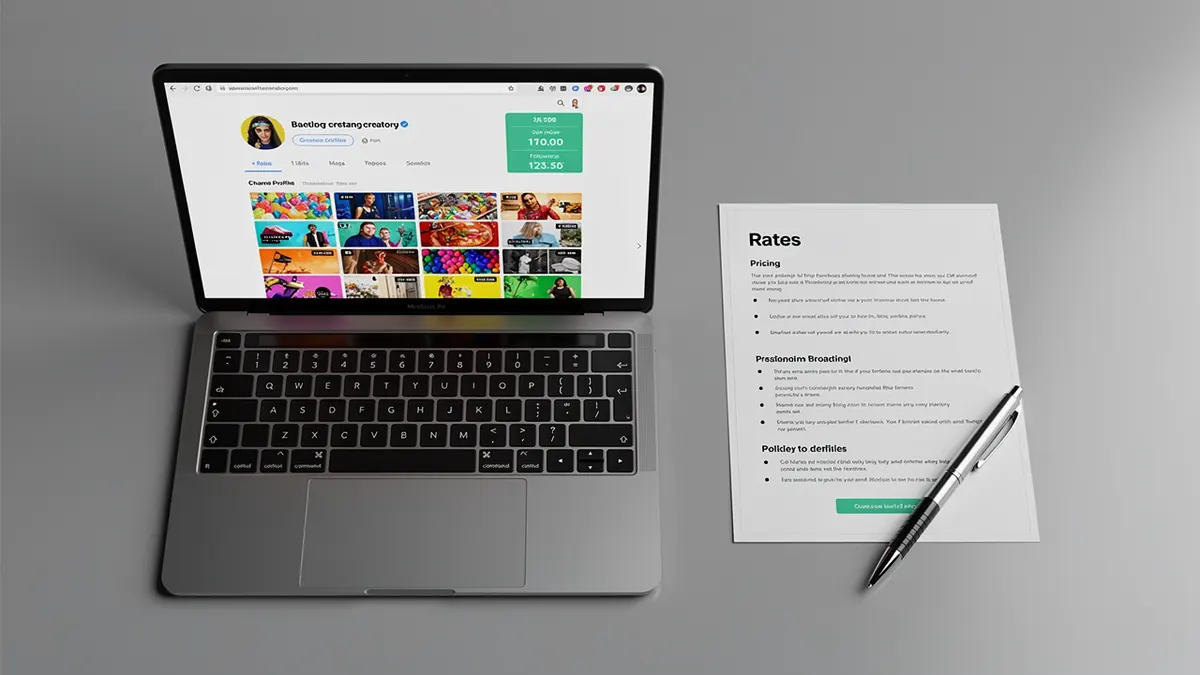
What has to fit: your name and one line placing you, two or three fields rather than ten, four stills from your best pieces with a direct link to each video, what you concretely deliver in formats and lengths, your real turnaround in working days, and your rates as numbers.
Why publish your prices
The usual objection is that a public rate removes room to negotiate. In practice it does the opposite: it screens out those with no budget and makes those who have one write to you.
It also protects you from a well established French habit, the quote requested from three suppliers for comparison. If your price is visible, you are compared on what you deliver; if it is not, you are compared on something else and you will never know what.
What has no place in it
Follower counts, statistics from your personal account, sentences about your passion, travel photos. And overloaded templates where the reader finds neither the formats nor the price.
A test before sending: hide the layout and read only the text. If it answers what you film, what it looks like and what it costs, the document is good. Otherwise the design was covering a void.
The link matters more than the file
Send a document, but above all a link to a folder of videos. Nobody commits on stills.
A public profile on a marketplace often fills that role better than a file, because it gathers fields, formats, rates and pieces in one place and does not age in an inbox. A document sent in February is still circulating in September with February's rates.
What each page must answer
| Page | The reader's question | Length |
|---|---|---|
| 1 | Who are you and where do you work? | 5 lines |
| 2 | What have you already filmed? | 2 samples |
| 3 | How much and within what time? | 4 lines |
What gets updated every quarter
The best sample, the price range, a language added and a visible update date.
What has no place in it
A personal biography, a list of software, a rate with no rights scope, a link that does not open.
Updating
Every three months, replace the oldest piece, review your rates, and check that the administrative line is still accurate. It is the only element of the document that can become false without you touching it.
Sources
- Urssaf, official auto-entrepreneur portal
- Service Public, how to become a micro-entrepreneur
- Service Public, crossing the micro-entrepreneur turnover thresholds
Checked on 4 September 2026. Thresholds and rates change: where this guide and the official source disagree, the official source is right.