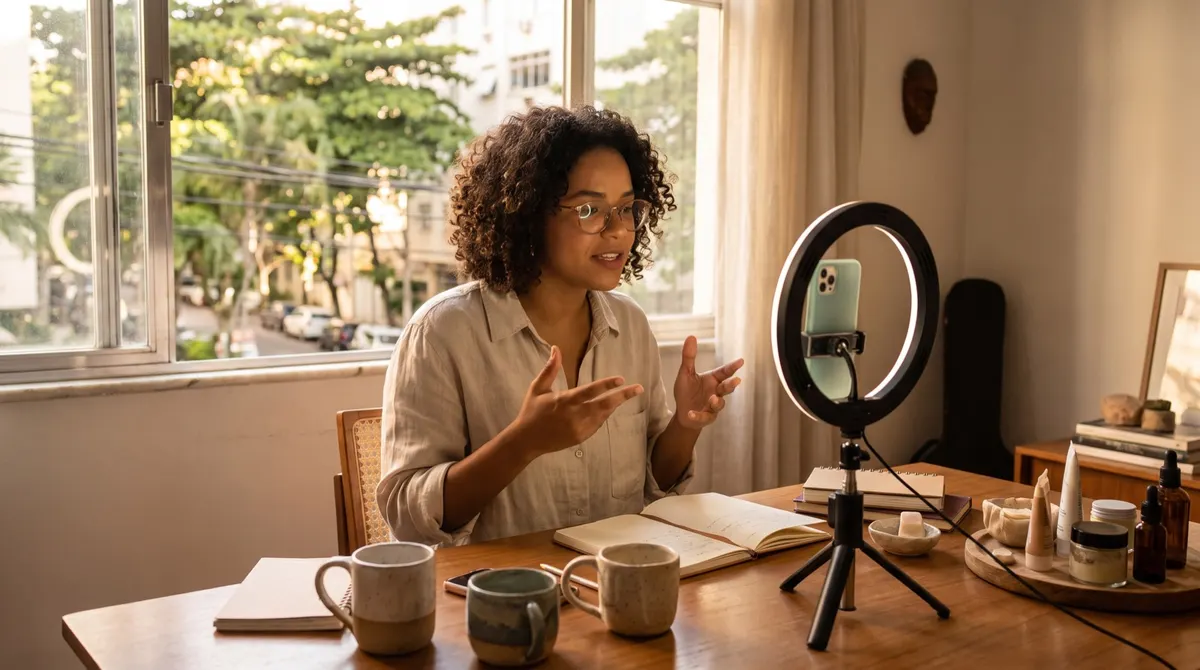
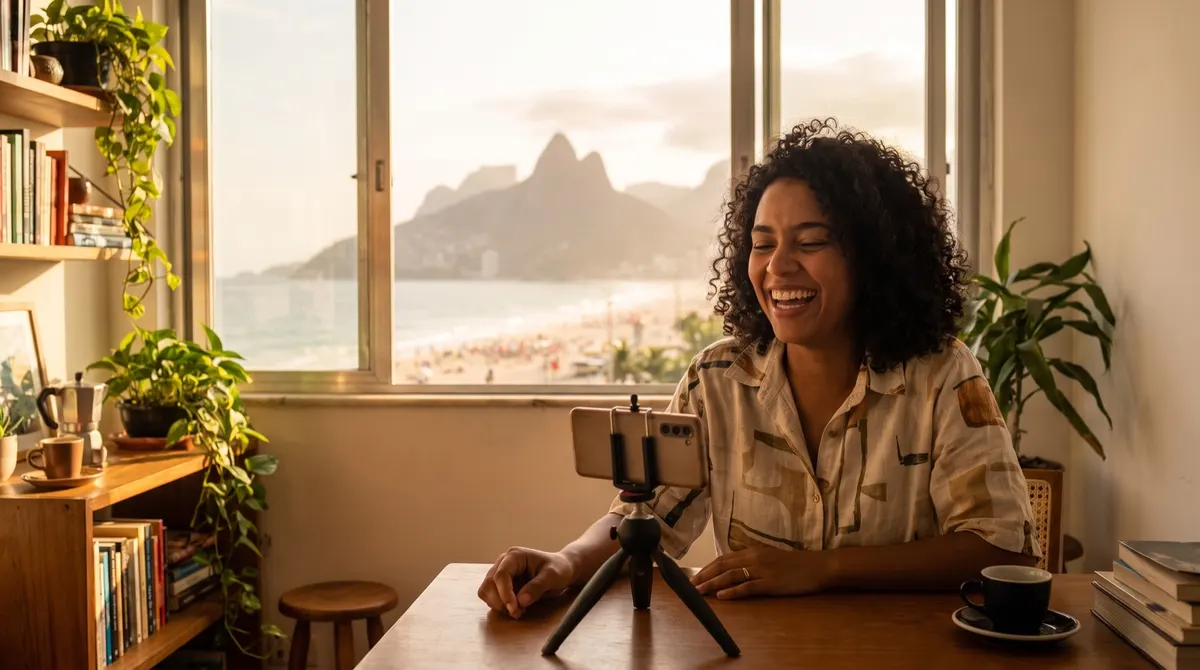
Rio de Janeiro produces a very specific kind of UGC creator. The light, the beaches, and the informal energy of the city all show up on camera, and brands feel it the moment they open a video. If you sell swimwear, sunscreen, fitness apps, hotels, or anything that lives outdoors, a Rio creator can hand you footage that looks expensive without any studio behind it. This guide covers the Rio scene, how it differs from São Paulo, how local creators find paid work, how remote delivery works across borders, and roughly what to pay in reais.
Why Rio has its own UGC identity
Most cities produce content that could come from anywhere. Rio does not. The backdrops are baked into daily life: the beach at Ipanema, the hills, the boardwalk, the pickup football, the açaí bowl on a Saturday morning. A creator in Rio does not have to build a set to make lifestyle content feel authentic, because the authentic version is a ten minute walk away.
This gives Rio a natural advantage in a few verticals. Beach and swimwear content is the obvious one. Fitness and wellness thrive here because outdoor training is part of the culture, not a trend. Tourism and hospitality brands love Rio creators because they can film a hotel, a viewpoint, and a restaurant in one afternoon and make the whole city look like the product. Beauty brands lean on the local look: sun, sweat, and skin that has to survive humidity.
The trade off is that Rio can tilt toward lifestyle more than hard selling, so the best creators pair a beautiful frame with a real hook and a reason to buy. Pretty footage that says nothing does not perform, in Rio or anywhere.
Rio versus São Paulo: two Brazilian scenes
Brands working in Brazil quickly notice that Rio and São Paulo feel different. São Paulo is the commercial engine: corporate, fast, agency heavy, and comfortable with performance marketing, tech products, finance, and studio grade production. If you need polished direct response content with a clear script and tight editing, São Paulo has deep bench strength.
Rio is warmer, more spontaneous, and more visual. Where a São Paulo creator might deliver a clean, controlled talking head, a Rio creator is more likely to hand you something that breathes, filmed in natural light with real energy behind it.
The right choice depends on the product. Sending a hyper technical B2B script to a beach creator, or asking a Rio lifestyle specialist to shoot a rigid corporate demo, wastes everyone's time. Read the creator's existing work before you assume the city defines them, because plenty of Rio creators do sharp, conversion focused content too.
How Rio creators find brand work
The local market has matured fast, and creators here rarely wait to be discovered. They build pipelines through several channels:
- Instagram and TikTok, where portfolio style content gets them discovered by brands and agencies scrolling their niche
- UGC marketplaces and platforms, which connect them to brands searching by category, location, and language
- Agencies and local production collectives, common in Rio, that package several creators for bigger campaigns
- Word of mouth and repeat clients, still the strongest channel once a creator delivers well once
- WhatsApp, where a surprising amount of the actual negotiation and delivery happens in Brazil
The creators who win consistently treat UGC as a service, not a hobby. They have a simple portfolio, answer fast, invoice properly (often as MEI, the Brazilian micro entrepreneur status), and make it easy for a foreign brand to hire them. If you are a creator wanting to build this the right way, it is worth learning how to become a UGC creator before chasing your first client.
Remote delivery across borders
Hiring a Rio creator is a fully remote transaction. The creator films locally, edits on a phone or laptop, and delivers finished vertical video files through a link. You never need to be in Brazil, and often you never get on a call.
The workflow is simple. You send a brief with the hook, the key message, the do and do not list, and the format. If the product is physical, you ship it or the creator sources a local equivalent. The creator films, sends a first cut, you request revisions, and you receive final files with usage rights defined up front. Paying through a platform that holds the money until delivery protects both sides and removes the cross border trust problem.
Time zones rarely block anything, since Brazil is only a few hours off from Europe and roughly aligned with the eastern United States. Most professional Rio creators deliver in Portuguese, and many handle English or Spanish for international campaigns.
What Rio creators roughly charge
Rates in Rio vary widely with experience, usage rights, and complexity, so treat any number as a starting point. Entry level creators building a portfolio may take small collaborations for a modest fee, sometimes a few hundred reais per video, and occasionally in exchange for product early on. Established creators with a strong portfolio and proven results charge meaningfully more per deliverable, and can move into four figure reais for a full package with multiple videos and broad usage rights.
The biggest price drivers are not follower counts, since UGC is bought for the footage, not the audience. They are usage rights (organic only versus paid ads, and for how long), exclusivity, the number of variations, revision rounds, and whether you want the creator on camera or just producing content. A brand asking for whitelisting or long term paid usage should expect a premium. Always agree on scope and rights in writing before filming, because renegotiating them after the fact is where most disputes in this market come from.
What a capital of tourism and imagery orders
| The buyer | Their typical order | Their constraint |
|---|---|---|
| A fashion or swimwear brand | Wear outdoors | The very hard midday light |
| An accommodation or travel agency | The place and the experience | A two-language version |
| A drinks or food brand | The gesture and the consumption | Legal wording if alcohol |
What beach light imposes
Strong contrast and sand that bounces everything. Exposing for the face and accepting a bright background gives a usable image, whereas exposing for the sea turns the person into a silhouette.
What to prepare before an outdoor shoot here
Salt, sand and crowds. A waterproof bag, no lens changes on the beach and an early-morning slot solve the three problems the edit never fixes.
Sources
- Portal do Empreendedor (MEI), Brazilian government
- Receita Federal, Brazilian tax authority
- Simples Nacional, official portal
Checked on 26 August 2026. Thresholds and rates change: where this guide and the official source disagree, the official source is right.