It is the most requested format and the most often missed. It sells not through demonstration but through context: the product is bought because the life around it is recognised.
It is not a dream day, it is a Tuesday
The most frequent confusion, and the most costly.
A day in the life filmed like a postcard, with perfect light and a tidy kitchen, produces no identification. The audience does not project itself into a life it does not lead.
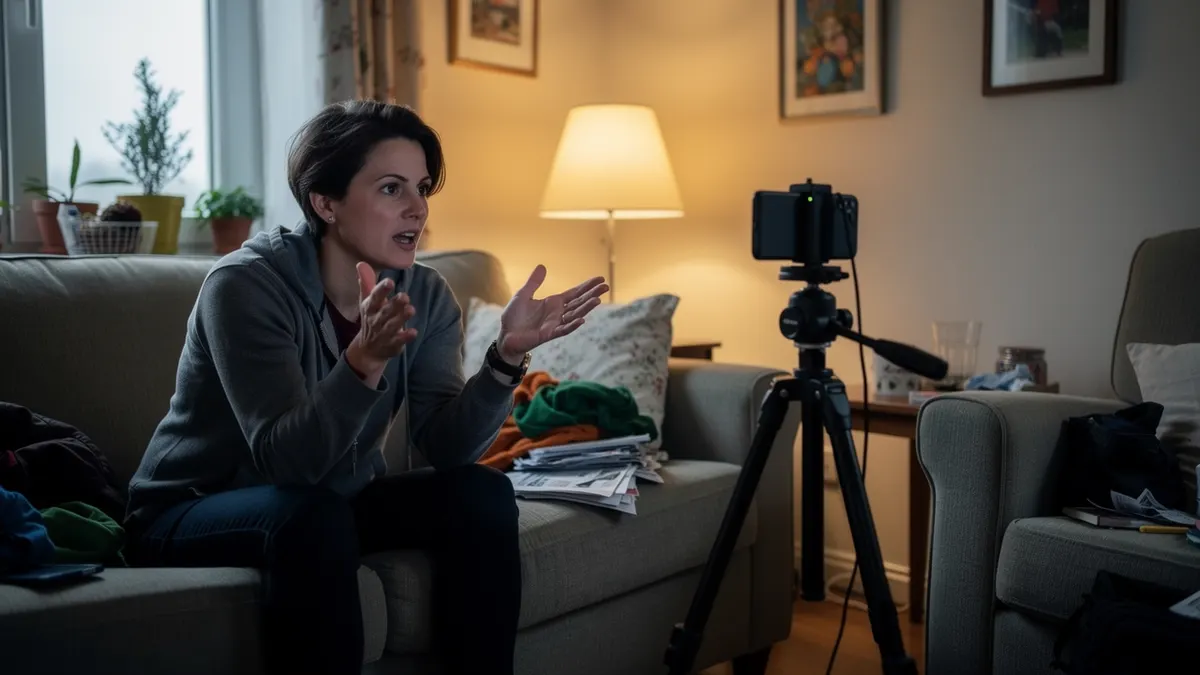
What works: a normal interior, real morning light, objects lying about, everyday clothes.
The rule holds in one sentence: the scene must look like what the person would see at home on looking up.
The product must be incidental
That is the central difficulty, and it is settled in the brief.
In this format the product appears in passing, as one object among others. It is used, not presented. Nobody holds it up to camera, nobody lists its qualities.
Three appearances beat one long sequence: the morning gesture, the daytime use, the evening return.
That is what gives the impression the product is already part of the life, which no demonstration achieves.
The format suits products with no demonstration
It is its natural territory, and it is wider than people think.
A garment worn, a drink drunk, an app opened three times, a supplement taken in the morning, an accessory slipped into a bag: all products no demonstration shows off.
Conversely, a product whose interest lies in a before and an after, a stain, an assembly, a repair, loses everything in this format. It needs a demonstration.
So the choice is made before writing: ask whether the product has something to prove or only a place to take.
What ruins the format
Four flaws, all frequent.
The voice-over written like an advertisement, which breaks the illusion in three words.
Editing too fast, preventing the places from being recognised.
The accumulation of other placed brands, turning the day into a catalogue.
And the absence of commercial identification. It remains due in this format as in the others, including when the video looks like personal content, and is checked before publication.
The length
Between thirty and sixty seconds for a social feed, up to two minutes on a brand page.
Beyond that, a narrative reason is needed: a journey, a preparation, a season.
What the day must prove
| Sequence | What it shows | Trap |
|---|---|---|
| The morning | The product in a real routine | A staging that is too tidy |
| Midday | Use outside the home | A shot where the light changes |
| The evening | The feedback | A conclusion written in advance |
What is filmed in one stretch
The whole day, with the same phone and the same settings. A day reconstructed over three days shows in the stubble, the clothes and the weather.
What is cut in the edit
The journeys, the dead time and everything unrelated to the product. A day in the life lasts a minute, not ten: it is an edit, not a diary.
The Canadian point
The climate structures the day, and that is a resource.
A winter day in the life, with the preparation before going out, the layers of clothing, the car to clear, resembles no video shot elsewhere. It is an immediate identification factor for the local audience, and a differentiator for the brand.
So film the same day in the life twice a year, in January and in July. The edit changes, the rushes serve two campaigns.