It is the format that converts best and the one that exposes you most, because a comparative statement is not an opinion: it is a claim, and it has to be proved.
People are comparing already
That is the starting point, and it removes a lot of fear.
Somebody hesitating between two products makes the comparison in their head, in the comments, or in a search engine. The question is therefore not whether the comparison will happen: it is already happening.
The choice is simply whether to let it happen elsewhere, or to conduct it yourself, honestly, on the criteria the audience actually uses.
The format converts well precisely because it arrives at the moment of decision, not at the moment of discovery.
Name the criterion where you lose
That is the element making the rest credible, and the one brands delete.
A comparison where the product wins on all six criteria reads as an advert, because nobody believes in a perfect object.
So name the criterion where you are behind: the price, the weight, the charging time, the bulk, the availability.
Two effects. The audience gives more weight to the other five criteria. And the brand avoids a sweeping claim it would have struggled to support.
Compare categories, not names
That is the rule that protects legally without weakening the message.
Naming a competitor is possible in certain frameworks, but it triggers heavier obligations and different risks.
Comparison by category works just as well: an aluminium model against a plastic one, a rechargeable version against a disposable one, a concentrated formula against a diluted one.
Better still, compare two versions of the same product: the old and the new, the standard size and the large, the base model and the higher one. It is the most useful format for the buyer, and the least exposed for everybody.
Show the test, not the result
That is what distinguishes a comparison from an assertion.
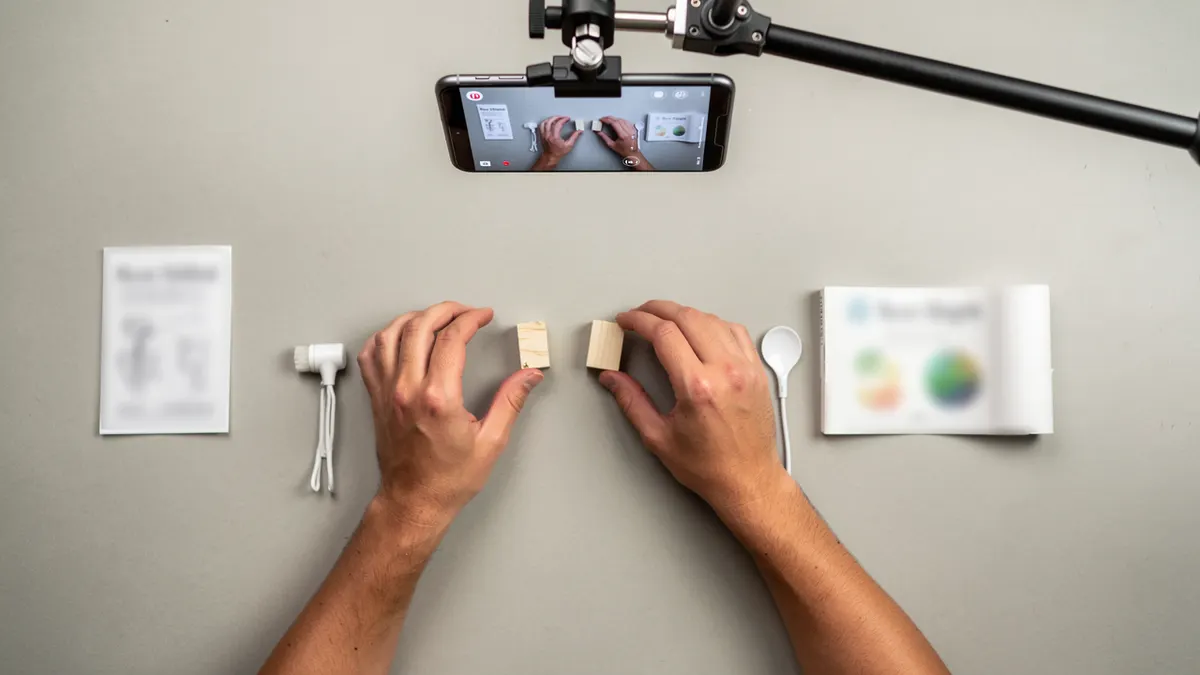
A table on screen is not proof: it is a layout. What convinces is seeing both objects undergo the same thing, in the same take, with no cut.
Three rules. Same quantity, same duration, same conditions. A timer or a visible reference in frame. And one continuous take for the deciding part.
Add the context out loud: what was tested, and what was not.
Let the creator make the honest version
That is what produces the best result, and it is counter-intuitive for the brand.
A comparison dictated word for word by an advertiser is spotted immediately. A comparison where the person says what they observed, including what bothers them, is watched to the end.
The brand's role is therefore not to write the conclusions: it is to supply the products, the test conditions and the list of claims it can support.
What makes a comparison honest
| Rule | What it imposes | Without it |
|---|---|---|
| Same conditions | Same room, same hour, same settings | An unusable result |
| Same use | The same task on both products | A rigged demonstration |
| Same duration | The same testing time | An artificial advantage |
What is said before comparing
What could not be made identical. One product bought and the other given, a newer version, a longer use: saying so does not weaken the video, it makes it credible.
What is refused in a comparison
Naming a competitor to disparage it, comparing an entry-level range with a higher model, or drawing a general conclusion from a single trial, to be confirmed with a lawyer.
The Canadian point
Two elements are added here.
The rules applicable to comparative advertising and performance claims come from precise texts, and certain categories follow additional sector rules. They are checked with a lawyer before the shoot, not after going live.
And the French version must be recorded separately: in a comparison, the nuance of one sentence changes the scope of a claim, and subtitling is not enough.