It is the category where the gap between the advertising image and the reality of the audience is widest, and where that gap costs the most.
The ordinary body beats the athlete
That is the result every brand ends up observing.
A professional athlete produces admiration, not identification. The viewer concludes the result comes from the body shown, not from the product.
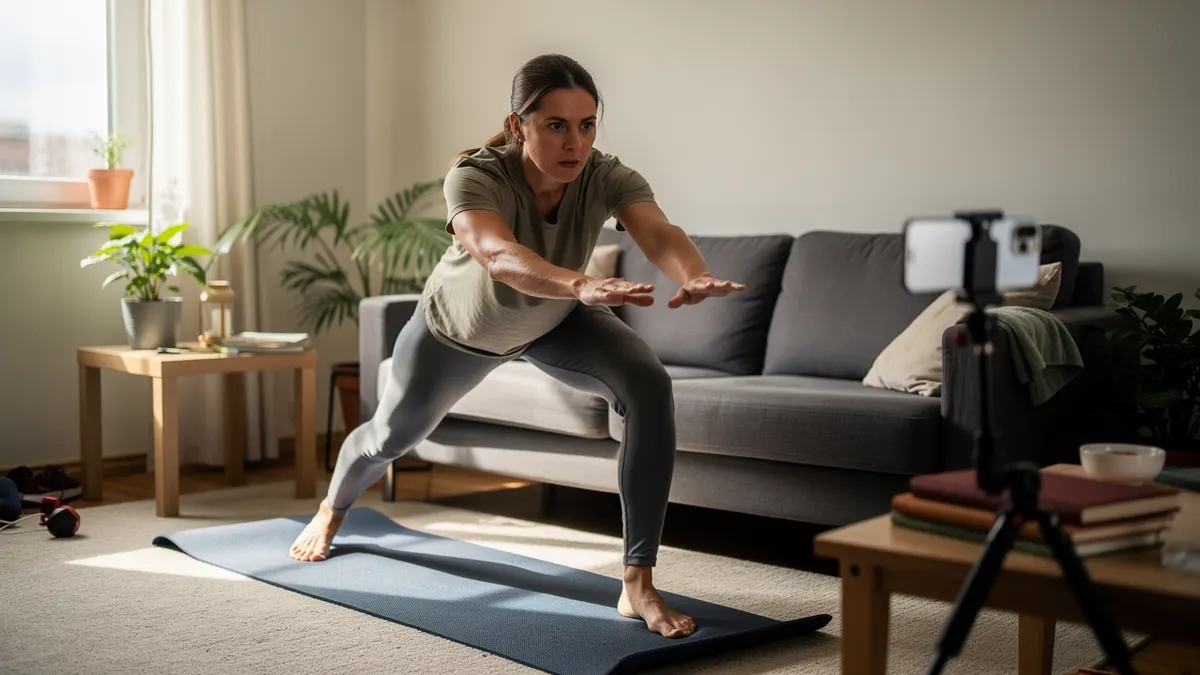
Somebody with an ordinary build, filmed in an ordinary gym or at home, produces the opposite: if they can do it, so can I.
So cast on resemblance to the buyer, not on performance. It is also cheaper, and it shows in the results.
Show the use, not the result
That is the rule that avoids half the advertising rejections.
A video showing a physical transformation promises a result, which is regulated, often refused, and sometimes forbidden depending on the product and the message.
A video showing real use promises nothing: how the machine is adjusted, how the mat folds, how the garment is washed, how much space it needs, what noise it makes.
It is less spectacular and it sells more, because it answers the questions that block the purchase.
Training at home is the majority context
That is what brands from other markets underestimate.
A large share of the audience does not go to a gym: because of cost, hours, distance, or safety on the way back at night.
So film in a small, real space: two square metres, a mat, a wall, a chair. Show the storage, because the equipment has to disappear between sessions.
And show the heat: training in a room with no air conditioning does not look like training in a ventilated studio.
Supplements demand extra caution
It is the most regulated sub-category, and the riskiest.
Claims about health, performance, weight loss or composition follow precise rules, and a product may be subject to registration, labelling and disclosure obligations.
Three practical prohibitions: never promise a numbered result, never present a supplement as a substitute for treatment or a meal without a basis, never improvise a dosage.
These rules depend on the product and the medium, and are checked with the competent authorities and a lawyer before publication.
What the video proves, and what it does not
| Shot | What it establishes | What it does not |
|---|---|---|
| A full movement | Correct execution | A physical result |
| A garment under effort | Fit and breathability | Performance |
| An accessory | The grip | A measurable gain |
What is agreed with the gym before coming
The quiet slot, the permitted area, the music on the system, the consent of those present and a water point for the recovery shots.
What stays with the health professional
A programme, a load, a diet and any claimed effect on the body. The video shows the gesture and refers to the professional, to be confirmed with a lawyer.
The shot that is always missing
Only one, and it costs thirty seconds.
The storage of the equipment, filmed in full: the mat rolled, the band wound up, the space it takes in a cupboard.
It is the question asked in the comments on every post, and nobody answers it on video.
Add, while the camera is running, the assembly out of the box and the real weight of the object lifted one-handed. Those three shots bring returns down more reliably than any argument.