A market where everybody believes they are an expert: here is what credible food content looks like, and the shots that sell.
What makes food content credible
Four elements, in this order.
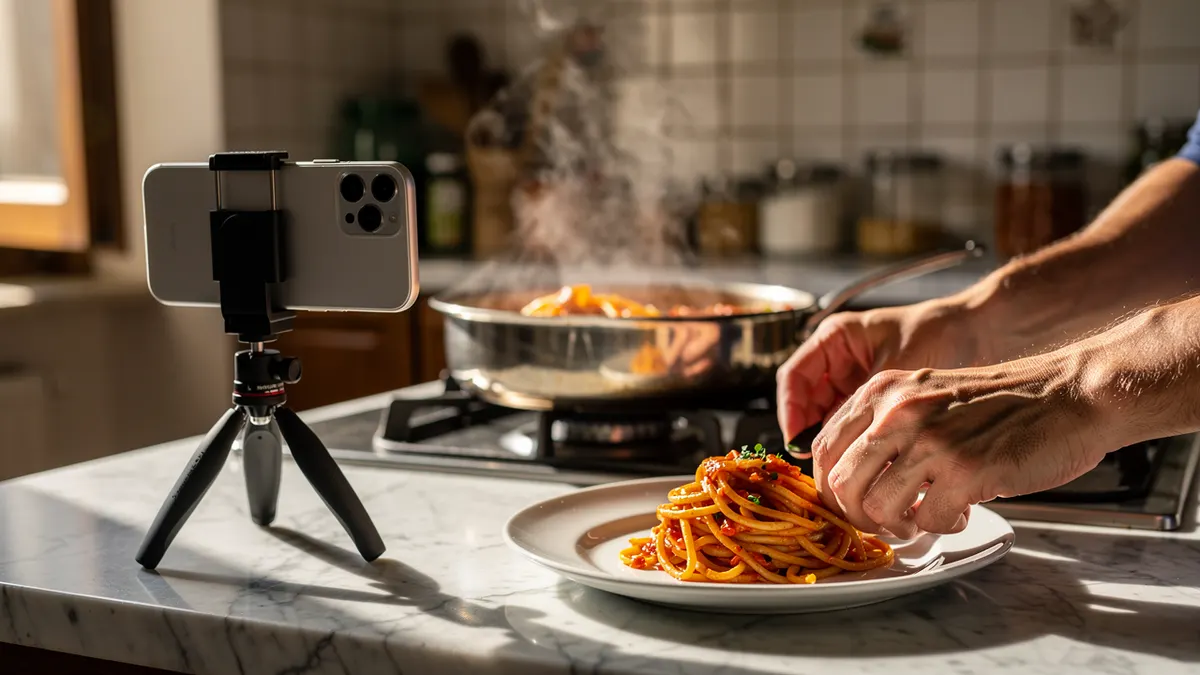
The hands: they show competence, well before the face.
The real pace: the time an operation takes, with no abusive speeding up.
The assumed mess: a perfect worktop undermines credibility, a splash reassures.
And the regional context: the setting, the crockery, the bread on the table have to match the place the video is supposed to happen in.
One signal immediately giving away a foreign production: a dish served with an accompaniment that is not done here, or a combination nobody eats.
What to buy for a restaurant
Five contents, by return.
The room before service, empty and lit: that is the video reassuring about what the place really looks like.
A signature dish, filmed from preparation to plate, with no artificial cut.
The team at work, briefly, to show there are people behind it.
The practical shot: where to park, how to get in, the terrace at service time.
And the answer to an objection: the price, the wait, the booking, the lunch menu.
One note on measurement: in catering, the useful indicator is not the view count, it is the number of bookings and route searches in the following days.
What to buy for a food product
Four shots, all concrete.
The opening of the pack and what is left inside: real quantity, appearance, texture.
The use in a simple recipe, doable on a weekday evening.
Keeping: what the product becomes the next day, how it is stored.
And the honest comparison: what this product replaces in the cupboard.
One clarification useful to exporting brands: shoot with no burned-in text, and add the statements per market at the edit. Labelling obligations differ from one country to another, and are checked with a lawyer.
Constraints to respect
Four families of rules, to approve before the shoot.
Nutrition and health claims are regulated: saying a product is good for health, that it makes you lose weight or that it strengthens something is not improvised.
Allergens and mandatory statements are not handled orally only.
Origin and protected designations are legally defined: "made here" and "product of here" do not mean the same thing.
And the advertising disclosure is said and shown in the video.
Those rules are checked with a lawyer before the shoot, not after, because a forbidden sentence forces the whole sequence to be redone.
What is filmed during service
| Moment | The shot | The constraint |
|---|---|---|
| The preparation | The gesture in the kitchen, close-up | Hygiene and clothing |
| The plate | From above, in natural light | Two minutes before it goes cold |
| The dining room | A wide shot with no faces | The customers' consent |
What is agreed before arriving
The slot outside service, the chef's consent, the table by the window and the list of dishes available that day. Filming during the rush yields nothing usable.
What is checked on the menu
The displayed prices, the allergens and the availability of the dishes shown. A video promoting a dish taken off the menu annoys the customer who travels for it.
Seasonality
Three cycles to know in order to sell at the right moment.
Seasonal products dictate the calendar: ordering a video about a vegetable three weeks after the harvest peak means filming a product no longer on the shelf.
Festivities structure the year, and orders are placed two to three months ahead.
And summer moves consumption outdoors, cold and quick, which changes the shots to film.
One arrangement that works: shoot two seasons in the same week when the product allows it, changing the table, the light and the clothes. The cost saving is immediate, and the brand has a reserve of content at the moment when everybody is looking for an available creator.
One last marker, valid for the whole category: in food, the most profitable video is not the most appetising, it is the most reproducible. A recipe the viewer feels able to make that same evening sells the product twice: first in the basket, then in the habit.