Gamers trust real setups and honest reactions. Here are the videos that convert, the brief, the rights and the sourcing.
Why this format works so well in gaming
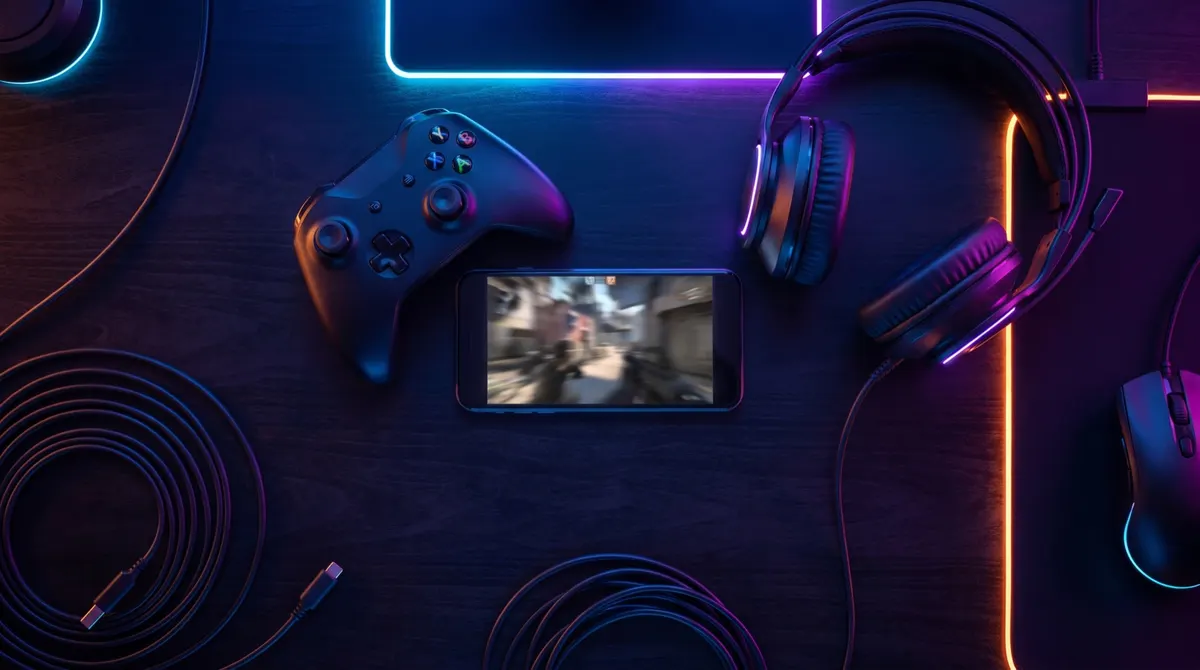
Because this audience has been exposed to polished advertising more than any other, and recognises it instantly. What gets through is a real desk, a real badly-routed cable, a hand hesitating over a key, a reaction that was not scripted. Credibility comes as much from the mess as from the skill level.
What the audience spots in three seconds
Six details that give a commissioned video away.
A setup so clean not one cable is visible.
Loose vocabulary about the genre.
A controller held in an unusual way.
Gameplay on the easiest difficulty.
Enthusiasm that arrives before the action.
And a reaction filmed afterwards, out of sync with the screen.
Which formats convert best
Seven formats, from the most effective to the most situational.
The setup tour, hardware in context.
The first session, unscripted reaction.
The hardware unboxing with live plugging in.
The before and after of changing one accessory.
The comfort test after several hours.
The honest opinion, including what is wrong.
And the settings tutorial, much watched on hardware.
How to handle game capture and voice
Seven technical rules, all checkable before shooting.
Turn the game music off in the options, dealt with above.
Record the voice on a separate track.
Keep the game sound effects, they carry the action.
Film the face at the same time, never afterwards.
Check the overlay does not hide the interface.
Record vertically if the video ends up vertical.
And deliver the raw capture as well as the edit.
The audio settings to impose
Six instructions that save half the deliveries.
Microphone under thirty centimetres, out of the keys' line.
Mechanical keyboard away from the mic, or quiet switches.
Fans and tower away from the recording spot.
Game level set lower than the voice.
No open headphones, which leak back into the mic.
And a test sentence recorded before every session.
How to brief a gaming creator
Seven mentions to write down in full.
The target platform, and the expected format.
The game genre, and the familiarity required.
Explicit permission to give an honest opinion.
The reminder to show rather than tell.
The deliverables, raw capture included.
The audio instructions, listed above.
And the partnership disclosure, mandatory and visible.
What must never be shown
Six situations that make a video unusable.
A pirated game or an unauthorised build.
Content under embargo, before the release date.
A competing brand legible on the desk.
A shared or resold account.
Content unsuited to the age of the target audience.
And a faked performance presented as real.
What usage rights to provide for
Seven elements to write into the quote.
Paid advertising, invoiced separately.
Use on storefronts and product pages.
A duration of at least twelve months.
The right to recrop and re-edit.
Use of the game capture, framed by the publisher's terms.
Use of the voice, if it is reused on its own.
And the fate of the raw files, essential for re-editing.
Where to find gamer creators
Six methods, from the most reliable to the slowest.
Looking among players of the genre concerned, not generalists.
Seeing who already posts hardware content.
Going through game communities and dedicated servers.
Filtering a marketplace by category.
Approaching profiles who show their setup regularly.
And calling back those whose results already suited you.
How to recruit on a marketplace
Six selection criteria, in order.
The genre they master, visible in the portfolio.
Sound quality, decisive here.
Clean capture, with no stutter.
The ability to deliver capture and edit.
Acceptance of a framed but honest opinion.
And availability for a second version.
What a gaming video costs
Seven markers, to adjust for the product.
A short hardware presentation.
A first session with reaction, longer to produce.
A comfort test over several hours.
A batch of three videos from the same session.
A vertical version and a horizontal one.
Category exclusivity, invoiced separately.
And advertising rights, never included by default.
Which platform to target first
Six markers for deciding.
Short format for hardware and accessories.
Long format for a game that needs context.
The platform where your audience already buys.
The one where paid advertising costs you least.
The one that accepts game capture most easily.
And the one where your competitors are least present.
The most frequent capture mistakes
Six errors that force a session to be redone.
Recording at thirty frames per second a game running at twice that.
Forgetting to turn off on-screen notifications.
Leaving another player's handle visible.
Capturing an interface in a language other than the released version.
Filming the face afterwards, with no sync reference.
And delivering without the raw capture, which rules out any re-edit.
What is filmed, and how
| Shot | What it proves | The constraint |
|---|---|---|
| The screen in play | The real pace | A clean capture, never a filmed screen |
| The player's reaction | The emotion | Framing that keeps the screen visible |
| The first hands-on | The accessibility | The first minutes, not the last |
What is checked before publishing
The rights to the game's footage and its soundtrack. Some publishers allow capture but not the music, and the video can be muted without warning.
What is never said without confirmation
A release date, upcoming content, a compatibility or an age rating. Each is confirmed with the publisher, and a wrong rating commits everyone involved.
What to measure
Six indicators, none of them views.
Cost per install or per purchase, depending on the product.
Fifteen-second retention.
The hardware return rate.
The number of technical questions in the comments.
The video's lifespan in paid advertising.
And the share of sales coming from videos with a nuanced opinion.
On UGC MATCH, the brief travels with the order, the video is delivered in a private space, and the creator's payment goes out when the brand approves.
One last marker: in this category, it is not the skill level that sells, it is the credibility of the setup and the honesty of the reaction.