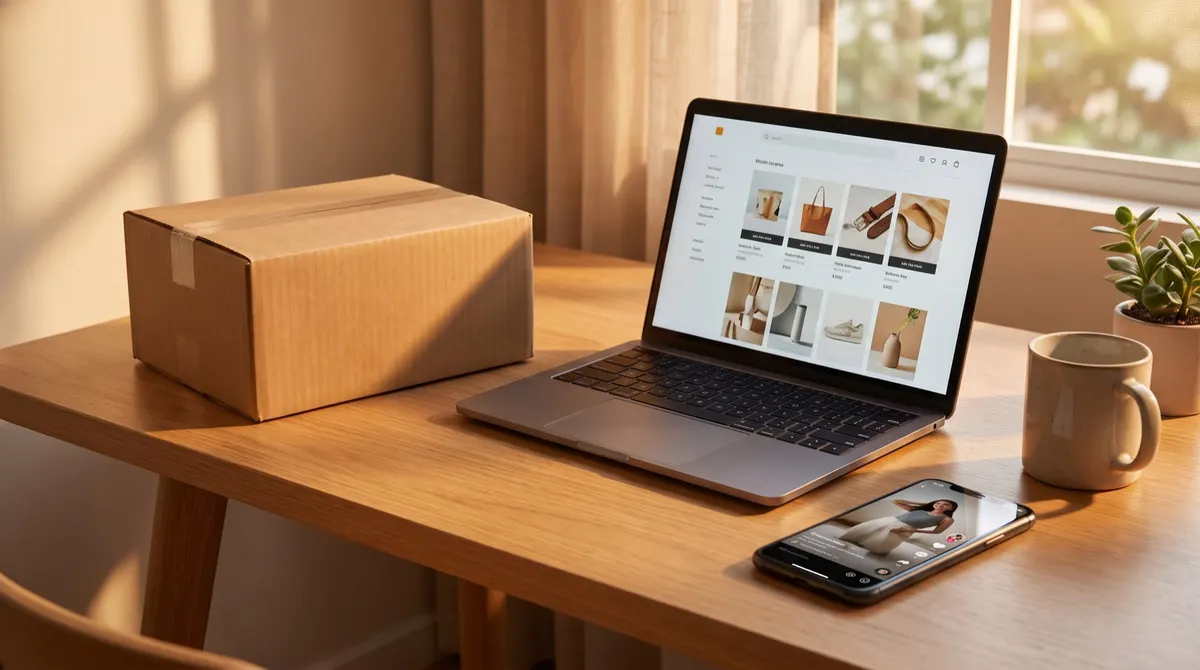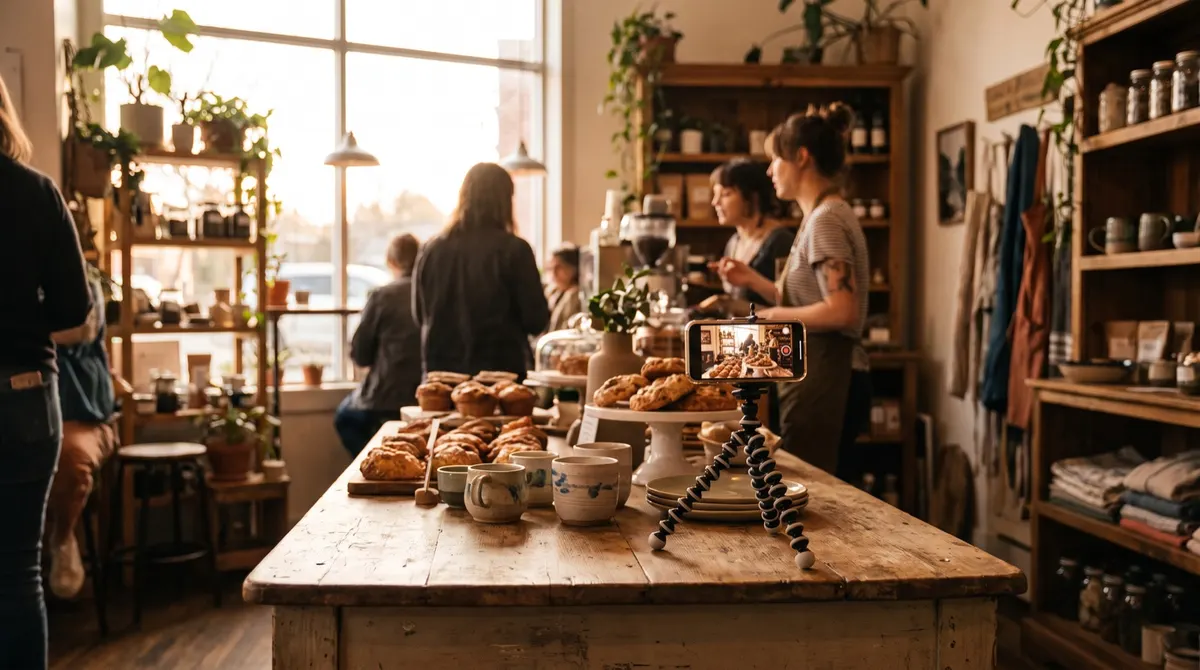
Creator video keeps local businesses alive: real dishes, real customers, geotargeted ads. Here are the videos that convert and how to work with local creators.
Why creator video works so well locally
Three reasons, all economic.
The audience to convince is small and close: a few thousand people are enough, which makes advertising cheap.
Proof counts more than production: nobody expects a film, everybody wants to see the real place.
And the decision is fast: between seeing the video and pushing the door, an hour may pass.
One budget consequence: in this context, a simple video with a small geotargeted budget almost always beats a polished production with no distribution.
The video formats that convert
Five formats, by return.
The journey: from the street to the table, in one continuous shot, with no cut.
The signature dish or product, filmed in the real light of the place.
The team at work, briefly, with a first name: that is what distinguishes a business from a chain.
The answer to an objection: price, wait, parking, booking, accessibility.
And the quiet moment: the terrace at three in the afternoon, the shop on a weekday, when it is pleasant to come.
One format to avoid: the generic video shot in tight close-ups. It could be anywhere, and that is exactly the problem.
Working with local creators
Three concrete advantages.
They know the landmarks: the street, the neighbourhood, how people get there.
They speak like the target audience, including with the regional accent, which is an asset and not a fault.
And they come back: the relationship becomes recurring, which brings the cost per video down.
One question to ask in the first exchange: is the creator willing to be identified as a regular customer, and if so, the commercial relationship still has to be visible in the video, which is an obligation and not an option.
Briefing well for a place
Five instructions are enough.
The name and the address, legible on screen.
The opening hours and the closing day, said out loud.
The entry-level price, if it is an argument.
What not to show: the kitchen if it is not presentable, customers without permission, displayed documents.
And a simple action sentence: book, call, drop in.
One precaution: recognisable people in the frame come under image rights, and their permission is signed on the day. That also applies to customers glimpsed at the back of the room.
Usage rights and budget
Three lines are enough for this kind of order.
Local use, geotargeted advertising included, for six months to a year.
The right to use the video on the business listing and on the website.
And a simple clause: what happens if the place changes its name, its menu or its owner.
One useful order of magnitude: a batch of three videos, shot on the same day, costs less than three separate orders and covers a whole quarter of distribution.
What the video changes for a neighbourhood shop
| Goal | What you film | Where it serves |
|---|---|---|
| Bring people in | The window and the street | Local networks |
| Reassure before coming | The interior, visible opening hours | Business listing |
| Sell on the spot | The product tried at the counter | In-store screen |
What is prepared with the team
A slot with no customers, someone happy to appear, the area to film in and the product to show. Thirty well-prepared minutes beat two improvised hours.
What ages fast and is reshot
A displayed price, a promotion, a seasonal decoration. Filming those shots separately lets you swap ten seconds instead of the whole video.
A simple rhythm to start with
Three videos per quarter, and nothing more.
The first shows the place and the journey.
The second answers the most frequent objection.
The third highlights something new, a season or an underused time slot.
One last marker, more useful than the view count: measure calls, bookings and route searches in the ten days following publication. That is the only indicator distinguishing a video people like from a video that fills the room.