Here the question is not how much you earn in the good months. It is what remains when the season stops, because it does stop.
The basic calculation
Three lines, and the third is the one that gets forgotten.
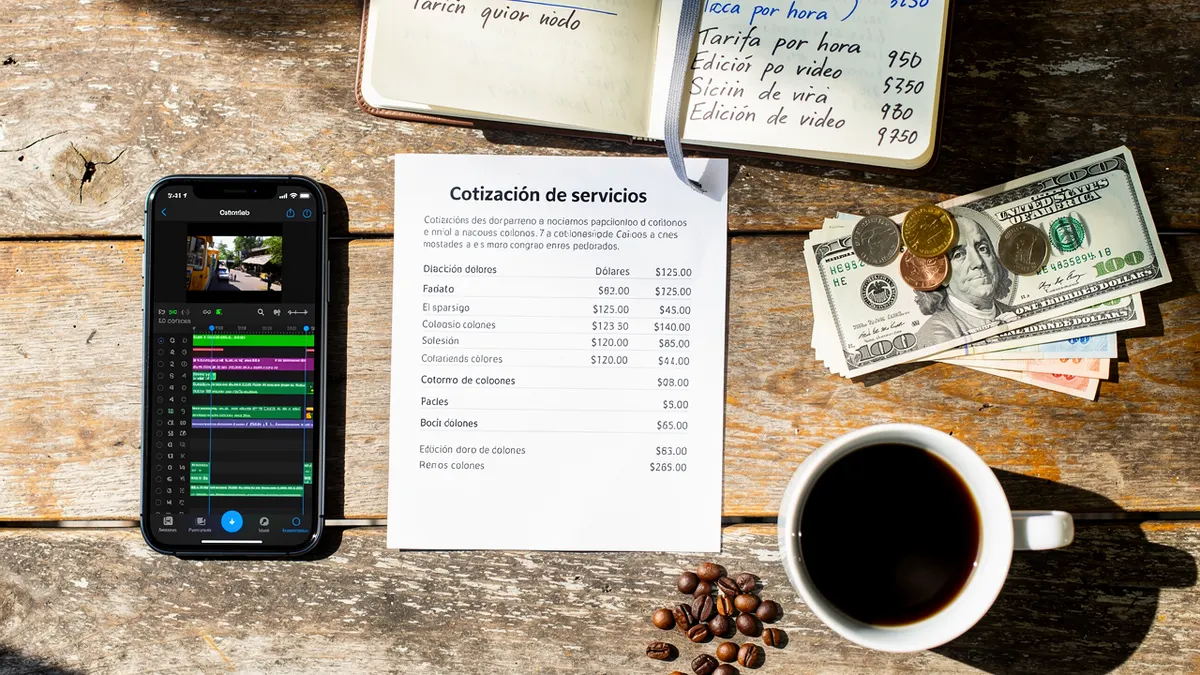
Gross income per job. What remains after contributions, tax and costs. And the real time spent per job, exchanges and chasing included.
That third figure often turns an attractive rate into a disappointing hourly one. Measure it on five real jobs before any decision.
Registration and invoicing obligations and reporting arrangements depend on your situation and are checked with the competent administration and with an accountant.
The real problem: the season
It is more brutal here than in most markets.
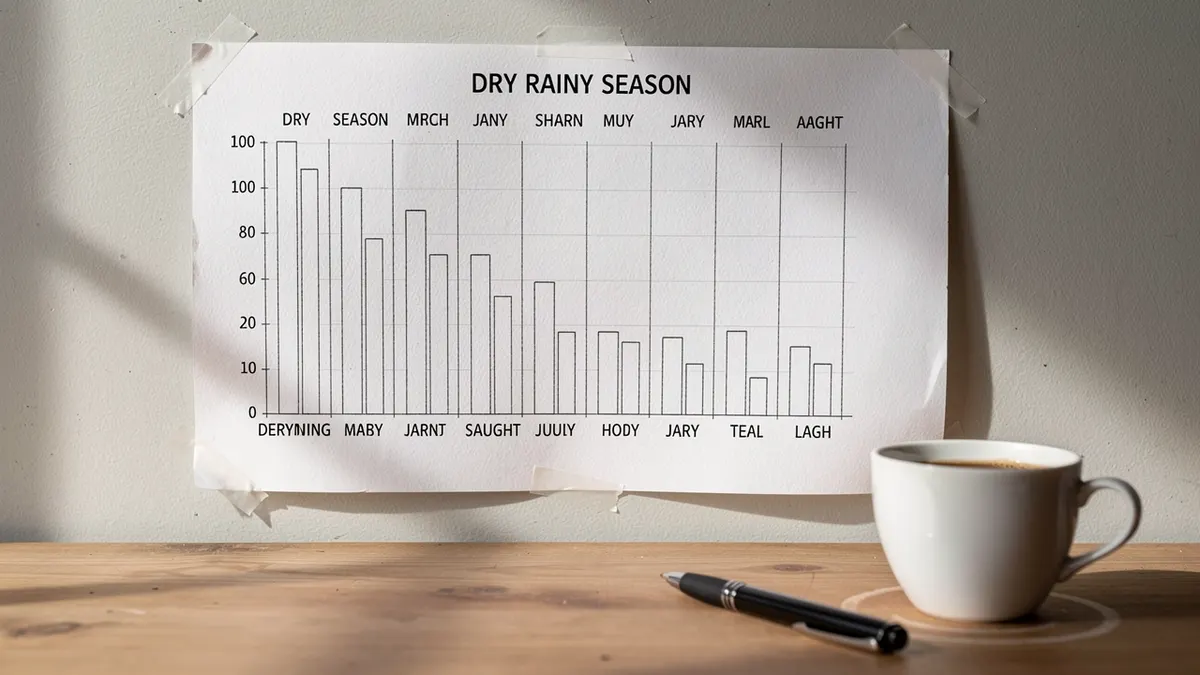
The tourist calendar governs the budgets: shoots concentrate before the high season, then everything slows. A creator discovering that rhythm in the first year experiences it as a personal failure; in the second, they plan for it.
Count four weak months a year, not one. And know that they fall at the same time for everybody, so competition for the rare jobs is at its highest.
The three ways to flatten the year
They add up, and none is enough on its own.
Monthly retainers: a fixed number of videos a month at an agreed price, for a client who needs a flow. It is the most stable income in this trade and the one creators ask for least.
Non-seasonal sectors: health, education, business services, technology, local food. They sometimes pay less per job but buy all year.
Foreign clients: they do not follow the local calendar, often pay better, and require an English version. It is the fastest lever in this market.
The rule of seasonal saving
It is decided in high season, never in low.
During the full months, move a fixed percentage to a separate account, on the day of every payment received, on top of what you set aside for tax. That account has one purpose only: paying your fixed costs during the empty months.
The useful marker: bill the full months as if they had to cover the quiet ones, because that is exactly their role.
When not to resign yet
Four signals, and one is enough to wait.
Your out-of-season share of income is below a third. One client accounts for more than a third of your turnover. You have never turned down a job for lack of time. Or you have not yet been through a full green season as a freelance.
That last one is the decisive test: until you have lived through it, you do not know how you will react when the inbox is empty for six weeks.
What you need before dropping an income
| Marker | Comfort threshold | Why |
|---|---|---|
| Regular clients | Three at minimum | One departure does not sink the month |
| Cash ahead | Three months of costs | A payment delay causes no panic |
| Visible pipeline | Four weeks ahead | Next month has already started |
What changes in the day
Shooting time drops, quoting and following-up time rises. Set aside half a day a week for prospecting.
What you keep even full-time
One long-standing client, even a small one: it is the one that absorbs a quiet month.
What makes the business last
Three habits, more decisive than the level of your rates.
Bill by deliverable, sell usage rights separately, and always deliver an English version to open the market that does not depend on the local season.
The right moment to go full-time is when you turn work down in the middle of the green season, not when you are looking for it in the middle of the dry one.