Health is the category where UGC promises the most and delivers the least, for a simple reason: the format that would naturally come to mind is the one that has to be handled with the most care.
The patient testimonial is not a free format
A before-and-after, a satisfied patient's account, a promise of results: that is what a creator left without instructions produces, and it is what exposes a clinic most.
Health communication is regulated, and what may be shown or claimed depends on the procedure, the practitioner and the medium. That is not an administrative detail: the responsibility falls on the establishment, not on the person who spoke on camera.
The practical consequence is not to give up on video. It is to build it somewhere other than on the result, and to have the wording approved in advance. For what is permitted in your precise situation, the reference is the competent authority or your own adviser, never the communication of a colleague who appears to be getting away with it.
What films without difficulty and convinces just as much
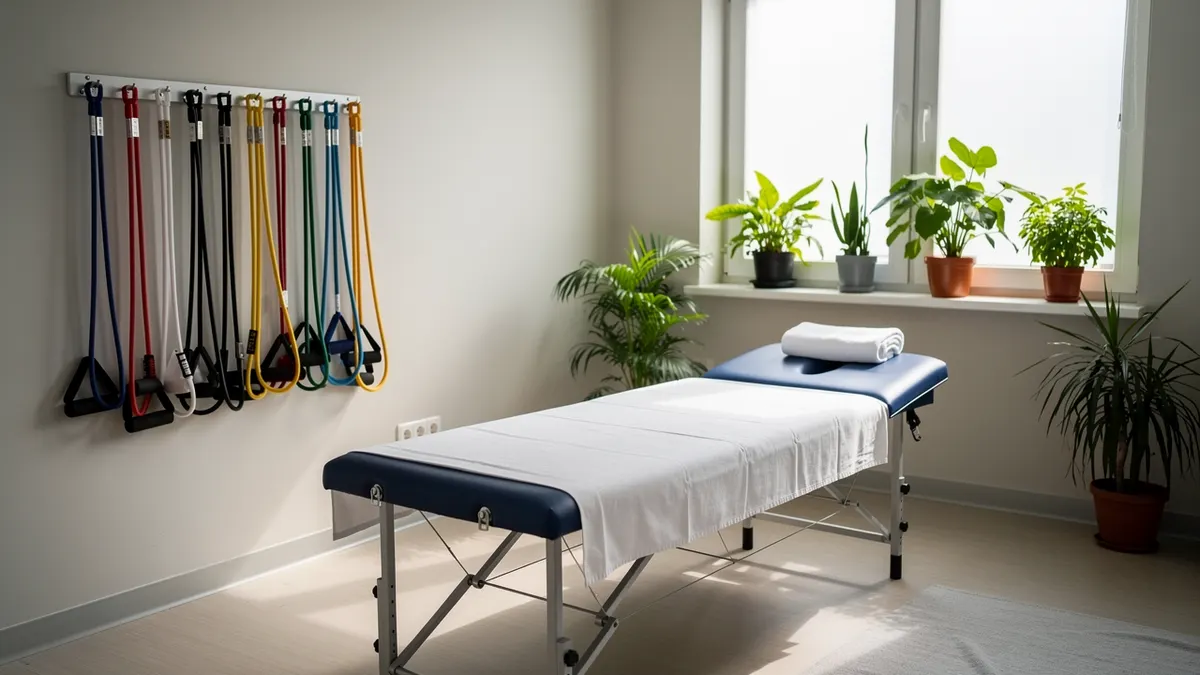
The place. The entrance, the waiting room, the cleanliness, the light. A significant share of a patient's anxiety concerns the place rather than the procedure, and nobody ever shows the place.
The pathway. What happens between booking and leaving: where to park, how long you wait, who greets you, what you are asked to bring. That is pure information, and it is not regulated.
The team. Faces, first names, roles. Trust in this category is built on people, and a team that introduces itself is worth more than any argument.
A practitioner's explanation. Not a promise, but an explanation of what a procedure is, what it is not, and what makes it unsuitable for some cases. Saying who it is not for establishes an authority nothing else provides.
Answers to the real questions. The ones reception hears every week. A series of short filmed answers beats a presentation video, and it lightens the phone line.
Which creator to hire
Often nobody from outside. In this category the best pieces come from the staff themselves: a practitioner explaining, an assistant showing the pathway, someone filming the place one morning before opening.
If you do bring in a creator, choose someone able to shoot indoors under medical lighting, often harsh and green, without turning a treatment room into a set. And give them an escort on site: they must film nothing showing a patient, a document or a screen.
The brief, more important here than elsewhere
Give the authorised wordings word for word, the list of what may neither be said nor shown, the areas where filming is forbidden, and the person who approves before publication.
Add the approval circuit to the calendar. A health video that has to pass a practitioner before publishing takes an extra week, and forgetting that makes it miss the date it was commissioned for.
What a practice must provide before the shoot
Six documents without which you do not film.
The internal policy for promotional content.
The approved wording of every claim.
The consent of every person on camera.
The list of rooms that may be filmed.
The name of whoever approves the final cut.
And confirmation of the obligations by a lawyer.
What is filmed and what is said
| Element | Filmable | Wording |
|---|---|---|
| Empty waiting room | Yes | Neutral description |
| A technical gesture | Per the internal procedure | Approved in writing |
| A result on a person | Under strict conditions | No promise |
What is gathered before the shoot
The internal procedure, the approved sentences, the signed consents, the list of filmable rooms and the name of the approver.
What is confirmed with a lawyer
The mandatory notices, the sector's advertising restrictions and the limits of a testimonial.
What this changes for the result
A clinic that gives up the spectacular result and shows its place, its team and its pathway obtains less spectacular and markedly more effective content, because it answers the questions that actually prevent people from booking: where is it, how long does it take, who will look after me.