Decor is the category where a beautiful image is most easily confused with a video that sells. A photogenic interior makes people dream; it does not say whether the object holds, how it goes up, or what it looks like in an ordinary room.
In Argentina an additional constraint governs everything else: people often decorate a home they do not own.
Decorating without owning
A large share of the audience rents, on leases that do not last and under rules that forbid touching the walls. Add a budget that dislikes single use purchases.
Three requirements follow, and they are almost never found in this category's videos.
Reversible. How the object goes up without drilling, and how it comes off without leaving a mark. It is the renter's first question, and nobody answers it.
Demountable. What comes apart moves house. Showing a piece of furniture flat again in two minutes is worth more than an argument about sturdiness, because the viewer knows they will move in two years.
Multi-purpose. An object that works in two rooms or for two uses justifies its price by itself. Showing it used in both contexts costs thirty seconds of filming and changes the decision.
The balcony deserves a separate mention. In cities it often works as an extra room, and it is a space almost no brand films even though it concentrates a real share of decor purchases.
What actually converts
Scale in a real room. The object next to a door, a chair, a person. Cut-out photography makes everything look bigger, and disappointment on delivery turns into a return.
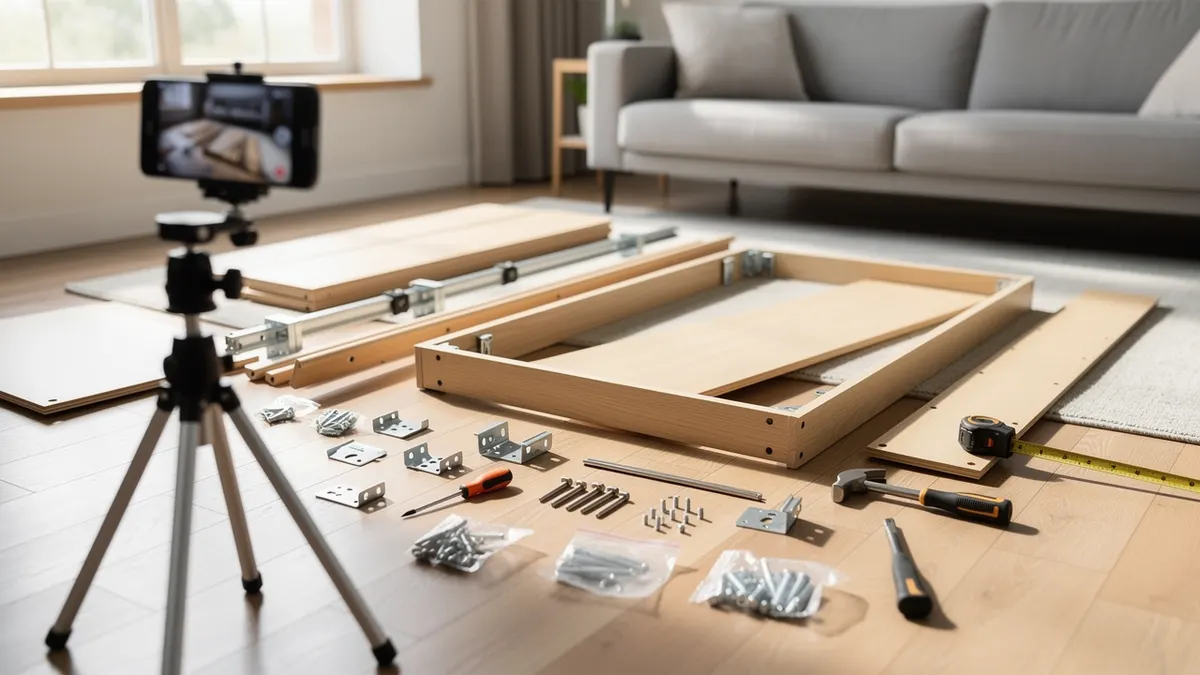
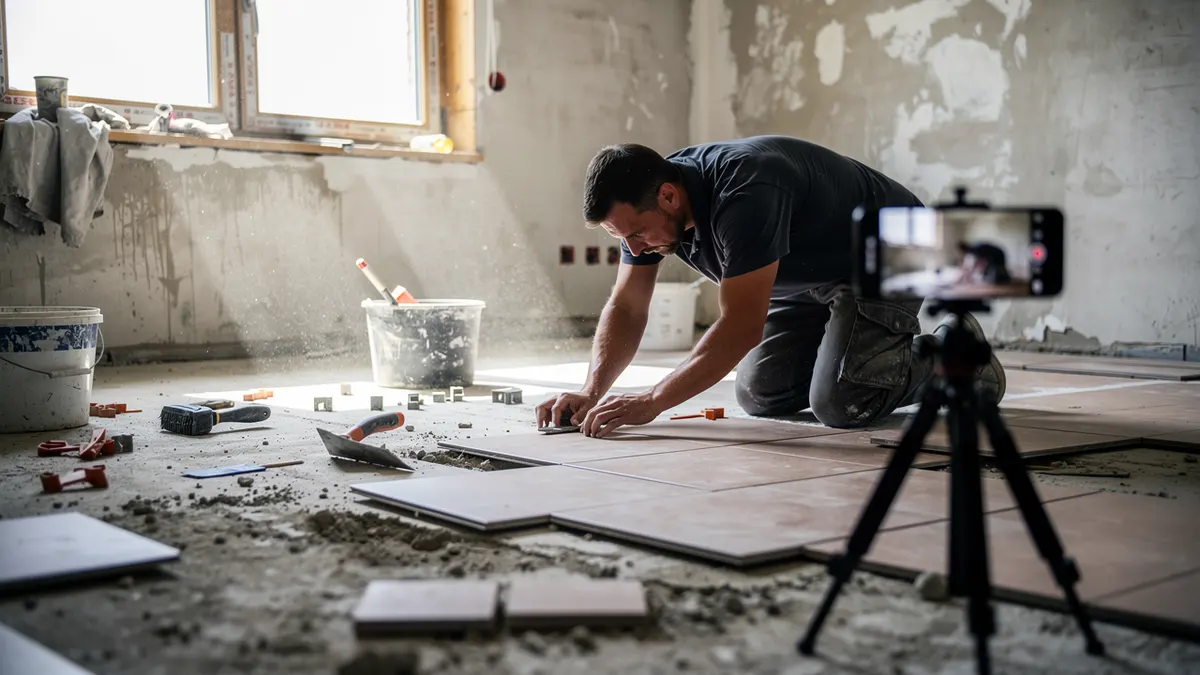
Assembly in real time. How many minutes, how many tools, how many people. That is the question that blocks the purchase of bulky items.
Material up close. The grain, the stitching, what scratches, what wipes clean. Studio lighting erases exactly what the customer wants to assess.
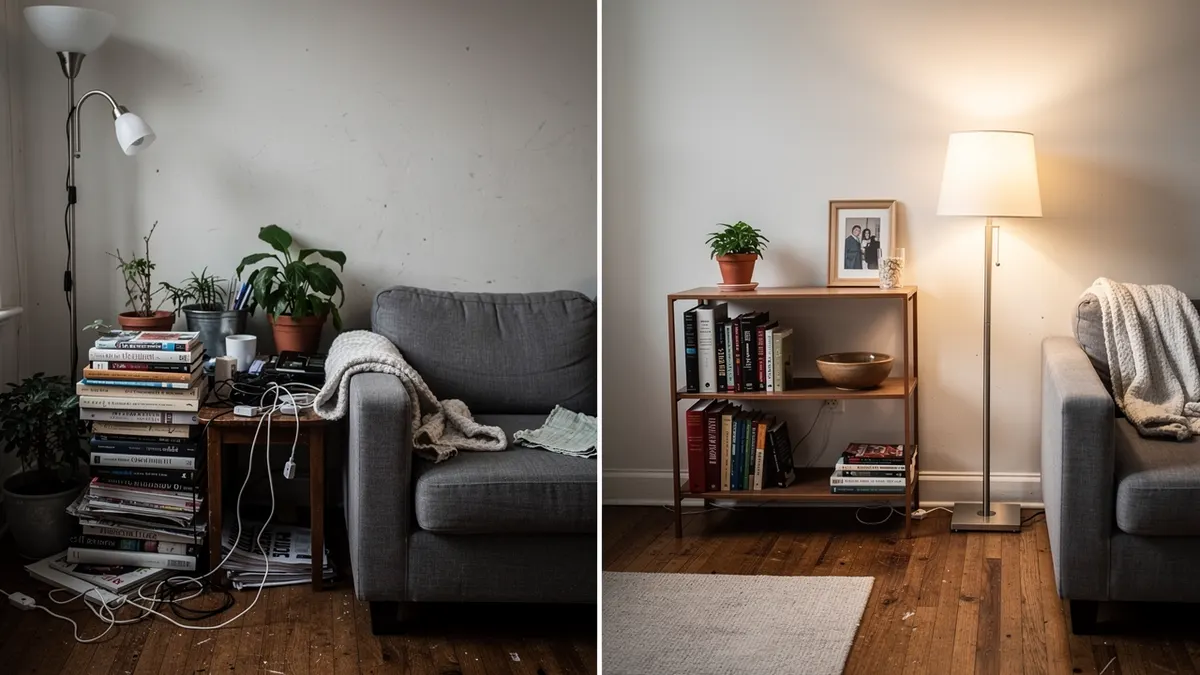
Before and after in an ordinary home. Not a magazine flat: a place with its flaws, where the viewer recognises their own.
Use after several months. What has shifted, faded, held. It is the rarest and most convincing proof in the category.
Which creator to hire
Someone whose home resembles your customers': modest size, mismatched furniture, imperfect light. An over-styled interior moves the product into a world the viewer does not live in.
Look too for the ability to film a space, which is not the same as filming an object. A shot that pulls back, a room walked through, light that changes across the day: it can be verified in ten seconds from a previous example.
The brief that produces usable material
Give the exact dimensions, the weight, the fixing method, the tools needed, what arrives assembled and what does not, three possible openings.
Explicitly ask for the no-drill version where it exists, and for the disassembly. Those are the two shots that are nearly always missing and that answer the real question.
And attach the list of what may not be claimed, particularly about strength, safety and fire behaviour where the product is concerned: those statements are regulated and the risk returns to the brand.
What the brand has to prove
| Buyer's doubt | The shot that answers | Length |
|---|---|---|
| The size in an ordinary room | The object beside a chair | 8 s |
| The real colour | A locked shot in daylight | 6 s |
| The assembly | Box to finished piece, sped up | 20 s |
What one session covers
The object alone, the object in place, the material detail, the assembly and the cleaning.
What requires coming back
Another colourway, another room of the house, another decorating season.
The calendar
March reorganises homes after the summer and concentrates the moves. The end of year holidays carry decoration in full heat, which rules out half the winter imagery seen elsewhere. And the short winter sells textiles and lighting.