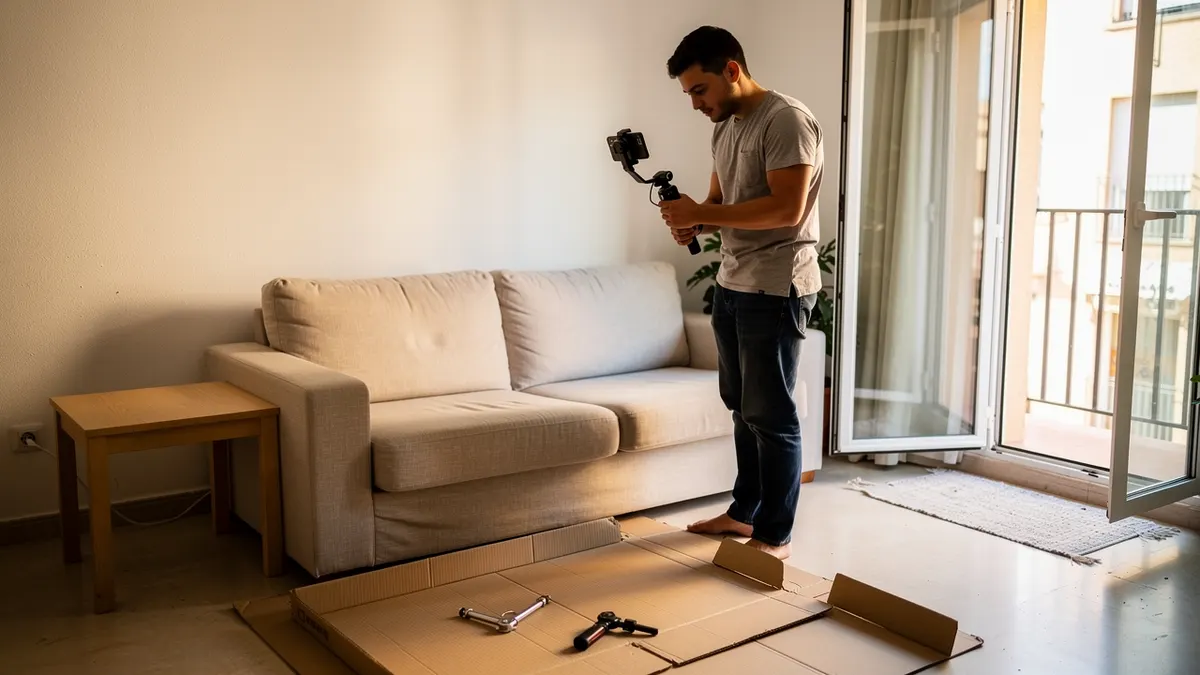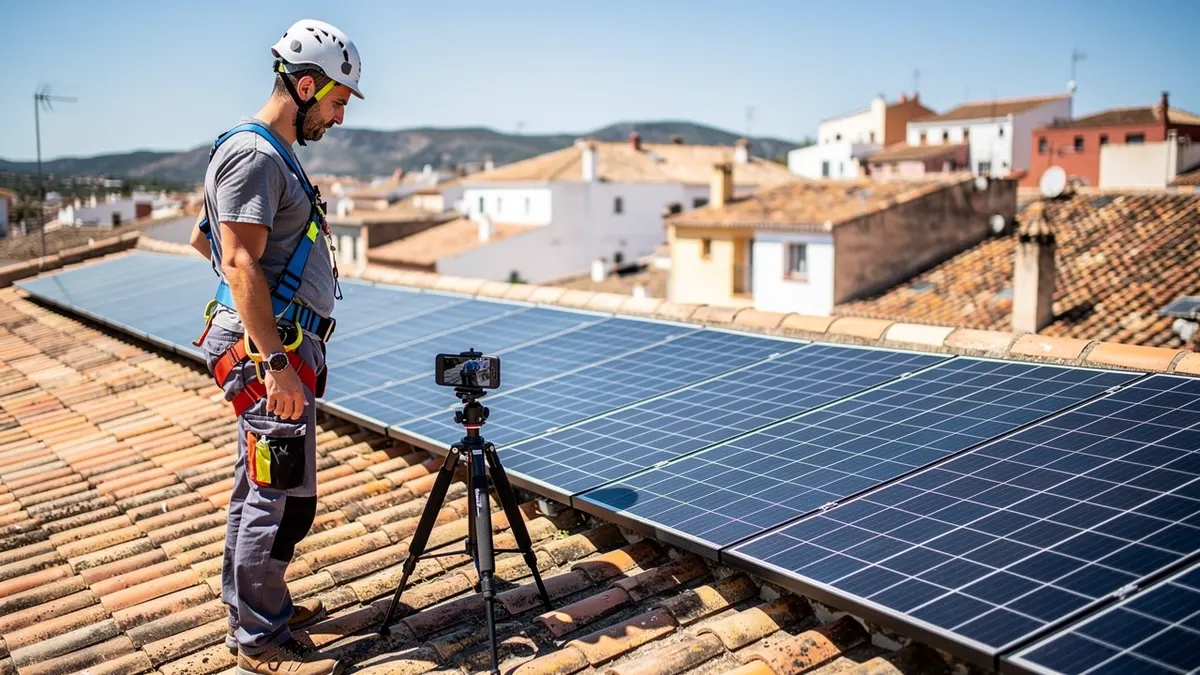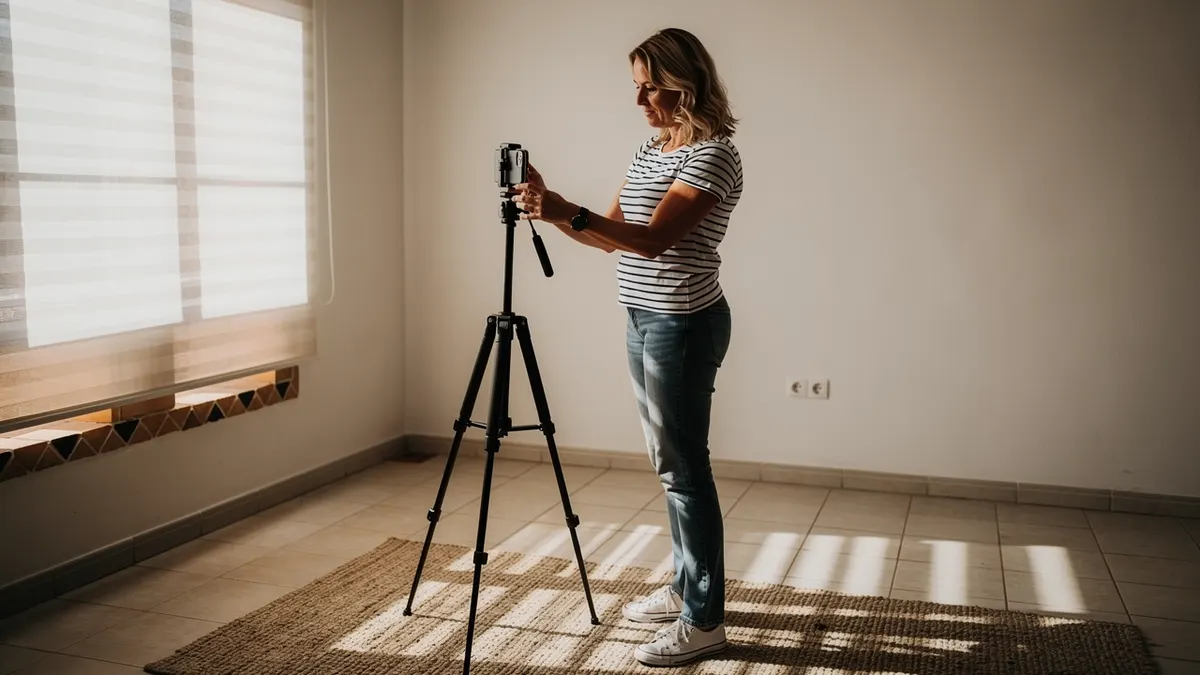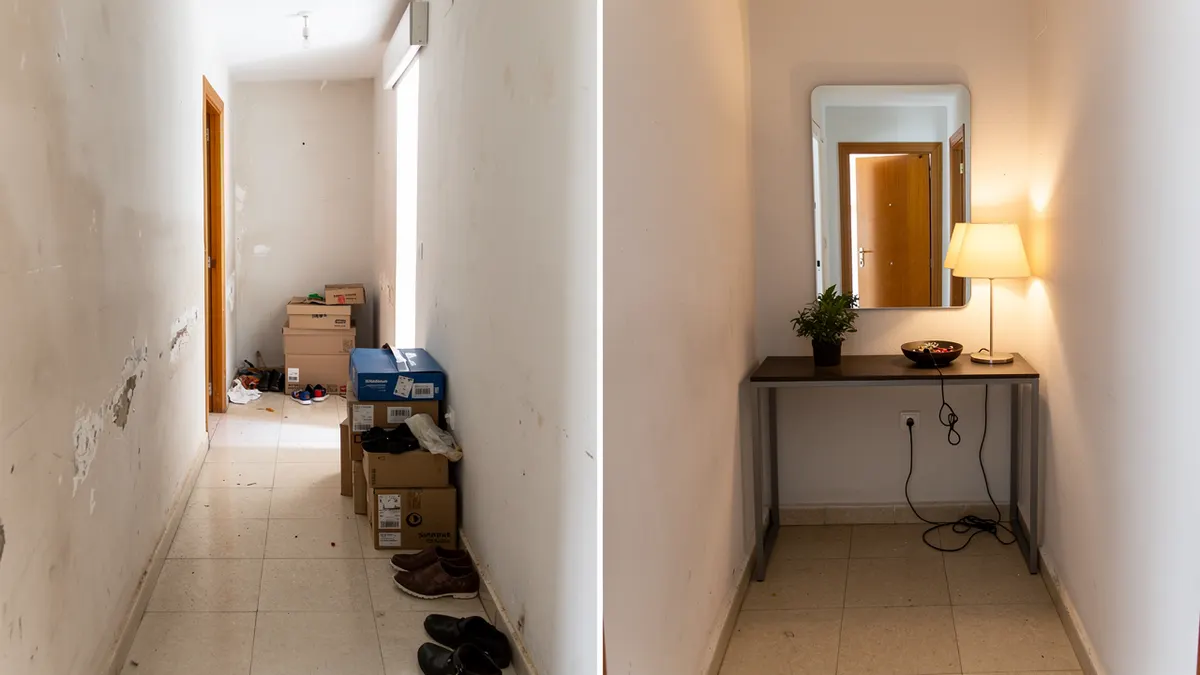
Before and after, the reality of Spanish flats, and how to brief creators whose home looks like your customers'.
What really converts
Four sequences, in decreasing effectiveness.
The before and after of a precise corner, filmed in the same place at the same height: the hallway, the worktop, the corner of the living room. The fixed shot makes the difference readable.
The real setting up: taking the object out of the box, installing it, plugging it in. How long that takes is buying information.
The constraint solved: storing without drilling, gaining space in a corridor, hiding cables. That is the format most shared.
And the material in natural light, at two moments of the day: fabric and wood do not look the same in the morning and at six in the evening.
The reality of Spanish homes
Five facts that have to be visible on screen.
Surfaces are smaller than in Nordic catalogues, and a piece of furniture is judged on its depth as much as on its style.
The floor is very often tiled, not carpeted: pads, noise and stability matter.
Concrete walls resist drilling: no-drill solutions sell better, and it has to be said.
The light is strong and direct for much of the year: saturated colours read badly, fabrics fade.
And part of the stock is rented, with drilling or repainting forbidden. The reversible format is an argument, not a compromise.
Which creators to hire
Three criteria, in this order.
A home resembling your customers': a seventy-square-metre flat will convince more than a house with a garden.
An ability to film steadily in natural light, with no equipment: home content forgives a moving camera badly.
And ease with showing the initial mess. Someone only willing to film their tidy home cannot do a before and after.
One criterion not to overweight: the follower count. On this content, the quality of the home and the clarity of the gesture matter far more.
The brief producing good material
Five instructions are enough.
One object per video, and one promise.
The same frame before and after, marked on the floor with tape.
The wide shot required: show the whole room once, so the scale is readable.
The dimensions said out loud and shown on screen.
And the final tidying left visible: what stays on the worktop after installation is as interesting as the installation.
Add one instruction on format: deliver a vertical and a square version, and a version with no on-screen text for the product listing.
What a home brand needs to prove
Six elements that trigger the purchase.
The real size of the object in an ordinary room.
The exact colour in daylight.
The material seen very close.
The assembly, from box to finished piece.
The stability once it is in place.
And the cleaning, shown in a few seconds.
What the video must make visible
| Subject | The shot | What it proves |
|---|---|---|
| A textile | The fabric in movement | The drape and the thickness |
| An object on display | A slow turn around it | The real proportions |
| A light fitting | The room before and after switching on | The light produced |
What is tidied before pressing record
The clutter around the frame, visible cables, other brands' objects and anything that dates the room. Ten minutes of tidying are worth an hour of editing.
What is said about colours
The possible gap with the website photo, and the light the shot was filmed in. A textile filmed in sunlight and delivered in winter disappoints without anyone having lied.
The Spanish calendar and the number of rooms
Four moments structure the year.
The September return, which triggers storage purchases.
The cold months, when textiles, lighting and rugs sell, including in mild regions.
Spring, the moment of deep cleaning and outdoor renewal: terrace, balcony, awning.
And summer, when the interior empties in favour of the outside, and demand moves to objects of coolness and shade.
One last marker, useful for sizing an order: three to four videos per reference are enough to cover the year, provided you film the four moments rather than four variations of the same shot.