Selling something nobody wants to use. The only content that works is the claim, told by somebody who lived through it.
The claim is the only content that works
That is the rule of the category, and it comes down to one thing: nobody is interested in insurance before having needed it.
Three accounts holding attention.
The theft, told by the person, with what they did within the hour.
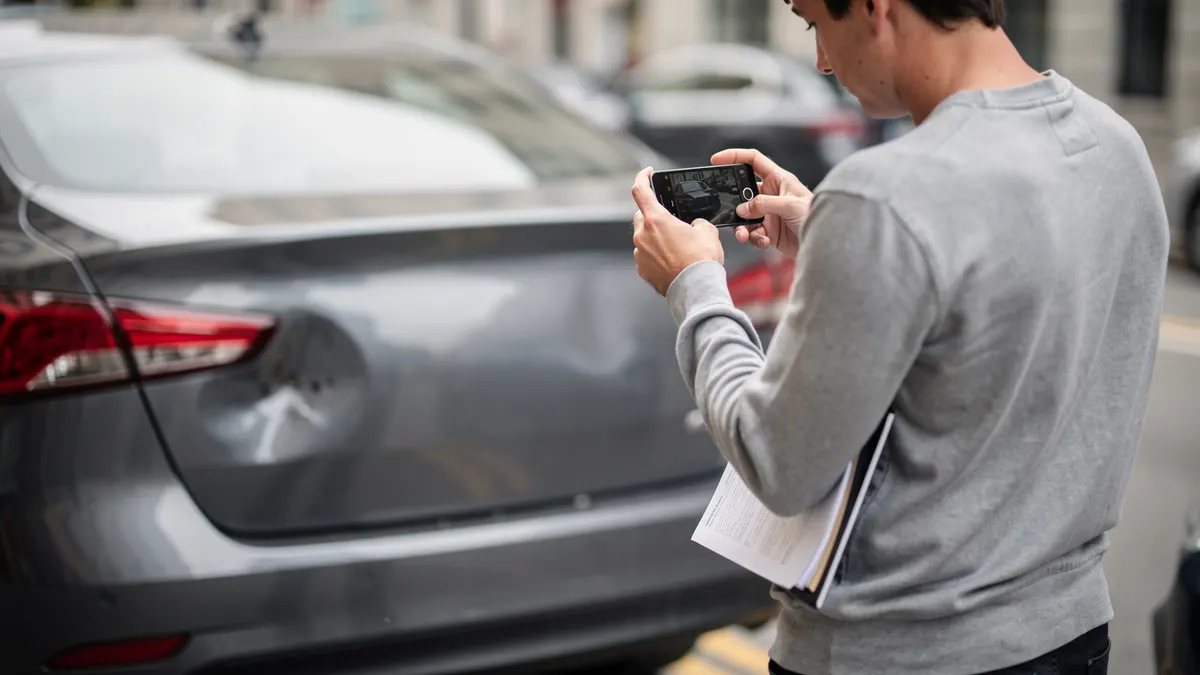
The water damage, with the photos taken at the time and the list of what was covered.
And the accident, without dramatisation, centred on the procedures rather than the emotion.
Two shooting rules. Film the person at home, not in a set. And do not add music: in this category, sound design tips a testimony towards advertising, and the doubt comes back.
Explain the process, not the product
That is what the audience is really looking for, and what brands replace with arguments.
Four useful sequences, thirty seconds each.
What to do within twenty-four hours: who to call, what to photograph, which papers to gather.
How a claim is filed, screen by screen, with the fields that block people most.
How long it really takes, from filing to payment.
And what gets a file rejected: late declaration, missing document, excluded damage.
A video explaining a rejection is worth more than a video promising a payout, because it gives information nobody else gives.
Who should speak
Three profiles, in this order.
The insured person who lived through a claim, and who tells it without exaggerating, including what went wrong.
The employee handling files, filmed in their work setting, explaining what speeds up or slows down a case.
And the professional who assesses the damage, for the technical part.
Three prohibitions. No creator recommends a contract to one particular person. No compensation figure is presented as the norm. And no named comparison with a competitor without prior approval. The border between information and personalised advice, along with the mandatory statements, is checked with a lawyer before the shoot.
The buying moments
Four triggers, and they are all life changes.
Buying a vehicle, where insurance is a condition, not a choice.
Moving house, which reopens every question at once.
The arrival of a child, which triggers the provision questions.
And a relative's claim, which is the most powerful and least exploited trigger.
One distribution consequence: this content is not pushed at random. It has to exist at the moment somebody is searching, which gives the advantage to durable formats over posts disappearing in three days.
What the video can do, and what it cannot
| Element | What remains possible | What is ruled out |
|---|---|---|
| A policy | Explaining where to read the cover | Summarising the exclusions |
| A claim | Showing the steps of a declaration | Promising a payout |
| A price | Quoting a public price | Comparing with no source |
What is always said on screen
That the cover depends on the policy taken out and that only the contractual documentation is authoritative, to be confirmed with an insurance professional.
What is masked in every shot
A policy number, an address, a plate, a named document. One badly cleaned frame is enough to publish personal data.
What builds over time
Two assets, and they add up.
A library of short answers, one question per video, answering the same queries for years.
And a series of testimonies, filmed over time, which do not date because they tell a situation and not an offer.
One last practical point: keep the written permissions of the people filmed, with the duration and the channels, because a claim testimony contains personal and sometimes family information. Those permissions are drafted with a lawyer, and kept for as long as the video is shown.