Jewellery is the category where photography lies most. Studio lighting transforms any metal, and the buyer knows it. That is why video converts so well here: it shows what the photo covers up.
In Argentina two traits are added and they change what has to be filmed.
Metal is looked at differently there
The first trait is artisanal. Silver has a long tradition in the country, worked by workshops that make tableware as readily as jewellery, and the public knows what a well finished piece looks like. A brand that films a solder joint or an engraving badly is judged by people with an eye for it.
The second is economic. A precious metal piece is not only an ornament, it is also regarded as a purchase that holds its value, unlike costume jewellery which is judged on impulse. That creates two audiences with two expectations, and a video that does not choose misses both.
For the first you need proof of material: the hallmark, the weight in hand, the sound of the piece set down, the finish on the back. For the second you need it worn, the light, and the combinations.
What actually converts
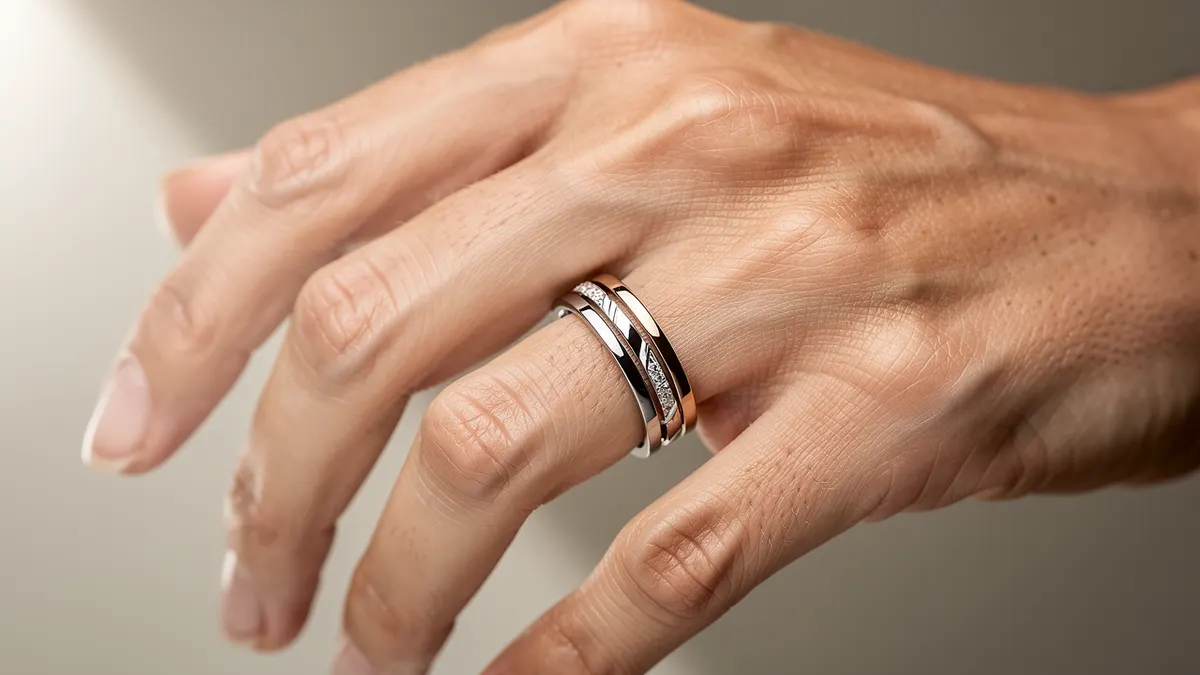
Worn on skin, in movement. Daylight, a wrist that moves, a chain that slides. It is the only way to show real size and how a piece falls.
Scale against a known object. A ring next to a finger, a chain next to a hand. Cut-out photography makes everything look bigger, and a significant share of returns comes from that.
The finishing detail. The back of the piece, the clasp, the solder, the hallmark where there is one. This is what separates a workshop from an anonymous import.
Layering. Two or three pieces worn together. It is what raises the average basket with no sales effort.
Real use over time. A piece worn for months, and what that has done to the metal. It seems risky and it is what the audience looks for most.
Which creator to hire
Someone whose hands and skin resemble your customers', across the full range of tones. Metal does not read the same on every skin, and a brand showing a single complexion leaves part of its audience without a reference.
Look too for the ability to film small. Jewellery is shot in close-up, with soft light and stable focus; it is a precise technique and many all-round creators do not have it.
The brief that produces usable material
Give the exact material, the weight, the dimensions, how to care for it, what is guaranteed and what is not, three possible openings, and the list of what may not be claimed.
That last list matters more than elsewhere: statements about metal purity, stones and guarantees are regulated, and an approximate claim commits the brand. When in doubt the reference is the competent authority, not a competitor's page.
Finally ask for shots with no face, close-up on a neutral background. Those are the ones that go on to the product page and short ads, and they cost nothing to capture in the same session.
What to show depending on the piece
| Type of piece | The shot that sells | The trap |
|---|---|---|
| Ring | The hand in movement, not resting | The camera's reflection |
| Necklace | The clasp and how it falls on skin | A twisted chain |
| Earrings | The profile, ear cleared | Softness in the very close range |
What gets prepared before the take
Cleaning the metal, hair tied back, tidy nails, a plain background: the cleaning takes longer than the take itself.
What gets checked afterwards
Colour fidelity of the metal, sharpness on the stone, the absence of a stray reflection.
The calendar
The peaks are Mother's Day in October, the end of year holidays, Valentine's Day in February in high summer, and wedding anniversaries all year round. Allow four to six weeks before each, because jewellery needs more takes than average to get a clean image.
Sources
Checked on 4 September 2026. Thresholds and rates change: where this guide and the official source disagree, the official source is right.