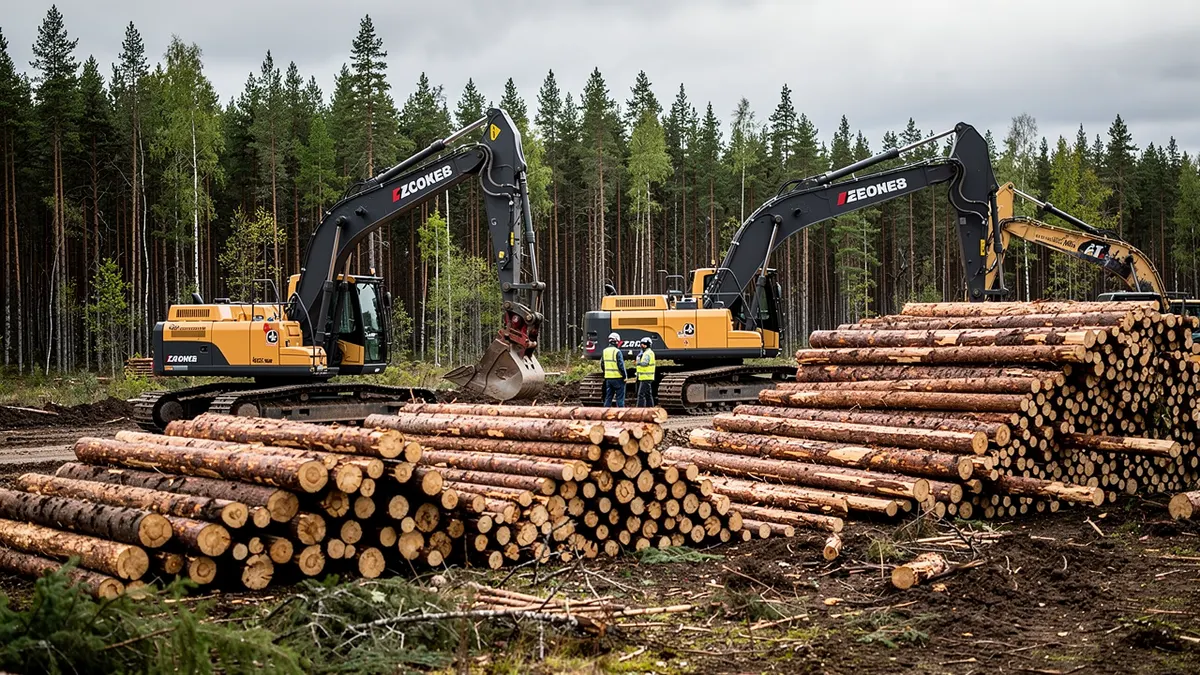
Recruitment, safety and community relations budgets that have nothing to do with marketing and never disappear.
Recruitment is the biggest need
Three reasons, all budgetary.
An unfilled post costs more than a campaign: stopped production, overtime, emergency subcontracting.
The pool is geographically limited, which means convincing people willing to travel.
And competitors recruit from the same catchment, often at the same wages: the difference comes from the real conditions, shown or not.
One budget consequence: recruitment content is compared with the cost of a vacant post, not with the cost of advertising. That is why it is easily funded in this sector.
Honesty is more effective than polish
Three reasons why the over-clean video fails here.
The audience is made up of people from the trade, who spot staging immediately.
The work is hard, and denying it creates instant mistrust.
And somebody recruited on a false image leaves within three weeks, which costs more than never having recruited them.
What works instead: showing the cold, the mud, the hours, the tiredness, and beside them what compensates, the team, the pay, the rhythm, the food, the free time between rotations.
Safety communication is recurring work
Four characteristics specific to this content.
It is mandatory in many configurations, and it is renewed regularly.
It has to be understood by people of different languages, which means several versions.
It is approved internally by people who have nothing to do with marketing.
And it ages fast: a procedure changes, the video becomes obsolete.
One practical consequence: produce that content in short modules, one action per video, rather than as long films. Replacing a module then costs a day, not a whole production.
Community relations require care
Four principles, all non-negotiable.
Nothing is filmed on a territory without prior authorisation from the people and bodies concerned.
Images of people belonging to a community are used only with their explicit, written agreement, and for a defined duration.
Commitments made on video bind the company lastingly, well beyond the campaign.
And environmental questions are handled with extreme caution: claims in that field are regulated and are checked with a lawyer.
One note on method: in this sector, video is not a detached communication tool. It sits inside a relationship that existed before it and will continue after it.
Filming conditions are genuinely difficult
Five constraints to budget for.
Access: mandatory safety training, personal equipment, permanent escort.
The cold or the dust, which limit the equipment's endurance.
The noise, which makes recording sound difficult without a protected lapel microphone.
The hours: useful light is sometimes short, and the site does not stop for a shoot.
And the connection, often absent, which prevents any transfer before the return.
One pricing consequence: this work is invoiced by the day, training and travel included, never by the video.
What is filmed on an industrial site
| Subject | What it proves | Constraint |
|---|---|---|
| The equipment in action | The real scale of the work | A safety distance |
| The operator's gesture | The know-how | Protective equipment |
| The control station | Monitoring and measurement | No customer data visible |
What is arranged with the site manager
Access, the mandatory equipment, any induction training, a permanent escort and the areas strictly closed to pedestrians.
What is verified before any claim
A certification, a volume, a yield or an environmental compliance. Each is proven by an official document, to be confirmed with the operator and a lawyer.
What to measure
Three indicators, in this order.
The number of applications received in the three weeks following publication.
The proportion of candidates who actually turn up, having seen the real conditions.
And retention at three months, which measures the content's honesty better than any other figure.
One last marker, valid for this whole sector: these budgets do not depend on marketing cycles. They exist because the company has to recruit, train and maintain a relationship with a territory, and those three obligations never disappear.