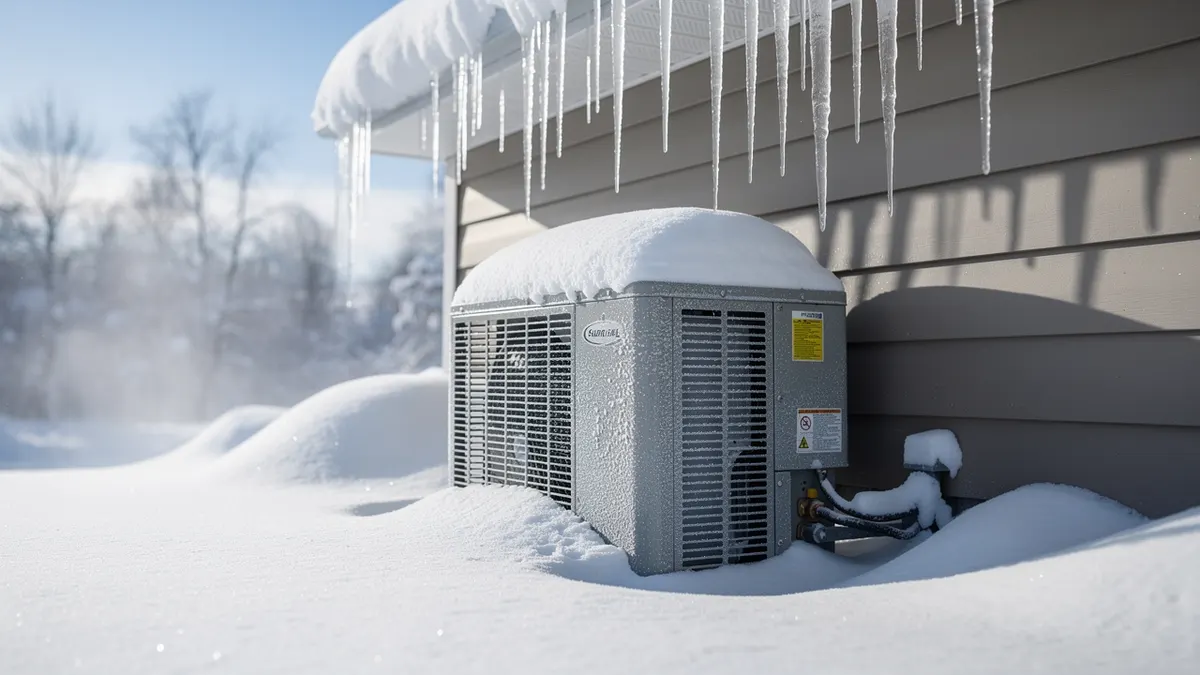
Heat pumps, insulation, windows, grants: it is a market where the argument is proved in winter, and where a video shot in June convinces nobody.
The winter bill is the whole argument
It is the only figure the audience really looks at.
A long heating season makes the calculation concrete: the monthly amount, the difference from one year to the next, the moment the installation pays for itself.
But a figure quoted without context is worth nothing. You have to state the floor area, the type of home, the year of construction, the region and the previous energy source.
Without those five elements, the audience cannot compare itself, and an announced saving becomes an unverifiable promise.
Installation is the real hesitation
That is what brands most underestimate.
Before the price, people want to know what the works involve: how many days, how many people in the house, how much noise, how much dust, whether furniture has to be moved, whether they can stay at home.
So film a complete installation, from the van to the final clean-up, sped up for the long part and in real time for the decisive moments.
It is the most watched content in the category, and the one triggering the most quote requests.
Grants trigger and confuse
They are the main purchase trigger, and the main source of confusion.
Programmes change, combine or exclude each other, depend on the province, the type of home and sometimes the date of the works.
Two production rules. Never quote an amount without its date and its source, because a modified programme makes the video wrong overnight. And take that information out of the image: put it in the description or a pinned comment, which are corrected in thirty seconds.
What stays in the video is the process: who to contact, in what order, which documents to prepare.
Claims here are performance claims
That is what makes this category particular.
A saving, an efficiency, a lifespan, a performance in deep cold: those are technical claims, regulated, binding the company as much as the person speaking.
Three precautions. Take the manufacturer's figures word for word, with their measurement conditions. Never extrapolate a particular case into a general rule. And check the compulsory mentions attached to the public programmes cited.
These rules depend on the product, the province and the programme, and are checked with the competent authorities and a lawyer before publication.
What the video can show
| Subject | What is possible | What is not |
|---|---|---|
| An energy-saving action | The action filmed at home | A promised saving amount |
| An appliance | The installation and the use | A figure on efficiency with no source |
| A public scheme | Referring to the official site | Summarising the conditions |
What is checked on every figure quoted
The source, the date, the scope and the unit. A figure taken from another country or another year becomes false, and nobody notices before it spreads.
What is systematically referred elsewhere
The calculation of a bill, eligibility for a scheme and the choice of a supplier, to be confirmed with the competent body.
The creator to choose
Two criteria, and audience is not one of them.
Somebody living in the same type of home as the target audience, in the same region, with the same climate.
And somebody willing to be filmed twice six months apart: once at installation, once in midwinter.
It is that second visit that produces the useful video. The first only sets the scene.