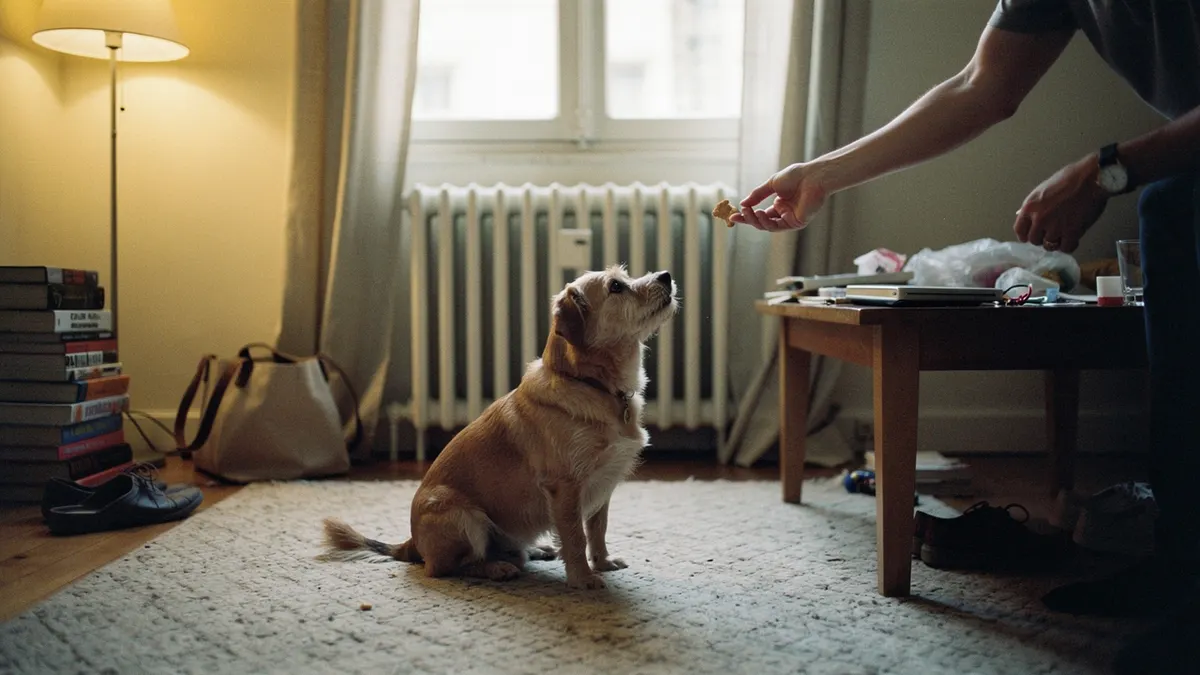
Pet content has a privilege nothing else enjoys: it stops the scroll effortlessly. The trap is stopping there and delivering a charming video that sells nothing.
In France a second trap exists, and it concerns the brand's image rather than its sales.
The public context changes what can be said
The conversation about responsible adoption and abandonment is well established, repeated every year, and the summer carries a particular symbolic weight. A brand publishing a light video about travelling with a pet in July finds itself, without meaning to, next to campaigns talking about abandonment at the same moment.
That does not mean the subject must be avoided. It means it has to be treated rather than ignored: show the preparation of the journey, what gets packed, what happens on arrival. A brand that speaks about travel as an act of organisation, not as a holiday image, places itself on the right side and gains credibility.
The second element of context is the vet. They are the recognised prescriber, and their opinion weighs more than any demonstration. A brand cannot have a creator speak for them, and it should not try: what it can do is claim nothing that contradicts them.
What actually converts
The animal's reaction. The first sniff, recognising the packaging, the insistence. It is the hardest proof to fake, and the audience knows it.
The owner's problem. Hair, smell, refusing food, cleanliness. The person pays, so it is their problem that has to be named.
Dated before and after. Coat, energy, teeth, over a stated period. Without the duration, the comparison proves nothing.
The usage demonstration. Applying a pipette, measuring a portion, cleaning. Practical beats pretty, and it removes half the questions to customer service.
The testimony of someone who tried other things. It resembles what the buyer is living, whereas immediate enthusiasm resembles nothing.
Which creator to hire
The right animal before the right profile. A food brand for large dogs needs a large dog, a range for senior cats a genuinely old cat. That is the dominant criterion, ahead of edit quality.
Then look for owners who resemble your customers in housing and way of life. A city flat, a house with a garden, a family with children do not tell the same story and do not address the same buyers.
The brief that produces usable material
Give the exact instructions for use, the owner's problem the product solves, the time before a visible effect, three possible openings, and the list of forbidden claims.
Add a constraint other categories do not have: plan for several takes, because the animal does not cooperate. A pet creator often shoots twenty minutes for eight usable seconds, and that has to appear in both the deadline and the price.
What a pet brand looks for in a video
Six proofs that sell.
An animal accepting the product without being forced.
A portion that matches the animal's size.
A closure that opens with one hand.
Cleaning that takes seconds.
Packaging that fits in a cupboard.
And a scene from daily life, not from a studio.
What the video has to prove
| Doubt | The shot that answers | Length |
|---|---|---|
| Does the animal want it? | The first approach, no pushing | 10 s |
| Is the dose clear? | The scoop poured into the bowl | 6 s |
| Is cleaning simple? | A rinse under the tap | 10 s |
What is prepared beforehand
A clean floor, a familiar mat, treats out of frame, a second person, a clear way out.
What is said with caution
No health promise, no veterinary advice, and a pointer to a professional as soon as the question goes beyond the product.
The calendar
The September return puts routines back in place and sells everything that occupies an animal left alone. Autumn and winter carry coats, beds and supplements. The end of year holidays concentrate toys and gifts. And the summer, as said above, calls for careful treatment rather than avoidance.