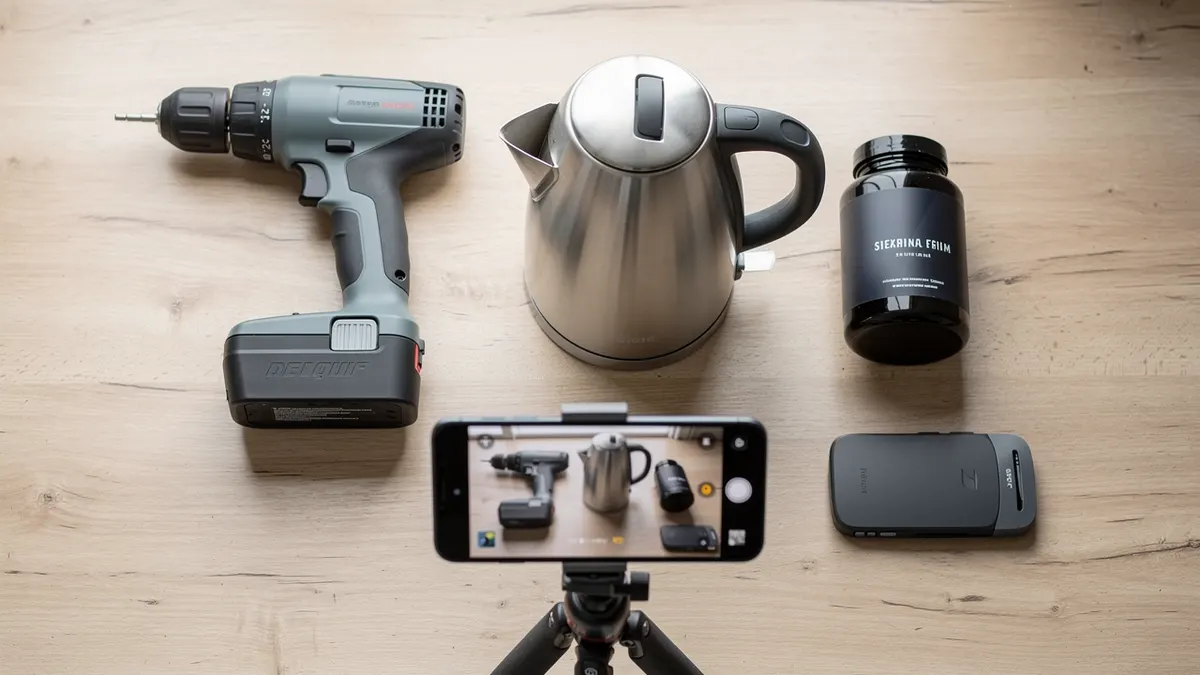
Where the German audience looks, what brands buy per platform, and the effect on your deliverables.
Who collects the money, and what that implies
Three circuits, and they are not alike.
The brand directly: the simplest, it pays on invoice, with its internal terms.
The intermediary platform: it collects, takes a commission, then pays you. The delay depends on its rule, not on the brand.
And the agency, which adds a layer of approval and sometimes a delay tied to its own client settling.
One rule that protects you: know before starting who pays, on what due date, and what triggers payment, delivery or approval. The tax treatment of sums received through a foreign platform is checked with an accountant.
What makes you visible once registered
Four elements, in order of weight.
The response rate, measured and displayed, which weighs more than the gallery.
The reviews, which only exist after the first jobs, hence the value of accepting a short one at the start.
Profile completeness: an empty field counts as a missing answer.
And freshness: one example added this quarter is worth more than ten from last year.
How many platforms
Two, not six.
Beyond that, profiles fall out of sync, prices diverge, and a displayed availability becomes false somewhere.
Three criteria for choosing. The presence of the brands you actually target. The payment method and its delay. And the language of the briefs: a platform where everything arrives in the country's language puts you in competition with fewer people than an international one.
What the platform will not do for you
Three things, and they are the only ones that really count.
It will not set your price: it displays benchmarks, often pulled downwards.
It will not negotiate your rights: default requests are broad, and exclusivity is often implicit there.
And it will not protect you from an impossible brief: it is up to you to refuse beforehand, not to deliver and argue afterwards.
One local point not to neglect: as soon as the activity becomes commercial, the mandatory statements of a professional profile and the advertising rules apply, and their exact forms are checked with a lawyer.
The first month
Four moves, in this order.
Publish three examples bought by yourself, in a single category.
Write the title with the function, the city and the speciality, in the country's language.
Answer every request within half a day, including to say no.
And accept a short job to obtain the first review, delivering it a day before the promised date.
One frequent mistake: registering everywhere in the same week, then maintaining nothing. Two profiles kept up to date earn more than six abandoned ones, and abandonment shows immediately, because the last activity date is public.
What decides the display order
| Element | Effect on visibility | Under your control |
|---|---|---|
| A complete profile with legal details | Strong | Yes |
| Reply time | Strong | Yes |
| Orders delivered on time | Strong | Yes |
| Account age | Weak | No |
What you do in the first week
Fill in every field, publish three samples, set a firm range, attach a standard contract and reply within two hours to the first requests.
What makes a profile disappear
A long absence with no pause set, requests left unanswered, and a range untouched for a year.
What changes after six months
Two things, and they reinforce each other.
Requests arrive with a budget already written, because your displayed price has done the sorting.
And a share of the jobs comes back from the same clients, outside the platform, once the relationship is established. Check what the platform says on that point: some forbid it for a period, others do not, and the applicable rule is in the terms you accepted.