Here the buyer often decides without having come. The video does not replace the visit: it replaces the trust they do not yet have.
Why a filmed tour sells to somebody who has never visited the country
Because it replaces what the buyer cannot check.
At a distance they can neither open a door, nor listen to the street, nor measure the journey into town. They compensate by looking for signs: what they are shown, and above all what they are not shown.
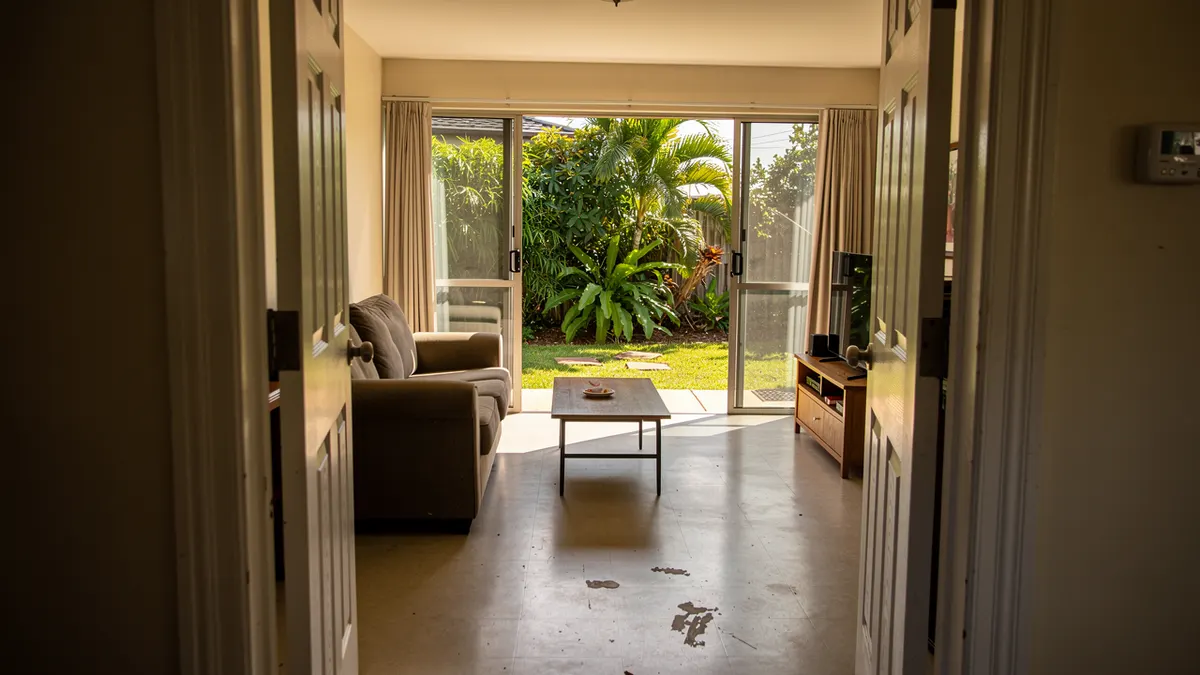
A continuous tour, with no cut inside the rooms, says more than a series of perfect shots. Fast cutting, here, reads as concealment.
What that buyer actually checks
Six points, and rarely the ones the seller puts forward.
Access, then, and whether it is passable in the rainy season. The real distance to the clinic, the school, the supermarket, stopwatch running. Water: where it comes from, its pressure, what happens in the dry season. Electricity and the cuts. The connection, tested on camera rather than announced. And the immediate neighbourhood, including what is being built next door.
Film those six points even when they are unflattering. A buyer who finds out afterwards withdraws; a buyer who knew negotiates, then buys.
The video in English, the decision that sells most
It doubles the property's audience.
A significant share of demand comes from abroad, and a tour in English is readable by every intermediary. It is not a dub: it is a second version, shot straight afterwards, by the same person or another.
Keep a local version nonetheless: buyers in the country and agents prefer it, and it serves word of mouth.
The brief that produces good material
Short, and ordered like a real visit.
Access drive, entrance, full tour with no cut room by room, outside, view, then the six checks above. Film in broad daylight, then a second time at the end of the day for the light and the evening noise.
What is never filmed: people present without their agreement, documents, locks and security systems.
What is checked beforehand, never in the video
Everything touching law and taxation.
The rules applicable to acquisition by a foreign person, to coastal zones, to ownership regimes, to easements, to permits and to taxation depend on the property and on the buyer's situation. They are checked with the competent authority, with a lawyer and a notary, before any promise.
The creator does not comment on them and puts forward no yield figure: their video shows a place, not an investment.
What a listing video must answer
Six questions asked before every viewing.
How much daylight the rooms really get.
What can be seen from the windows.
How loud the street is.
Which floor it is on and whether there is a lift.
How far the nearest stop is.
And what lies just outside the photographs.
What each shot closes
| Shot | Question closed | Length |
|---|---|---|
| Street and façade | The area and the access | 10 s |
| Main room | The real floor area | 20 s |
| View from each window | The orientation | 5 s |
What is said out loud
The floor, the charges, the year built, the distance to the first shop and the noise at the hour of the shoot.
What makes a viewing fall through
A wide angle that inflates volumes, added light, a shot that skips a room without saying so.
The Costa Rican calendar
It comes down to two opposite seasons.
The dry season gives the images that attract, the rainy season gives the images that reassure. Shoot both, on the same property, six months apart.
A file containing both stands out immediately: it shows the seller did not wait for good weather to be honest.