A restaurant buying video almost always makes the same mistake: it orders beautiful plates. But nobody chooses a restaurant on a plate. They choose it on an atmosphere, an hour, and the idea of what they will experience there.
In Argentina two habits make that mistake even more expensive.
The hour and the duration change the shoot plan
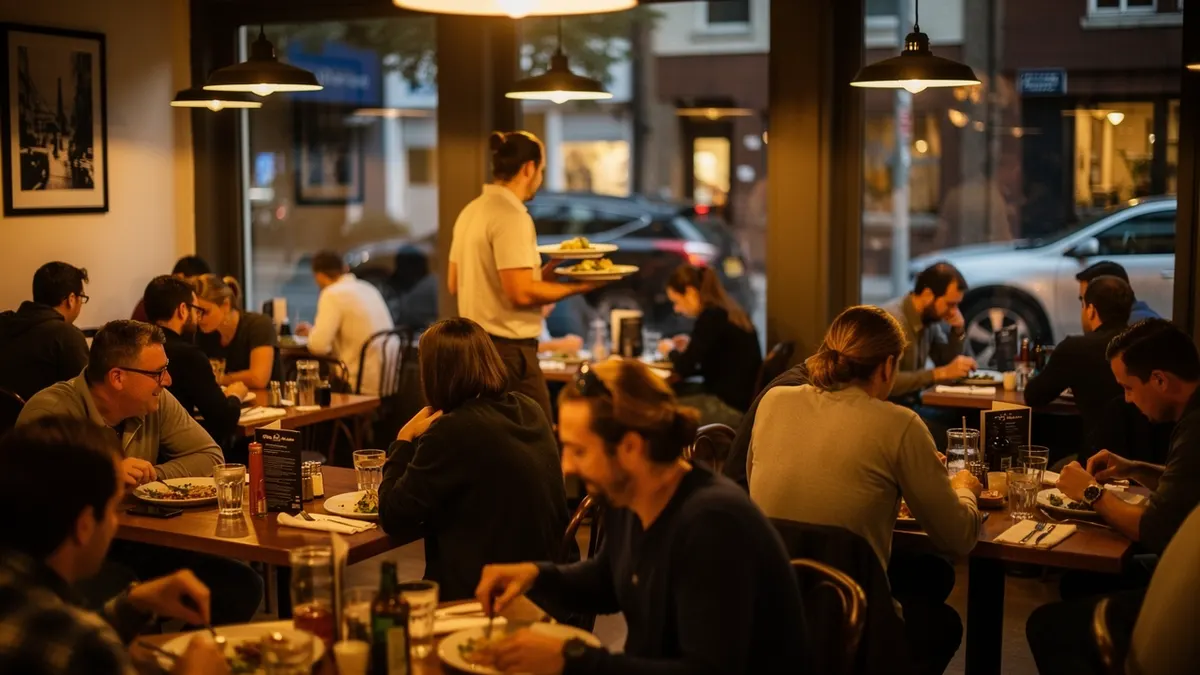
People eat late. A dining room at eight in the evening is empty, and an empty room is the worst sales argument there is. So the evening scene is shot later, and necessarily in artificial light: the restaurant's own, with its warm bulbs and its shadows.
That is a real technical constraint and it belongs in the brief. A creator used to filming in daylight will otherwise deliver yellow, noisy images, and the restaurant will wrongly conclude that video does not work for them.
The second habit is the sobremesa. There, the meal does not end at the last bite: people stay at the table, talk, order something else. It is often the best image the place can give of itself, and it is precisely the one nobody films because it comes after the moment everyone thought they had to capture.
What actually converts
The room with people in it. The noise, the occupied tables, the movement of service. An empty restaurant filmed in perfect light makes nobody want to go.
The gesture of service. The dish arriving, the carving at the table, what gets poured. Movement sells better than composition.
Sound. The sizzle, the hum, the coffee machine. In hospitality, audio does half the work and it is almost always neglected.
The outside and the street. How the door is recognised, what is around it, what the front looks like in the evening. The customer has to picture the journey, not only the meal.
The staff. Someone who works there describing a dish beats a creator discovering it. In a neighbourhood restaurant, it is also what brings people back.
Which creator to hire
Someone who can film in low light without turning the room into an American night scene. That is criterion number one and it can be verified in ten seconds from a previous example.
Look too for someone who resembles your actual clientele. A neighbourhood restaurant is not sold with the same faces as a place in the centre, and the setting of the video says who the venue is for before the first sentence.
The brief that produces usable material
Give the exact time of the shoot, the dishes to show and the order in which they leave the kitchen, what must not appear on screen, three possible openings.
State what may not be claimed: mentions of allergens, product origin and preparation are regulated, and an approximate sentence in a video commits the establishment. The reference when in doubt is the competent authority.
And ask for a short version with no face, centred on the dishes and the room. It goes on to the venue listing, to review replies and to local advertising, for the price of the same shoot.
Which shot for which goal
| What the venue wants | The shot that works | Length |
|---|---|---|
| Filling a weekday lunch | The plate served, the price stated | 12 s |
| Making a new menu known | Three dishes in a row, same frame | 25 s |
| Recruiting floor staff | The team before service | 20 s |
What can be filmed before opening
The empty room, the plating, the cellar, the front: none of it needs customers present.
What is approved before release
The exact names of the dishes, the origin claimed, the price shown and the consent of the people filmed.
The calendar
The weekend asado carries all year. The end of year holidays arrive in full heat, so on the terrace and not inside. March brings back office lunches and the reunions of the new term. And the short winter sells what warms and what gets shared.