In Argentina a large share of online sales closes on a marketplace. The payment works, the delivery works, and yet the brand comes out of the transaction with nothing: neither the buyer's address nor the right to write to them.
That is what makes the email question particular here. Before asking what to send, you have to ask how to obtain the address.
A marketplace customer is not yet yours
You know the order, not the person. The platform keeps the relationship, and that is normal: it is its business.
As long as you stay there, your revenue depends on a ranking you do not control and on competition fought on price. The only way out is to bring the buyer to you, once, willingly.
Video as a reason to come to you
A card in the parcel saying "sign up" does not work: it asks without giving.
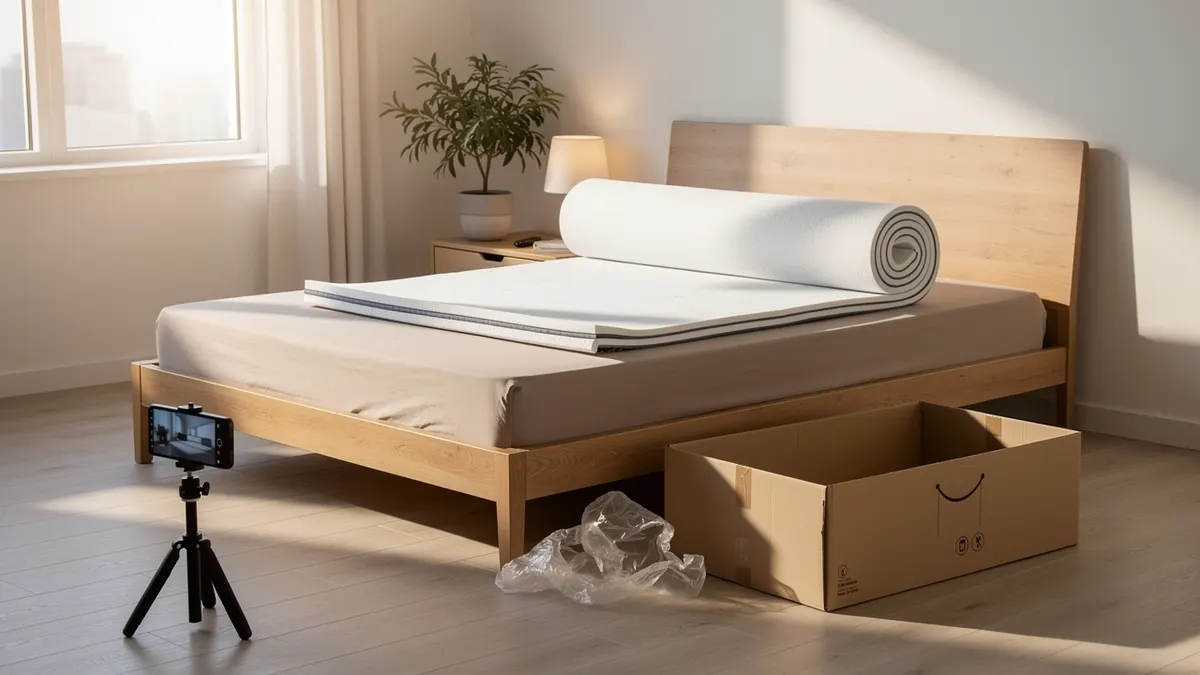
A card leading to a short useful video, shot by a real customer, works better, because it gives something before asking. Three uses of the product the manual does not show, the mistake everyone makes in the first week, the care routine that doubles its life.
The person watches, finds it useful, and leaves their address to get the rest. You have just bought a relationship the marketplace was not selling you.
Video does not play in the inbox
The technical point that decides the rest: almost no mail software plays a video inside the message.
What you send is therefore a thumbnail with a play button, leading to a page. A good thumbnail shows a face, a gesture and the product, with text readable on a phone. A failed thumbnail is a dark image where nothing can be made out.
Where it genuinely helps
After the purchase. The message accompanying delivery is the most opened of the whole sequence. A getting-started video has more effect there than a promotion, and it reduces questions to customer service.
On the second purchase. A video from a customer using the product for six months answers the only remaining question: does it last.
On reactivation. Someone who has not bought for a year does not come back for a discount. They come back if something has changed, and a video shows that faster than a paragraph.
What to write when prices move
An email is read later, sometimes much later. Putting an amount in the message risks it being wrong when opened.
The fix is simple: the page carries the price, the email carries the reason to go there. If an offer has an end, the date appears in full in the message. Nobody feels misled, and you do not rewrite your sequence every month.
How to measure
The click on the thumbnail, not the open. Then what follows: how many went to the product page, how many bought.
A post-purchase sequence is judged on the second order, not on the open rate of its first message. And unsubscribes are watched: they rise when you write too often without giving anything.
Where a video fits in a sequence
| Message | What the video replaces | Length |
|---|---|---|
| Order confirmation | Three paragraphs of explanation | 15 s |
| After delivery | The manual nobody reads | 25 s |
| Thirty-day follow-up | A promotional reminder | 10 s |
What gets it opened
A thumbnail showing the product, not a logo, and a subject line stating what the video answers.
What drives people away
A heavy attachment, autoplay with sound, a video repeating what the text already said.
A clean list beats a big one
Writing to people who asked for nothing damages deliverability, which means your messages stop arriving, including to those who were waiting for them.
Consent, the record of that consent and an unsubscribe that works first time are therefore technical questions as much as questions of form. For what the regulation requires exactly in your case, the competent authority remains the reference.