What to film with no client, why German subtitles decide the impression, and how to shoot all three in one afternoon.
The subtitle decides the impression before the content
That is the point on this market, and it eliminates half the files.
A mistake in a subtitle, a compound word broken in the wrong place, an umlaut replaced by an approximate sign: it shows in two seconds and it tells the reader the work was not proofread.
Three checks, in this order.
Proofread every line by hand: speech recognition fails on product names and compound words.
Check that the font displays the language's own characters correctly.
And have the final version read by somebody whose language it is, even for thirty seconds of text.
The three formats to have
Three pieces, and they answer three different questions.
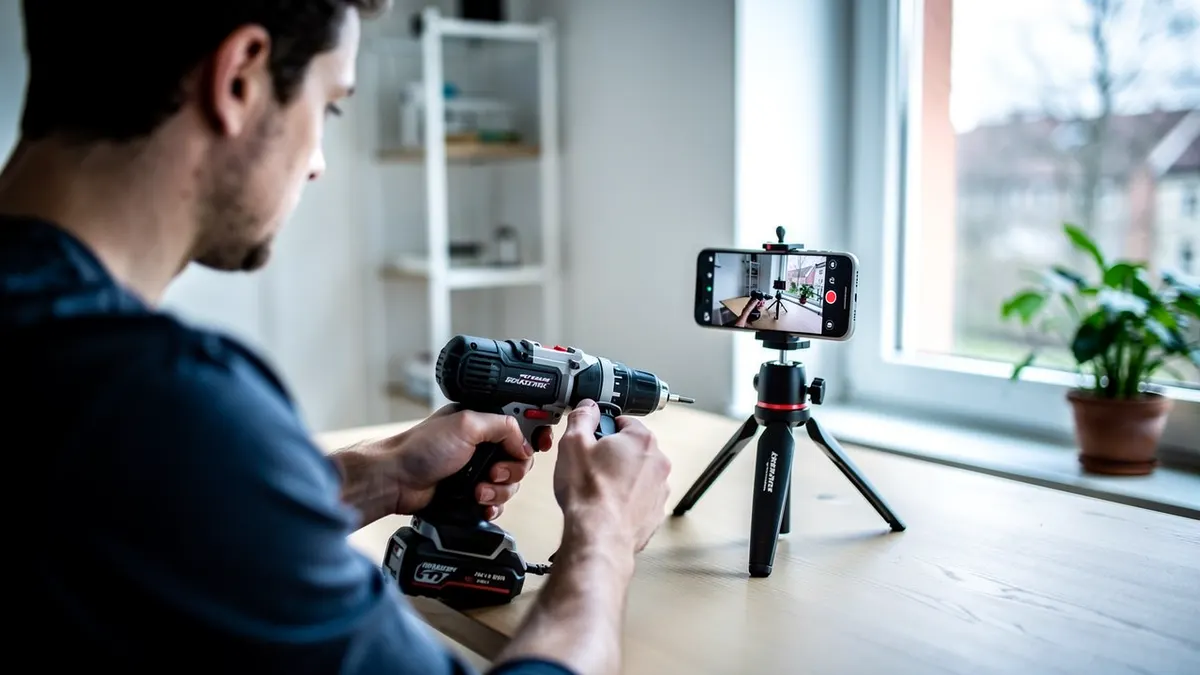
The demonstration: one product, one action, one proof, with no cut during the handling.
The piece to camera: two minutes maximum, a clear position, including one acknowledged flaw.
And the problem solved: the situation first, the product next, the verification at the end.
A fourth piece, optional but effective: the short version of the demonstration, edited to fifteen seconds, showing that you can version things.
How to shoot them in one afternoon
Five steps, in order.
Write the three texts before taking out the camera, and read them aloud.
Prepare the three products, bought by you, with their packaging.
Shoot first whatever depends on daylight.
Run the takes without reviewing each shot: the checking happens in the edit, not between takes.
And keep ten minutes at the end to redo the openings, which are always the weakest shots.
How to name them
Four rules, valid for the whole folder.
A file name with no accents, no spaces, with the format and the date.
One folder per type of piece, not a single folder.
A version with no burnt-in text beside each edited version.
And a three-line note saying what each example demonstrates.
One local point: an example not commissioned presents itself as such, clearly, and does not use a brand's name in a way suggesting a collaboration. This point is checked with a lawyer, and it is more sensitive there than elsewhere.
What a set of samples must cover
| Sample | What it demonstrates | Length |
|---|---|---|
| 1 | Speaking to camera | 20 s |
| 2 | A technical demonstration with no voice | 15 s |
| 3 | An unboxing or a first use | 25 s |
What goes first here
The sharpest and most informative shot, never the most spectacular. In this market a precise demonstration convinces faster than a polished staging.
What is redone every six months
The lead sample. A clip from two years ago gives itself away by an app interface, by the format and by the editing style, and casts doubt on the rest.
What gets a file rejected
Four faults, in order of frequency.
The sound: a recording in an echoing room rejects a file before the end of the first sentence.
The unproofread subtitle, already mentioned, still the first reason for rejection.
The example resembling personal content rather than commissioned work: no visible brief, no defined format, no ending.
And the over-edited video: five cuts in ten seconds prove you can cut, not that you can demonstrate.
One last, counter-intuitive tip: keep the best example for the end of the folder, not the beginning. A buyer rarely watches one piece only, and what they remember is what they saw last.