A huge market built on a single doubt: what condition it arrives in. Video answers that, text never does.
The unboxing is the proof
That is the format that sells in this category, before any other.
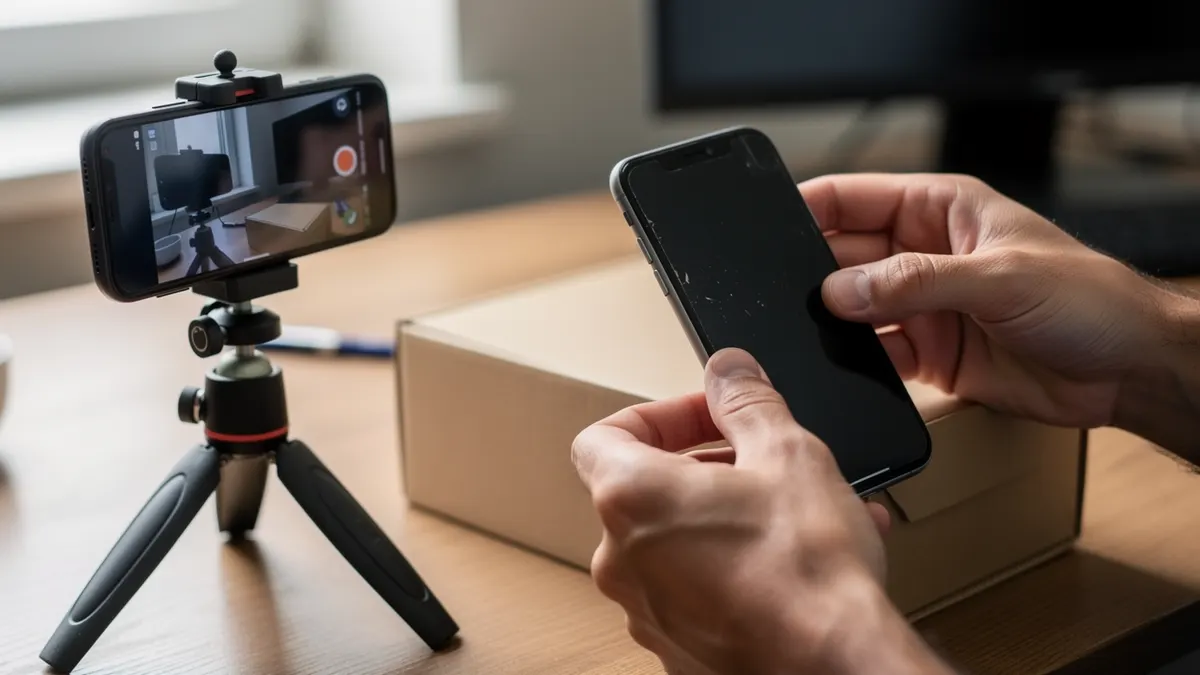
Film the parcel on arrival, as it is, including if the packaging is damaged.
Show what it really contains: the device, the accessories supplied, those that are not, the presence or absence of the original box.
Two rules. Never replace the real packaging with a clean set. And keep the sound: the noise of cardboard and plastic is part of the proof.
Explaining the condition scale
The point everybody skims, and it causes half the disputes.
Wordings like very good condition or fair mean nothing until they are shown.
So film the flaws in close-up, in raking light that reveals rather than hides them: the scratch, the marked corner, the worn edge.
And attach every level of the scale to a real image, not to an adjective. A brand publishing one video per condition level removes the main cause of returns.
Warranty and who answers
Three pieces of information, and they decide the purchase as much as the price.
The length of the warranty and what it covers exactly.
Who answers if there is a problem: the seller, the marketplace, or a workshop.
And the real time for a repair or a replacement, in days.
One precaution: read those elements on screen exactly as they appear on the sales page, without summarising. The mentions applicable to warranties and to selling refurbished goods are checked with the competent authorities before publication.
The buyer compares with new in instalments
That is the local particularity, and it changes the discourse.
A refurbished device is often paid in cash, whereas new is bought in instalments. The comparison is therefore not about the total price but about the monthly effort.
Two useful angles. Show what the difference allows them to buy as well. And recall that paying in instalments is not a discount, without ever quoting a rate or a number of instalments, which depend on the institution and change often.
What the buyer wants to see before paying
| Doubt | The shot that answers it | Length |
|---|---|---|
| The real condition | The flaws filmed close up | 10 s |
| What has been replaced | The new part, in close-up | 8 s |
| That it works | A full start-up, uncut | 15 s |
What is said out loud
What has been repaired, what has not, the warranty period and where the device came from. A declared flaw reassures more than an object presented as perfect.
What is systematically masked
A serial number, an identifier, an account still logged in, data from the previous owner. One frame is enough to publish personal information.
Which creator works
Three profiles, and the first is the most effective.
The person who genuinely buys second-hand and owns it: they have the vocabulary, the reflexes, and they know what to check.
The repairer, who opens it, shows it, explains what wears and what can be replaced.
And the recent buyer, filmed a fortnight after receipt, answering the only question left: does it hold up over time.
That last format is the rarest in the category and the most requested. Plan it in the first contract, with a second job scheduled two weeks later, rather than calling the person back and hoping they accept.