Beauty is the category that buys the most UGC, and the one where content dates fastest. The reason is simple: the audience has become expert. It spots a filter, arranged lighting, and a before-and-after shot on the same day.
In Argentina one more variable decides whether a test is credible: where it was done.
Say where you live, or the test is worthless
The country stretches over thousands of kilometres and crosses several climates. The humidity of Buenos Aires, the dry air of the northwest, the southern wind and the altitude of the mountains do not do the same thing to skin or hair.
A moisturiser judged too rich in a humid city will be judged right elsewhere. A sunscreen that holds at the beach does not necessarily hold at altitude. A styling product tested in a windy region has little to do with the same product tested indoors.
The consequence for the brief is direct: ask the creator to name their city and the season at the time of the shoot. It looks trivial and it turns an opinion into a reproducible test. A viewer living in the same climate recognises themselves; one living elsewhere knows how to adjust.
What actually converts
Texture at the moment of application. How the product leaves the bottle, spreads, absorbs or sits on the surface. That is what a photo never shows and what the buyer wants to know.
The dated before and after. Not a transformation, a measurable gap over a stated period, filmed in the same light and the same place. A change of light between the two shots is the audience's first signal of suspicion.
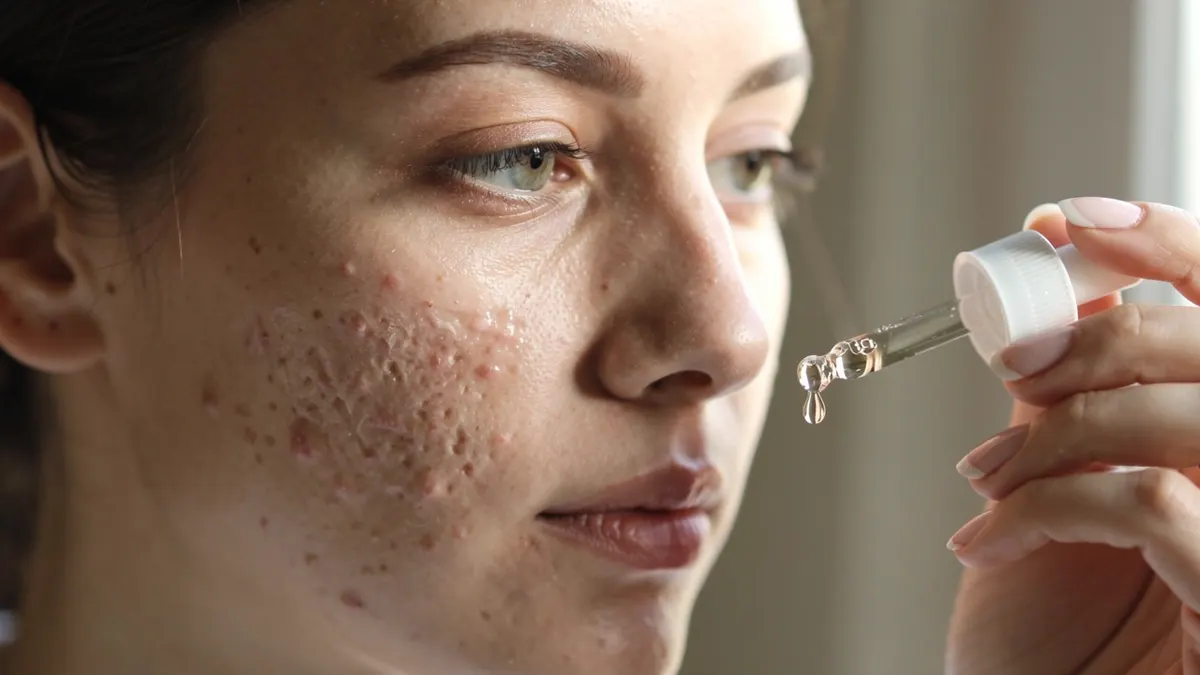
Real skin. Pores, redness, marks, everyday hair. Retouched skin cancels the demonstration, since there is nothing left to improve.
The result at the end of the day. A foundation is judged at six in the evening, not on application. That is the shot missing from almost every video in the category.
The complete routine. What comes before and after the product. A brand showing its item alone leaves the viewer without instructions.
Which creator to hire
Varied skins and hair, across the full range of types and tones. That is the first criterion in this category, ahead of edit quality: a buyer who never sees skin close to their own assumes the product is not for them.
Look too for someone who can film close-up without smoothing. A camera that is too soft destroys exactly the information the viewer is after, and one that is too harsh makes the product look ineffective.
The brief, and the list of what cannot be said
Give the composition, the application method, the time before a visible result, the expected city and season, three possible openings.
Attach the list of forbidden claims. This is the category where it matters most: cosmetic and health claims are regulated, and an approximate sentence in a video commits the brand. The reference when in doubt is the competent authority, never a competitor's communication.
Explicitly forbid filters and skin retouching. This is not an aesthetic question, it is what makes the demonstration admissible.
What the camera has to make visible
| Step | What you film | Common trap |
|---|---|---|
| Before applying | The skin with no filter | The phone's beauty mode |
| Applying | The real amount, in daylight | A hand covering the label |
| After | The same frame, the same light | A lighting change between the two |
What gets prepared before the take
Cleaning the bottle, label facing the camera, plain background, white balance locked for the whole series.
What gets approved
Every spoken line, the advertising disclosure and any claim, to be confirmed with a lawyer.
The calendar
Summer from December to February carries sun protection, body care and everything that resists perspiration. The short winter carries hydration and repair. Mother's Day in October and the end of year holidays concentrate gift purchases, which are prepared four to six weeks ahead.