It is the cheapest way for a small business to look credible online. Here is how to go about it, and what spoils it.
Why it works at this scale
Three reasons, and they play against the big brands.
A small business has a face: the person answering the phone is the one on screen, and that comes across immediately.
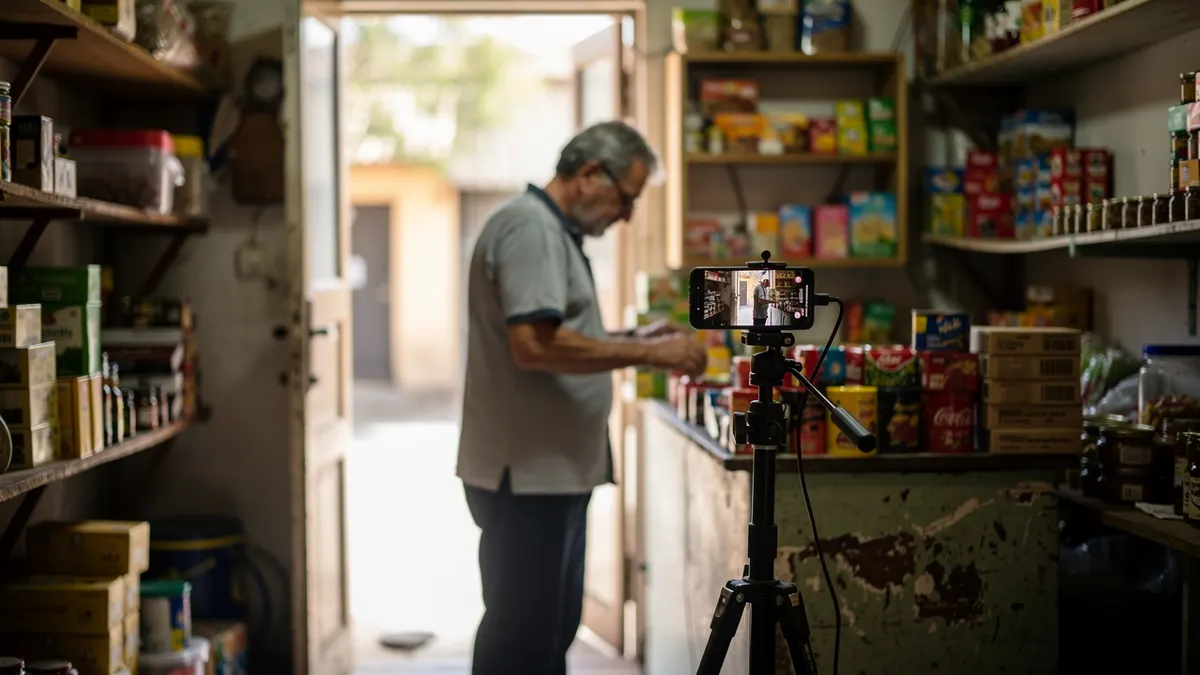
It can show what a big brand never shows: the workshop, the kitchen, the stock, the order being prepared.
And it can answer a question asked in a comment within a day, which no marketing department does.
Start with three videos, not thirty
That is the rule that stops you giving up after a week.
Three videos are enough to start: what you sell, how it goes when somebody orders, and who you are.
Shoot them the same day, with the same phone, in the same place. Publish them three days apart.
Then look at which one was watched to the end, and remake that one from another angle. That is how a series gets built, not by planning a whole month ahead.
The most frequent mistake is being too polished
That is what sinks the results of most small businesses that invest.
An image that is too clean, stock library music, a text read off a prompter: the result looks like an advert, so it gets watched like an advert, which is to say not at all.
Three immediate corrections. Keep the original sound. Talk as you would at the counter, not as in a brochure. And leave the setting as it is, with whatever is lying around.
The third mistake is stopping after one video
Two videos prove nothing, ten establish a habit.
The rhythm counts more than the quality of each piece: one simple video a week beats four polished ones followed by six months of silence.
A method that fits in a week: on Monday, note the question your customers ask most; on Tuesday, film the answer in forty seconds; publish on Thursday.
What costs least and returns most
Four formats, by effort against result.
The answer to a frequent question, shot in one take.
The preparation of an order, from start to finish, with no cut.
The product in real use, filmed by a customer whose written permission you ask to use their video.
And the introduction of the person who makes or serves, once a quarter.
What a small business can produce itself
| Content | What it takes | Useful frequency |
|---|---|---|
| A presentation of the place | Thirty minutes | Once a year |
| A product demonstration | One hour | Per new item |
| An answer to a customer question | Ten minutes | Every week |
What to delegate rather than improvise
A shoot with several faces, the advertising version tested with several hooks, and any content meant to last a year. The rest is filmed in-house with no loss of quality.
What costs a small business the most
Time spent starting over. A fixed set, a frame marked on the floor and a reusable editing template save more than more expensive gear.
The only indicator to follow
One single figure, and it will stop you getting lost.
Count the number of people who write to you or come in mentioning a video, every week.
That figure appears in no dashboard: it comes from asking those who arrive, and noting it in a notebook. It is the only one telling you whether your video work turns into customers, and it is also the one telling you which video to make again.