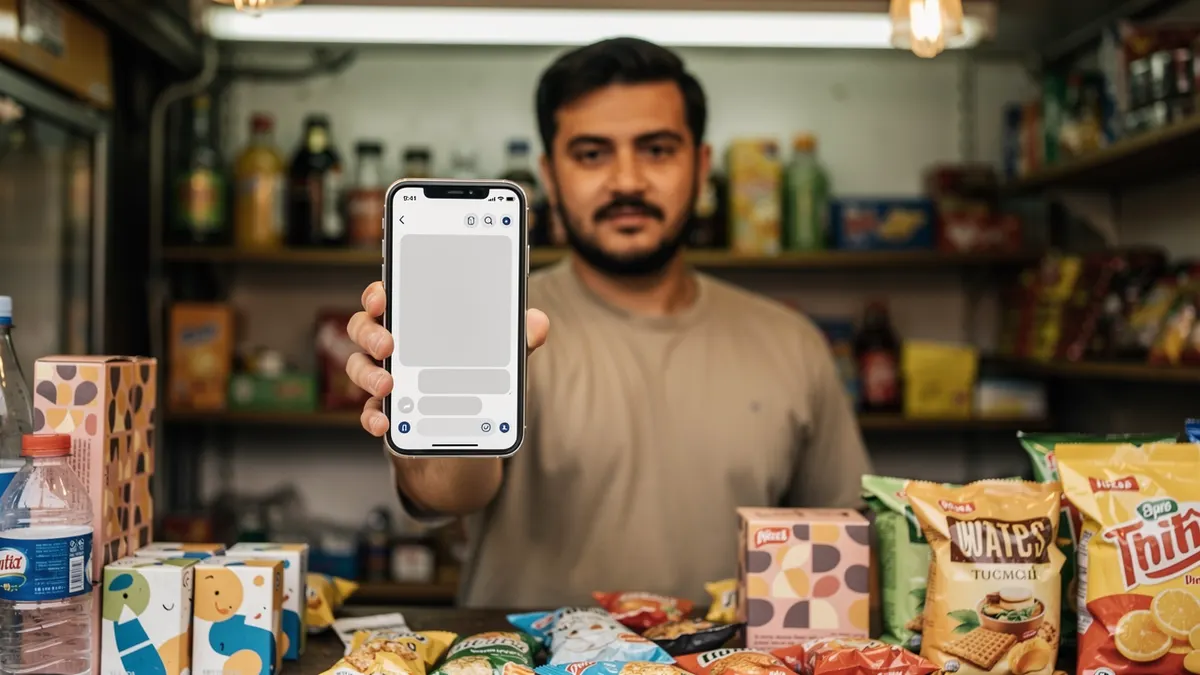
A huge share of sales here is concluded in a conversation. The video is not discovered there: it is sent, to a specific person, at a specific moment.
The video is sent, not discovered
That changes the whole edit.
There is no hook to make: the person has already asked a question, they are waiting for an answer. A video starting with a seduction line wastes its time and theirs.
So you begin with the information: the product, the answer, the demonstration. Three seconds of context, no more.
Second difference: the context is private. The video is watched with sound, often in full, sometimes several times. It can therefore be longer and more detailed than feed content.
Build a library, not a video
That is the change of method most brands do not make.
A shoot must produce a series of short answers, sorted and named, and not one single video: one per frequent question, one per product variant, one per objection.
Three rules to make the library useful. Explicit file names, readable by somebody in a hurry. A single folder, accessible from a phone. And one page saying which video to send in which situation.
A video that cannot be found when a customer asks does not exist.
File size matters
That is a technical constraint deciding the use.
A file that is too heavy does not get sent, or it is compressed until it becomes unreadable. Every reply must therefore exist in a light version, under the messaging limit, with text large enough to stay legible after compression.
Two shooting consequences. Avoid fine details that disappear in compression. And favour close-ups, which survive better than a wide shot.
The voice is enough, the face is optional
That is what makes this format accessible to any business.
An answer sent in a conversation does not need a face: the hands, the product and a clear voice are enough, and that removes the main obstacle for businesses where nobody wants to be on camera.
Add that it makes the videos reusable for longer: with no face, the content does not depend on a person who might leave the company.
What that changes for the brand
Four organisational points, more important than production.
Somebody must reply during the hours the advertising runs. A campaign generating messages with no answer costs money twice.
The standard replies must be written down, including to say that you do not know yet.
The catalogue must be up to date, with checked prices, because a wrong price sent in a conversation is a promise.
And the applicable disclosures still apply: identifying the commercial nature and the obligations tied to sent messages depend on your situation and are checked with a lawyer, before launching an automated setup.
What is prepared to answer within three minutes
| Question received | The video ready | Length |
|---|---|---|
| How does it work | A silent, subtitled demonstration | 20 s |
| What size, what colour | A shot of the full range | 15 s |
| Is it sturdy | A test filmed in one take | 25 s |
What the channel's compression imposes
Large type, little text, strong contrast and secondary sound. A file that is too heavy will not send, and a vertical video is watched without turning the phone.
What you ask before sending
The person's consent to receive these messages and a simple way to say stop. A list built without consent costs you the account.
What can be measured
Three figures, all available with no tool.
The response time, described in the box.
The share of conversations ending in a sale.
And the number of times each video in the library is sent. That last figure says which question comes back most, and it writes the brief for the next shoot.