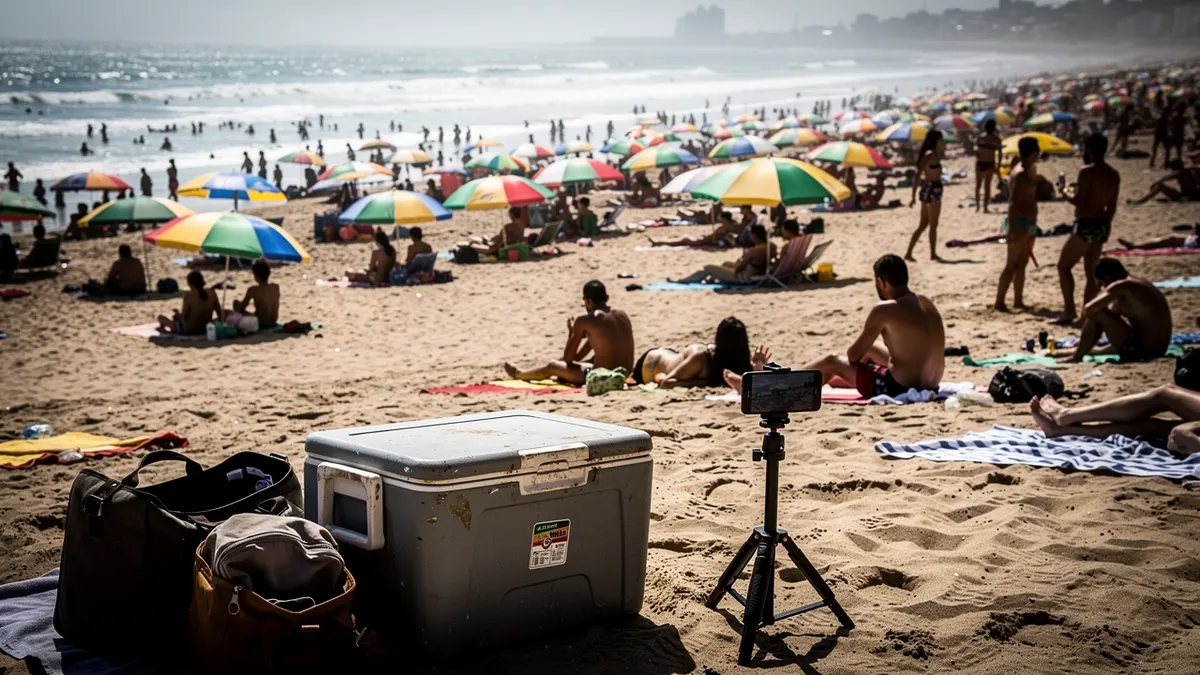
January empties the cities and fills the coast. Here is where the audience actually is, and what it buys that month.
Where the audience is
It does not disappear, it changes place and timetable.
The big cities empty, the coast and mountain areas fill up, and viewing hours shift: less in the morning, far more in the late afternoon and late at night.
Two consequences for distribution. Shift your posts by two or three hours compared with the rest of the year. And accept that local reach in a big city drops, without concluding that the campaign is not working.
Consumption changes category
It is not the budget that moves, it is what gets bought.
Rising: everything that travels, is shared, is consumed outdoors, is quickly repaired, or replaces something left at home.
Falling: furniture, heavy equipment, anything requiring installation, and anything assuming you are at home to take delivery.
A brand keeping its usual catalogue in January works against the month.
Creators on the spot
That is the decision that changes the result most.
A creator already on the coast shoots in the real setting, with the light and the people of the season, for the price of one trip less.
Two selection criteria. Somebody spending several weeks there, not three days: they can reshoot a missing shot. And somebody willing to film early in the morning, the only time the places are neither crowded nor crushed by light.
The content is worth twice
That is the argument justifying the January budget.
Images shot now will serve again the following summer, provided nothing dates them: no event poster, no price, no mention of a year.
Two production rules. Buy long rights, at least eighteen months. And systematically ask for a version with no burnt-in text, reusable in another language and another campaign.
Coming back in March with material
That is what almost nobody plans.
The March restart is a second commercial peak, and it is prepared with what was shot in January: real use, an already worn product, an opinion after a month.
A simple plan: shoot in January, publish half straight away, keep the other half for the end of February, when everybody else has stopped producing.
What the season opens, month by month
| Period | What brands push | The shot that serves it |
|---|---|---|
| Before the holidays | Preparation, luggage, protection | A filmed comparison |
| Peak season | Outdoor use, beach, terrace | A take in one go |
| End of season | Upkeep, storage, sales | A before and after |
What the light imposes at this time
Film before ten in the morning or after five in the afternoon. In full sun the shadows are hard, eyes squint, and no retouching rescues the shot.
What is prepared during winter
The scripts, the shot lists and the agreements with locations. When the season arrives, all that is left is to film, and the slots are already taken.
The mistake to avoid
Two traps, and they cost dearly.
The first: treating January as a quiet month and suspending production. The audience is available and attentive, and it is even the moment when it watches most.
The second: filming an implausible summer scene, a table laid on a deserted beach at midday. The season's audience recognises a fake setting instantly, precisely because it is inside it while watching.