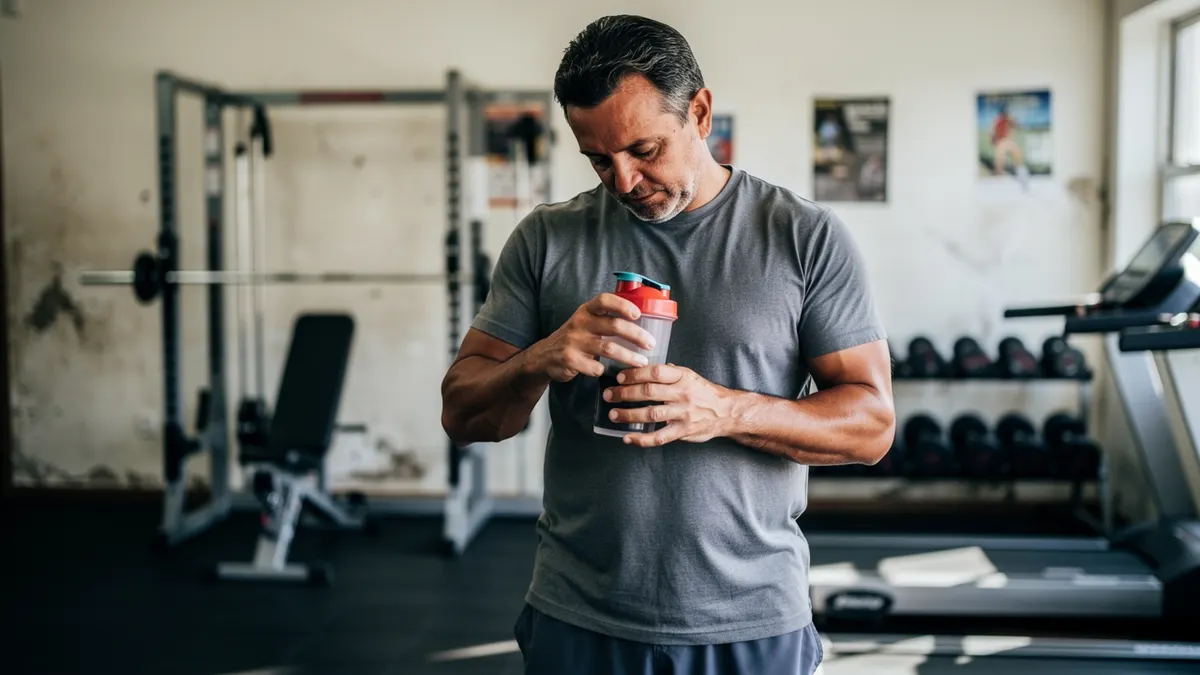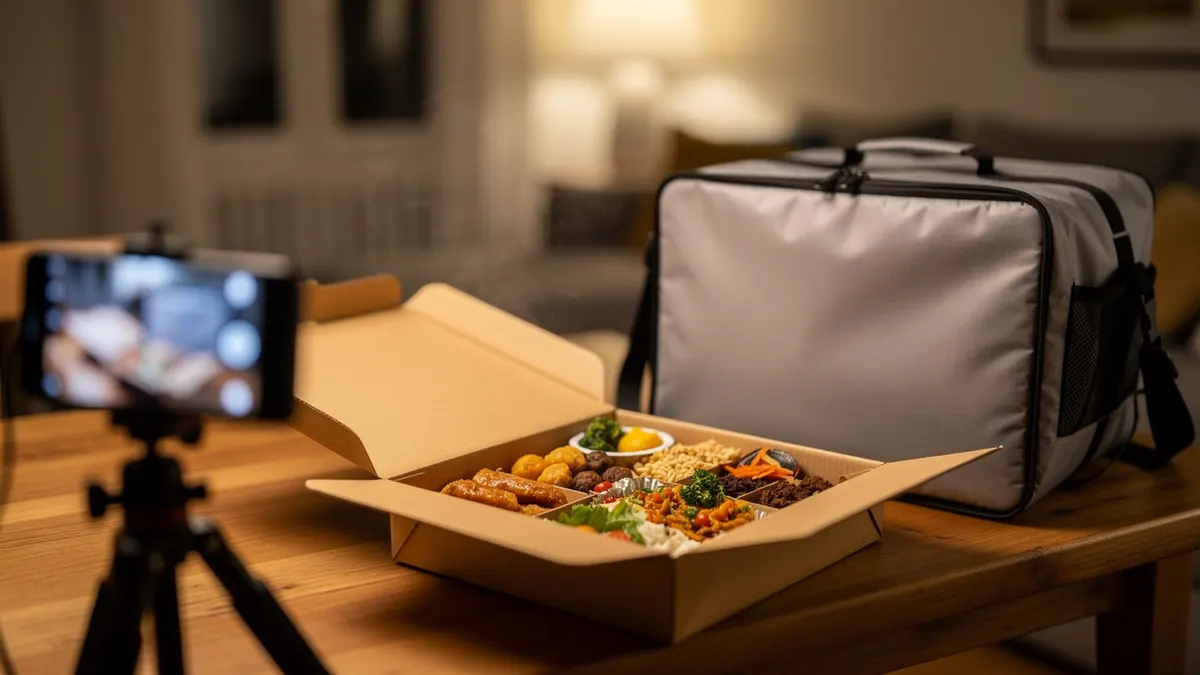
A regulated category where one sentence turns the video into a risk. Here are the claims to ban from every brief.
What cannot be claimed
Four families of sentences, to be banned from every brief.
What treats, prevents or cures: no claim of that kind, not even softened, not even phrased as a personal experience.
What replaces a treatment or a professional opinion.
What promises a quantified result, in weight, in centimetres or in time.
And what compares the product to a medicine or to a named brand.
One clarification that counts: staging is a claim. A white coat, a consulting room, a results chart or a person presented as a health professional say something the text did not say, and it is assessed in the same way.
What can be told
Four angles, entirely usable and rarely exploited.
Taste, texture, smell, how easy it is to swallow or to mix.
Format and practicality: the size of the container, the scoop, what fits in a bag, what travels to work.
The routine: at what moment, with what, how long it takes, how you remember it.
And the price per serving, calculated on screen, compared with the previous format of the same product.
A fifth angle, often the strongest: the question nobody dares ask at the counter, taken as it stands and answered by the video with what appears on the packaging.
Before and after is delicate ground
Three rules, and they are not always enough.
A comparison of images suggests an effect, even with no word spoken.
Light, posture, hour and framing change a result more surely than any product.
And an unstated duration turns the demonstration into an implicit promise.
The practical conclusion is simple: in this category, before and after is treated as a claim, and it is checked with a lawyer before the shoot. When a doubt remains, it is not shot.
Who should speak
Three profiles, and one prohibition.
The person using the product, talking about their routine, without concluding on an effect.
The brand's manager, explaining the composition as it is declared.
And the preparer or the shop assistant, for the practical part, in their work setting.
The prohibition: a person presented as a health professional recommending the product. That configuration follows its own rules, which add to yours, and is checked with a lawyer before any commitment.
The brief as a working document
Five elements, without which there is no shoot.
The list of permitted sentences, worded exactly.
The list of forbidden sentences, including neighbouring turns of phrase.
The mandatory statements, with their place and display time.
The person who approves, and the approval deadline.
And the takedown procedure, if a rule or a wording changes.
What is possible and what is not
| Element | What remains possible | What is ruled out |
|---|---|---|
| The product | Showing the packaging and the label | A health claim |
| The use | The gesture, the intake during the day | A promised effect |
| The testimonial | A personal experience described | A result presented as general |
What is read on screen rather than spoken
The label, the composition and the stated dosage. Rephrasing an official text is almost always what turns a permitted sentence into a forbidden one.
What must appear in every video
The advertising disclosure and the required warnings, including the reminder that a supplement does not replace a varied diet, to be confirmed with a lawyer.
The final proofread
Four checks, in this order.
The final script matches the approved version word for word.
The on-screen text contains no claim absent from the script.
The mandatory statements are readable on a phone, for long enough.
And the advertising disclosure appears from the start, in the expected form, checked with the competent authorities.
One last, often forgotten point: replies to comments bind as much as the video. Prepare three standard answers, and one sentence directing every question outside the frame to a health professional.
Sources
Checked on 4 September 2026. Thresholds and rates change: where this guide and the official source disagree, the official source is right.