Meal delivery buys the same content as restaurants, and that is a mistake. A dish filmed in the kitchen under good light says nothing about what the customer will receive.
Because in this category, between the dish and the customer, there is a journey.
Film the opening of the bag, not the exit from the kitchen
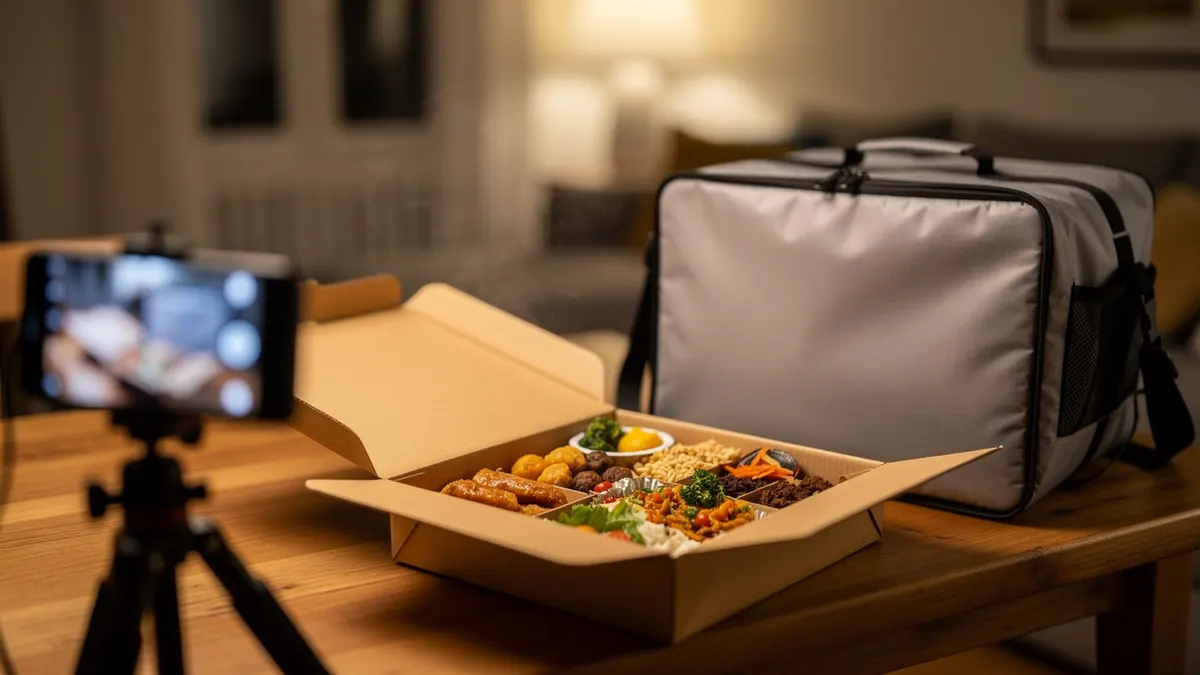
The only moment the customer actually lives is opening the bag at home. That is where the decision to order again is made, and it is precisely the shot nobody takes.
What that shot has to show: the state of the packaging, the temperature, what moved during transport, what stayed separate. A soggy chip, a spilled sauce, a badly closed lid are the real reasons a customer does not reorder, and no kitchen video addresses them.
A brand that films that opening and shows nothing moved makes a demonstration no studio shot can replace.
What has to change in the choice of dishes filmed
Not every dish travels. The content has to show the ones that arrive in good condition, not the ones that are most photogenic coming out of the oven.
It is a trade-off many establishments refuse to make, and yet it decides satisfaction. Filming a dish that survives twenty minutes on a motorbike sells better than a magnificent dish arriving lukewarm, because the second order depends on what the customer actually received.
The same applies to the packaging itself: showing it is designed for transport is an argument, especially where the customer has already been disappointed.
The rhythm of the day decides the shooting hour
There, orders concentrate late. A video shot in the late afternoon shows a moment nobody lives, and an empty room or kitchen at the hour when the viewer is actually ordering.
Film at the real ordering time. That imposes artificial light and a bit of mess, and that is exactly what makes the scene believable.
What actually converts
The genuine first bite on arrival. Not in the kitchen. The reaction of someone tasting what has just been delivered.
The journey, briefly. A few seconds of street, insulated bag, handover. It is what connects the dish to the customer and gives the scene its coherence.
The group order. A significant share of orders are for two or more. Showing a bag for one when the average basket is a family one speaks to the wrong audience.
What reheats and what does not. A practical piece of information nobody gives, and one that prevents disappointment the next day.
Which creator to hire
Someone who genuinely orders, at home, at the hour people order. A shoot organised in daytime in a clean setting produces exactly the content the audience does not believe.
Look too for the ability to film in low light and in an ordinary interior, without turning an everyday kitchen into a set.
What decides the order
| Customer's doubt | The shot that answers | Length |
|---|---|---|
| Does it arrive hot? | Opening the bag at the door | 10 s |
| Is the portion worth it? | The plate served next to the container | 8 s |
| How long does it take? | The time stamp between order and delivery | 6 s |
What is filmed at the restaurant
The plating, the packing, sealing the bag, handing it to the courier.
What is filmed at the customer's
The arrival, the opening, the transfer to a plate, the first bite.
The brief, and what cannot be claimed
Give the dishes to film, the ordering time, what has to be shown at the opening, three possible openings, and the list of forbidden claims.
Statements about allergens, origin, composition and delivery times are regulated or commit the establishment. The reference when in doubt is the competent authority, never a competitor's wording.
Finally ask for tight shots with no face of the delivered dishes: they go on to the listing, to review replies and to local advertising, for the price of the same shoot.
Sources
Checked on 4 September 2026. Thresholds and rates change: where this guide and the official source disagree, the official source is right.