The country has thousands of estates and strict rules on alcohol advertising. What remains possible is precisely what sells: the place, the work and the pairing.
What estates really need
Five kinds of content, and none shows anybody drinking.
The place
It is an estate's first asset, and the worst filmed.
The plot, the slope, the soil, the old vine, the building, the morning light. Those images serve direct sales, hospitality, export and restaurant lists.
Film them in two different seasons: the vineyard in summer and the bare vineyard have nothing in common, and both are useful.
The process
It is what justifies the price, and nobody shows it properly.
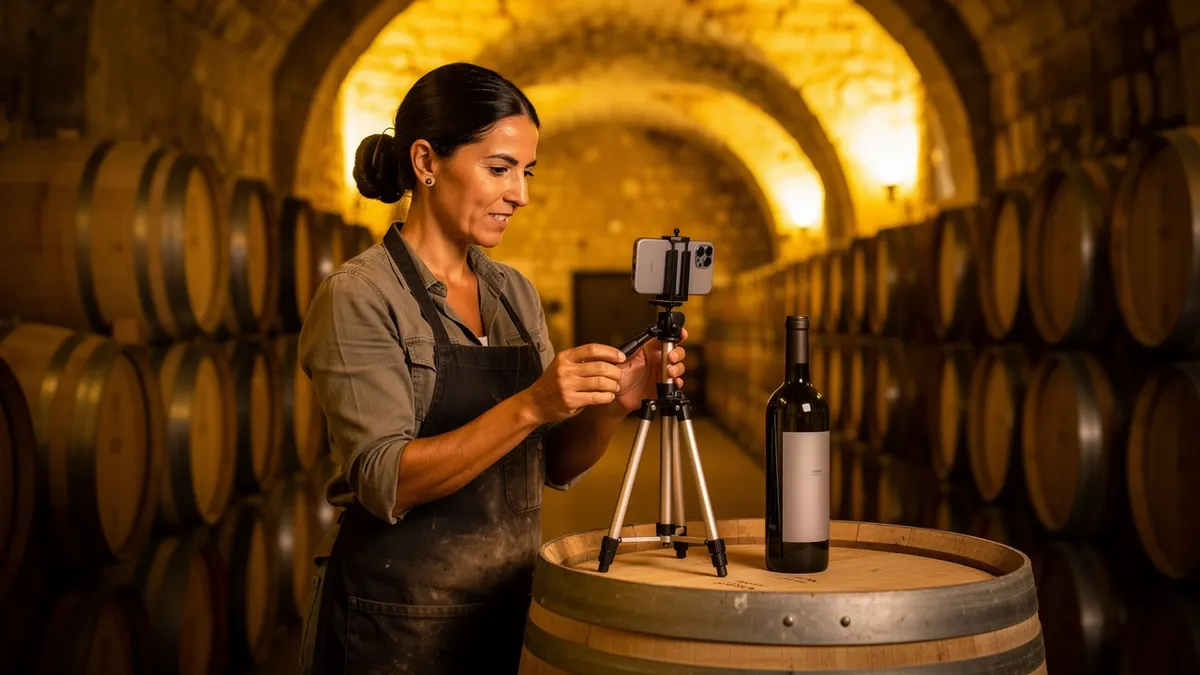
The harvest, the sorting, the press, the vat, the barrel, the bottling, the hand labelling. Each gesture explains a line of the price list.
One rule only: film the real gesture, including when it is mechanised. An estate that harvests by machine and shows wicker baskets loses credibility with professionals.
The pairing
It is the most useful format for the buyer, and the easiest to publish.
Which dish, which temperature, which glass, which moment. It helps people choose without ever praising the effect of alcohol.
The visit
It is a product in its own right, often more profitable than the bottle.
Show the journey, the parking, the length, what is included, the language spoken, and whether it suits families.
The gift
The case, the shipping, the packaging, the message. That is what carries the end of the year, and it is filmed in September.
The advertising rules that matter
They are stricter than in almost every other category.
The recurring principles: no association with driving, sport, work or social success; no content addressing minors or featuring them; no promotion of excessive consumption; no health claim.
To that are added the platforms' own rules, which restrict targeting and sometimes publication itself.
And a casting constraint: everybody visible must be of legal age, and that is documented before the shoot.
The applicable rules depend on the medium, the country of publication and the product, and are checked with a lawyer before going live.
What remains filmable
| Element | What is possible | What is not |
|---|---|---|
| The estate | The vines, the cellar, the work | A drinking scene |
| The bottle | The label, the appellation, the vintage | A link to celebration or success |
| The craft | The winemaker's gesture | Personal tasting advice |
What is prepared with the estate
The season of the work shown, access to the cellar, the consent of those filmed and verification of the appellation quoted on screen.
What must appear on every post
The advertising disclosure, the health message required by the regulation and targeting restricted to an adult audience, to be confirmed with a lawyer.
Practical notes
Four points that save time.
Shoot early in the morning: the light is better and the teams are available before the day's work.
Plan two versions, one for the local market and one for export, with different disclosures.
Keep a master with no burnt-in text: vintages change every year, and the video can serve again by changing an overlay.
And ask the estate for the written list of what it does not want to see on screen. It always exists, and it is almost never passed on.
Sources
Checked on 4 September 2026. Thresholds and rates change: where this guide and the official source disagree, the official source is right.