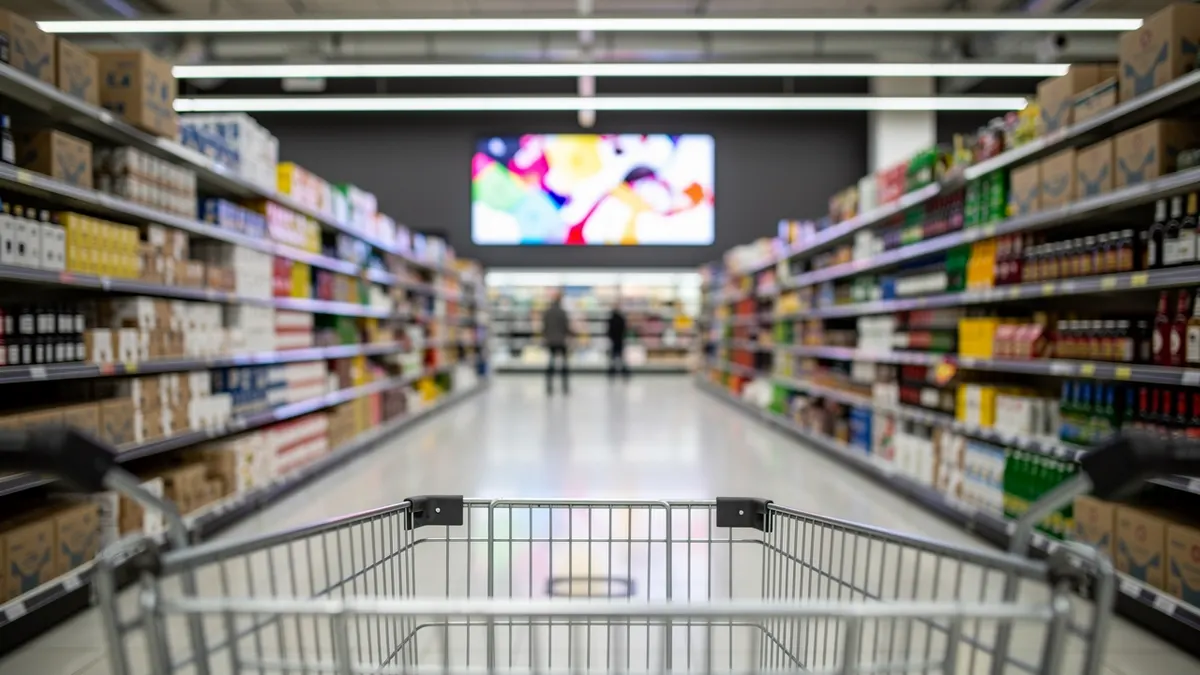
British grocers, pharmacy chains and department stores now sell advertising on their own websites, apps and in-store screens, and a growing share of brand video budget goes there.
It looks like another placement. It is not. Everywhere else you buy attention from a platform that is indifferent to what you sell. Here you are buying it from the company that decides whether your product stays on the shelf.
Your customer is the retailer
The buyer of the video is not the shopper. It is the retailer's media team, working to their own brand guidelines, their own approval process and their own view of what should appear next to their name.
What that changes about approval
Assume a round of changes you did not plan for, and assume they are not about performance. Retailers reject creative for reasons a social platform never would: a competitor visible in the background, a claim they do not want on their estate, a shot of a rival's shelf, packaging that is not the version they stock.
Send the spec to whoever is making the video, before it is made. Almost every rejection in this category is a specification that was read after the shoot.
The screen decides the edit
It plays silent, and it always will
On-site placements and in-store screens play without sound in almost every case. A video whose point arrives in the voiceover has no point.
Everything essential goes in the picture and in the text, the text is large enough to read from three metres for in-store, and the audio is a bonus rather than a carrier.
The three-second product rule
The shopper is mid-task. They are looking for something else, on a small screen, with a basket already open.
The product has to be recognisable, in its actual pack, in the first three seconds. This is the opposite of a social edit, which earns attention before revealing the product, and it is the single most common reason a repurposed social video underperforms here.
It has to work beside a product photograph
Retail media placements sit next to the retailer's own imagery and a price. A video that fights that layout loses; a video that matches its background and lets the pack do the recognising wins.
The measurement belongs to them
| What you are used to | What retail media gives you |
|---|---|
| Platform reporting you can query | The retailer's own measurement |
| Reach and engagement | Sales of that line, in their stores |
| Your own attribution window | Theirs, and it is not negotiable |
| Optimise mid-flight | Change what you can within their spec |
| A campaign that lives on its own | A campaign judged next to the buying conversation |
The last row is the one that matters commercially. Retail media performance is read by the same organisation that decides your listing, your promotional slots and your shelf position, and a campaign that moves their sales is an argument in your next range review.
That cuts both ways. A campaign that does nothing is now visible to the person who could delist you, which is a reason to be careful about what you put into the first one.
Make the thing they cannot supply
The retailer has product photography, a price and a pack shot. What they do not have is a person.
The video that earns its place is the one showing the product being used by somebody who looks like the shopper standing in that aisle: the size of it in a hand, how long it takes, what it replaces, what it goes with. That is creator work, it is cheap to produce, and it is the only part of the placement the retailer cannot make themselves.