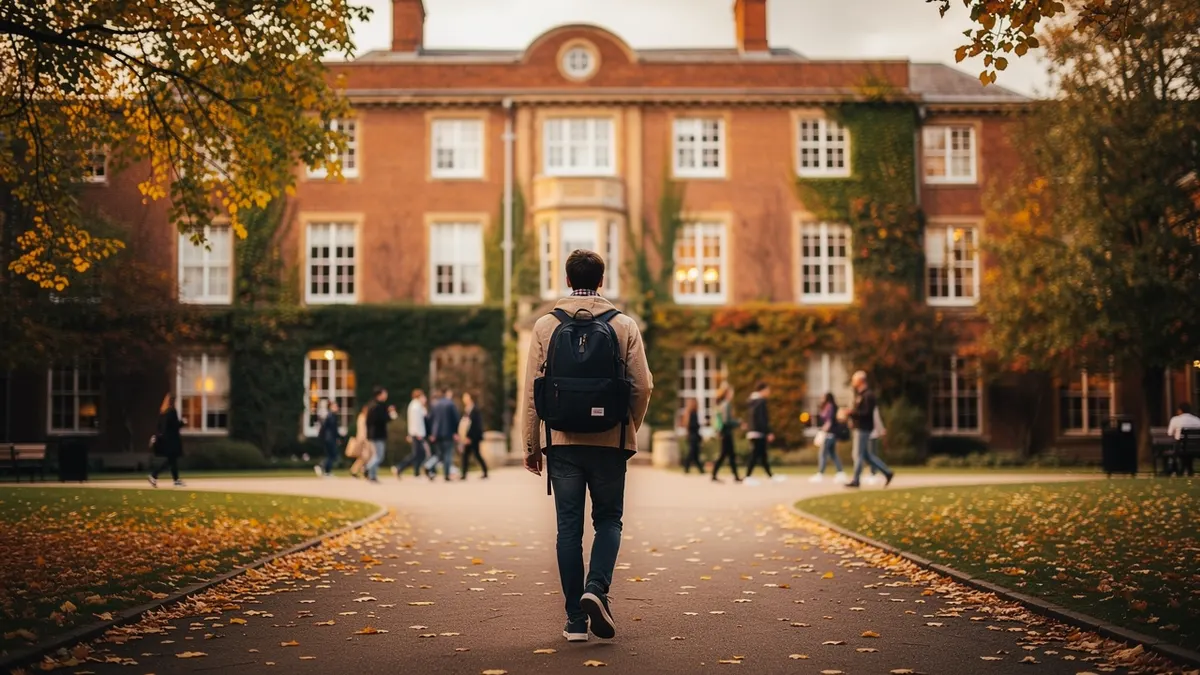
Student ambassador work is the only kind where the client marks your exams, houses you and sometimes sponsors your visa. That changes what you can accept.
What this position really changes
Disagreement costs more than the fee
An ordinary client can simply not call you back. A university employing you marks your work, manages your housing, sometimes your administrative status. The balance of power is not the same, and that has to show in what you agree to sign, not in what you hope for.
Your face outlives your enrolment
Dealt with above. It is the most concrete and least anticipated consequence of this kind of contract.
Three other differences count.
You film places where other people live, which raises a permanent question of authorisation.
You speak about an institution you depend on, which in effect limits your freedom to criticise.
And you are identifiable, for a long time, by a small community where information travels.
The four moments, which are not interchangeable
Four periods, with what each demands.
The application campaign, where the aim is to reassure people who are still hesitating.
The enrolment period, where practical and administrative questions are answered.
The start of term, showing arrival, housing and the first days.
And campus life during the year, the most authentic and least commissioned format.
One remark: those four moments call for different tones. Start-of-term content run during the application campaign answers none of the questions the target audience is asking.
What you never promise
Six statements to refuse, whatever the brief's wording.
An employment rate, a starting salary or a career prospect.
A guarantee of admission, of a grant or of housing.
An unfavourable comparison with another named institution.
A statement about the recognition of a degree abroad.
A promise tied to a visa or right to stay, a subject whose rules are checked with the competent authorities.
And an assessment of the quality of teaching you have not attended.
Filming other students
Five rules, all verifiable.
Written authorisation from every identifiable person, obtained before the shoot.
No images of private spaces, rooms and housing included, without explicit agreement.
No identification of a minor, which happens on open days.
Verification of the institution's internal rules on filming on its premises.
And actual removal if a filmed person withdraws their agreement, which must be provided for in the contract.
What an institution can show
| Subject | Allowed under conditions | To avoid |
|---|---|---|
| Buildings and campus | With the institution's consent | A class in session without consent |
| A student speaking | With written consent | A group filmed unannounced |
| A study space | Yes | A screen showing data |
What is arranged with administration beforehand
The accessible zones, the slot, the on-site contact, and how to handle people in frame. A university is a place of work and study, not a free set.
What is verified before any claim
A ranking, an employment rate, an accreditation or a degree equivalence. Each is confirmed with the institution and the competent authority, and dated, because those figures change every year.
Getting paid properly
Six points to write down before accepting.
The distinction between ambassador work, often hourly, and video production, which is invoiced separately.
The number of videos and the formats expected, never an undetermined quantity.
Usage rights: media, duration, territory, with the takedown clause dealt with above.
Use in paid advertising, invoiced separately and limited in time.
The possibility of reusing your own videos in your portfolio, often forgotten and easy to obtain.
And the name of the person who approves, with the review circuit.
If you are recruited from outside
Four differences when you are not a student of the institution.
You have no relationship of dependence, so you negotiate as with any client.
You cannot speak in the first person about the student experience, and the brief has to account for that.
You can however produce everything that does not suppose that experience: tours, presentations, practical formats.
And the rate is the market rate, without the implicit discount students suffer.
One last marker: in this kind of assignment the question is not the amount, it is the duration. A decent fee with an image circulating for five years costs more than a modest fee with a guaranteed takedown at the end of your studies. Negotiate the date, the rest follows.