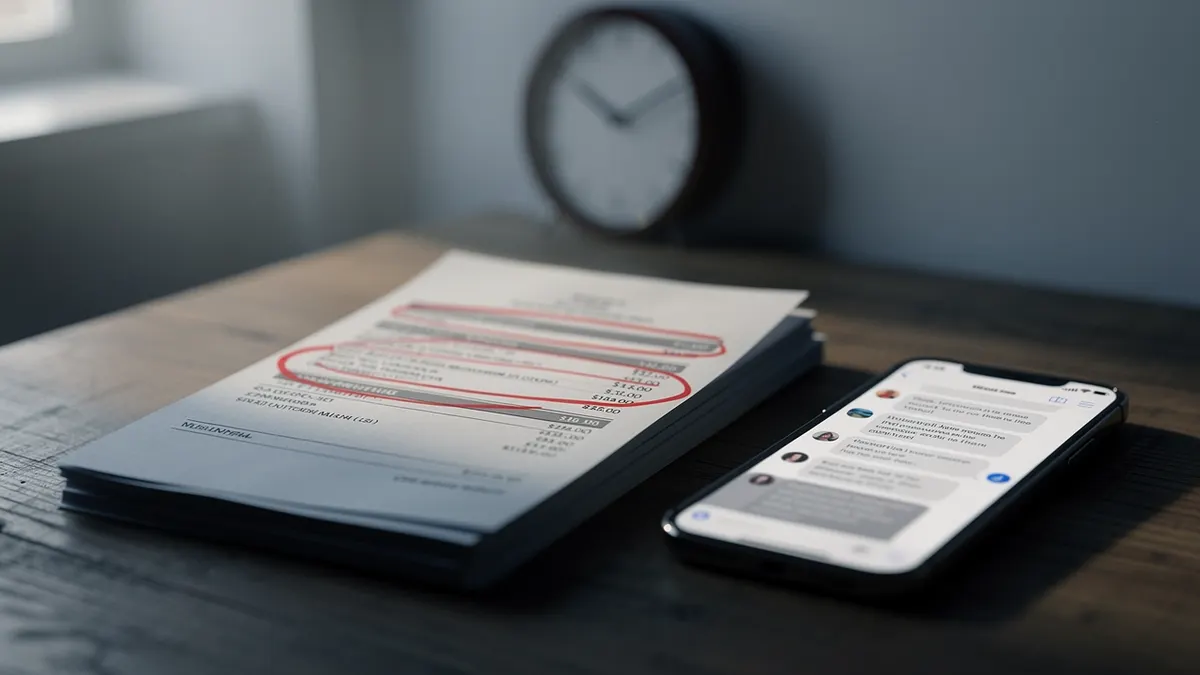
The balance of power flips the second you send the file. Unless you have kept, in writing, the one thing the client cannot use without you.
The three things to do before delivering
They avoid nearly all unpaid invoices.
A quote accepted in writing, even by a simple message, describing the deliverable, the price, the deadline and the licence. A verbal agreement cannot be demonstrated.
A deposit for every new client, received before the shoot. That is not mistrust: it is what funds production and what screens out clients who had no budget.
And delivery in two stages: first a version for approval, in reduced quality or watermarked, then the final files on payment. The client sees everything, approves everything, and can distribute nothing.
The sequence once it has happened
Four stages, fixed dates, constant tone.
The day after the due date: a short, factual message, with the invoice attached and the due date restated. Half of late payments are settled here, because they are oversights.
At seven days: the same message, to the same person, with the accounts department copied in. Ask for a payment date, not an explanation.
At fifteen days: a message pointing out that the licence is not granted while the invoice is open, and asking for confirmation that nothing is being distributed.
At thirty days: a formal notice. The applicable forms, deadlines, penalties and remedies depend on your situation and are checked with a lawyer.
What works and what does not
Three observations, learnt the hard way otherwise.
What works: regularity. A reminder every seven days, always on the same day, always polite, always written. The invoices that come back are the ones that get paid.
What does not work: telephoning without writing afterwards, threatening with no intention of following through, and above all going silent for six weeks out of embarrassment.
And what makes everything worse: delivering another job to the same client while an invoice is unpaid. You double the exposure and you lose your only leverage.
What to keep in writing
Four items, from day one.
The acceptance of the quote, the order confirmation, proof of delivery with its date, and every reminder. That file is enough in most cases and takes five minutes to build if it is kept as you go.
Note too the name of the person who ordered and that of the entity that pays: they are not always the same, and that is often where the case stalls.
What protects before delivery
| Measure | When | Effect |
|---|---|---|
| Deposit | When the date is booked | Filters out uncertain clients |
| Viewing-quality version | At delivery | Allows approval without releasing |
| Transfer after payment | Written in the quote | Makes use impossible before paying |
What is checked at the first delay
The company name, the order number, whether the invoice reached accounting and the payment calendar.
What changes afterwards
A higher deposit, a shorter term, and a ceiling above which you no longer work without a guarantee.
The rule that prevents a repeat
A client who paid badly once will pay badly the second time.
That does not mean refusing them: it means changing the terms. A higher deposit, payment in full before the final files are delivered, and the licence always conditional on payment.
If the client refuses those terms after an unpaid invoice, the answer has already been given.
Sources
- Agencia Tributaria, Spanish tax authority
- Spanish Social Security, self-employed registration (RETA)
Checked on 4 September 2026. Thresholds and rates change: where this guide and the official source disagree, the official source is right.