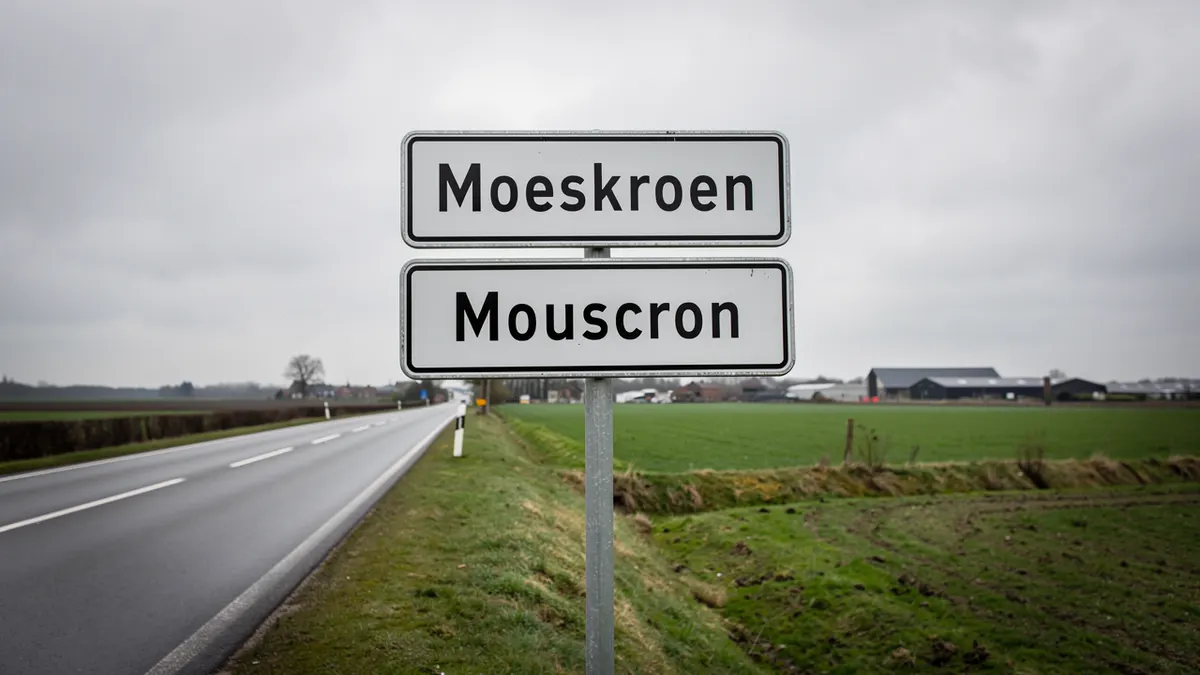
A brand in the north looks at the neighbouring market that speaks its language. A brand in the south looks at the one next door. Both are wrong for the same reason, and it is not about size.
Sharing a language is not sharing a market
What a viewer in the neighbouring country hears
They hear an accent that is not theirs, references that are not theirs, and a slightly offset rhythm. They do not put it that way: they simply feel the video is not addressed to them, and they move on. It is an immediate reaction, prior to reasoning.
What that changes for performance
A video that works very well at home can show mediocre results across the border with no identifiable element to blame. The classic mistake is then to conclude that the format does not work on that market, when it is the person on screen who is not from there.
What crosses and what does not
The reusable parts
Seven elements that travel with no retouching.
Product close-ups, with no recognisable hand.
Texture and material shots.
Technical gestures, applying, opening, assembling.
Atmosphere shots with no visible sign.
Result images, before and after.
Neutral cutaways.
And the structure of the script, which retranslates easily.
Who to cast on the other side
Six criteria for the second version.
Somebody who actually lives in the target market.
A local accent, never softened.
An interior resembling that of the target audience.
Familiarity with the shops mentioned.
An understanding of the mentions that apply there.
And availability to shoot from your existing script.
How to adapt a script without rewriting it
Seven adjustments, all minor and all necessary.
Replacing shop names with those of the target market.
Converting units and date formats.
Adapting any first names mentioned.
Checking idiomatic expressions, one by one.
Changing seasonal references, which do not coincide everywhere.
Adjusting the call to action to the channel used there.
And having it read by somebody from the market, before shooting.
What to check in the target country
Six points, to be confirmed with a lawyer.
The mandatory advertising mentions.
The claims permitted for your category.
The rules applicable to comparisons.
The price information obligations.
The particularities of local platforms.
And the rules on people visible on camera.
What a second version costs
Six items, often overestimated.
The local creator's fee, the only genuinely new cost.
Shipping the product, sometimes with customs charges.
Editing, reduced if the script is identical.
Subtitles, to be redone in the language.
A read-through by somebody from the market, one hour.
And nothing else, if your silent shots were planned for.
A test that costs almost nothing
Take the video that works best at home, have it reshot by somebody from the neighbouring market with the same script, and run both versions on the same audience for two weeks. The cost is that of one video, and the result definitively settles a question a team can debate for six months.
What to prepare before the test
Six elements, settled in advance.
The same script, translated but not rewritten.
The same call to action, adapted to the country.
The same budget on both versions.
The same run time.
A comparable audience, defined by area.
And one single difference between the two videos, the person speaking.
What to keep from every shoot
Six items to archive, systematically.
The silent shots, filed in a separate folder.
The original script, in an editable format.
The list of shots that cannot be reused, with the reason.
The performance figures per version.
The creator's contact details, for a possible follow-up.
And the licence end date, noted in the calendar.
The reverse case is more encouraging
A brand from the neighbouring market wanting to come to you runs into exactly the same wall, which gives you an advantage on your own ground. Your local content, with your accents and your references, is hard to imitate from outside. That is real protection, and it is worth exploiting before chasing a bigger market.
What to decide before starting
Six questions, in this order.
What share of your sales already comes from that market.
Who answers customer service in that language.
What delivery times you genuinely keep there.
Which mentions change by country.
How many versions your budget really allows.
And at what result you will stop the test.
What is reused and what is redone
| Element | Reusable abroad | To redo |
|---|---|---|
| The product shots | Yes, as they are | No |
| The voice | No | Yes, in the market's language |
| The on-screen text | No | Yes |
| The legal notices | No | Depending on the release country |
What is prepared at the shoot to save later
Filming with no burned-in text and no market-specific packaging. A neutral shoot then declines into five countries without going back on set once.
What is never assumed from one country to another
That an advertising rule or a mandatory notice is identical. Each market is verified separately with the competent authority and a lawyer before release.
The most frequent mistakes
Six reflexes that cost a campaign.
Running a video shot at home unchanged.
Subtitling instead of reshooting.
Asking a creator to soften their accent.
Rewriting the script instead of translating it, which makes comparison impossible.
Testing two markets at once, which blurs the result.
And concluding after one week of distribution.
One last marker: the border is cheap if you prepare for it at the shoot. A reserve of silent shots and a translatable script, and the next market becomes a second version rather than a second budget.