Belgium exports an extraordinary amount of medicine for its size, and the sites that make it sit in the middle of ordinary towns. Those companies buy video, and most of what they buy is unwatchable.
The reason is not incompetence. It is that almost everything anyone would naturally say about a medicine is regulated, so the safe version says nothing, and a film that says nothing is expensive silence.
What is actually off the table
What a company may claim about a product depends on its classification, its authorisation and the audience being addressed, and none of that is decided by a marketing team or by a supplier. It is decided by regulatory affairs, and a video is not the place to test the boundary.
Accepting that early is what makes the rest possible. A brief that begins with we cannot talk about the product produces better content than one that spends three rounds discovering it.
Three audiences where video works
Recruitment, which is the biggest budget nobody counts
These companies compete for the same few hundred scientists, technicians and engineers as every other site in the country, and increasingly as sites abroad. A vacancy that stays open for six months costs more than a year of content.
Nothing about a recruitment video touches a product claim. It shows the building, the shift, the lab at eight in the morning, the person who joined last year and what surprised them. It is also the only content in this sector where a real employee speaking plainly is unambiguously allowed to be interesting.
The town the site sits in
A production plant has neighbours, a local council, a school two streets away and a workforce drawn from the surrounding communes. Local acceptance is a real asset and it is almost never built deliberately.
Content that shows what happens inside, filmed for the people who live nearby rather than for an industry audience, does something no press release does. It answers the question the neighbours actually ask, which is what goes on in there, and it is a question with no regulatory content at all.
The suppliers who sell to the sector
Half the video opportunity in this vertical is not the pharmaceutical company, it is the businesses around it: equipment, cleanroom services, logistics, packaging, contract manufacturing, specialised recruitment.
Those companies sell business to business, they can say what they do, and their buyer is a procurement or engineering team inside a regulated environment. That is a normal industrial content problem with an unusual customer, and it is wide open.
| Audience | What the video can show | What it must not do |
|---|---|---|
| A candidate | The building, the shift, the people | Nothing restricted, this is free ground |
| A neighbour or local official | The site, the scale, the safety routine | Discuss a product's effects |
| A supplier's buyer | Process, capability, references | Speak for the client's regulated claims |
| A healthcare professional | This is a separate and strictly governed audience | Anything decided outside regulatory affairs |
| The general public | Almost nothing about a specific product | Improvise |
The fourth row is where content projects go wrong. Material aimed at healthcare professionals is a different discipline with its own rules and its own approvals, and it should never be an afterthought bolted onto a general shoot.
Filming inside a site nobody can enter
Access is the constraint that shapes every production here. Clean areas, gowning procedures, safety training and confidentiality mean a creator cannot simply walk in with a camera.
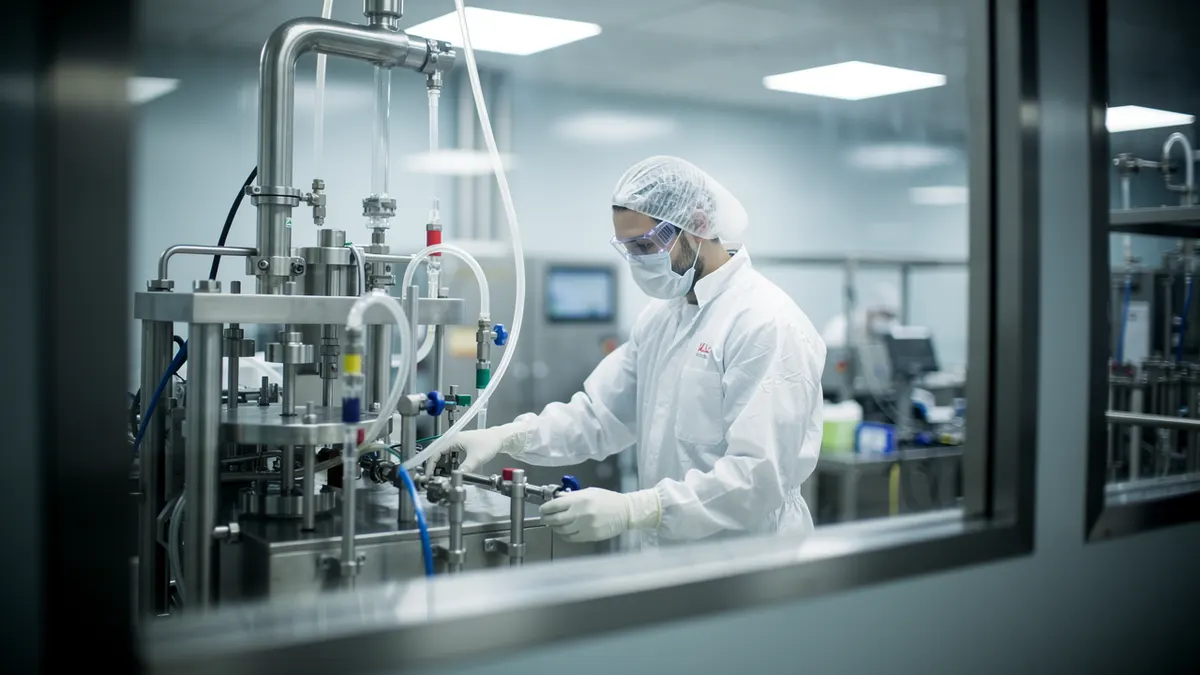
The workable answers are known and none of them are exciting. Film through glass, which is how most real footage of these environments is made. Film the areas that are not classified: the corridors, the control room, the canteen, the loading bay, the people arriving. And use the site's own existing footage where it exists, because many of these companies already have material they have never used.
Plan for a longer day than the footage suggests. Gowning alone can take an hour, and it happens before anything is recorded.
The equipment that gets in, and the equipment that does not
Anything entering a controlled area is subject to the site's rules, and that includes a camera, a tripod, a microphone and a bag. Some sites allow a wiped down phone and nothing else. Others require equipment to be dedicated to the area.
Ask before the shoot rather than at the door, and plan a version of the day that works with a phone alone. That version is frequently the one that happens, and a creator who arrives prepared for it loses nothing.
Review is part of the schedule, not an obstacle
Every script in this sector goes through a review that has nothing to do with taste. Treat it as a production stage with a duration, exactly like the edit.
Two habits make it painless. Send the script before the shoot rather than the cut afterwards, because a rewrite on paper costs nothing and a reshoot costs a day. And ask the reviewer for the reason rather than only the correction, because the reason applies to the next four videos and the correction applies to one sentence.
Companies that do this produce content at a normal pace. Companies that do not produce one film a year and complain about the process.