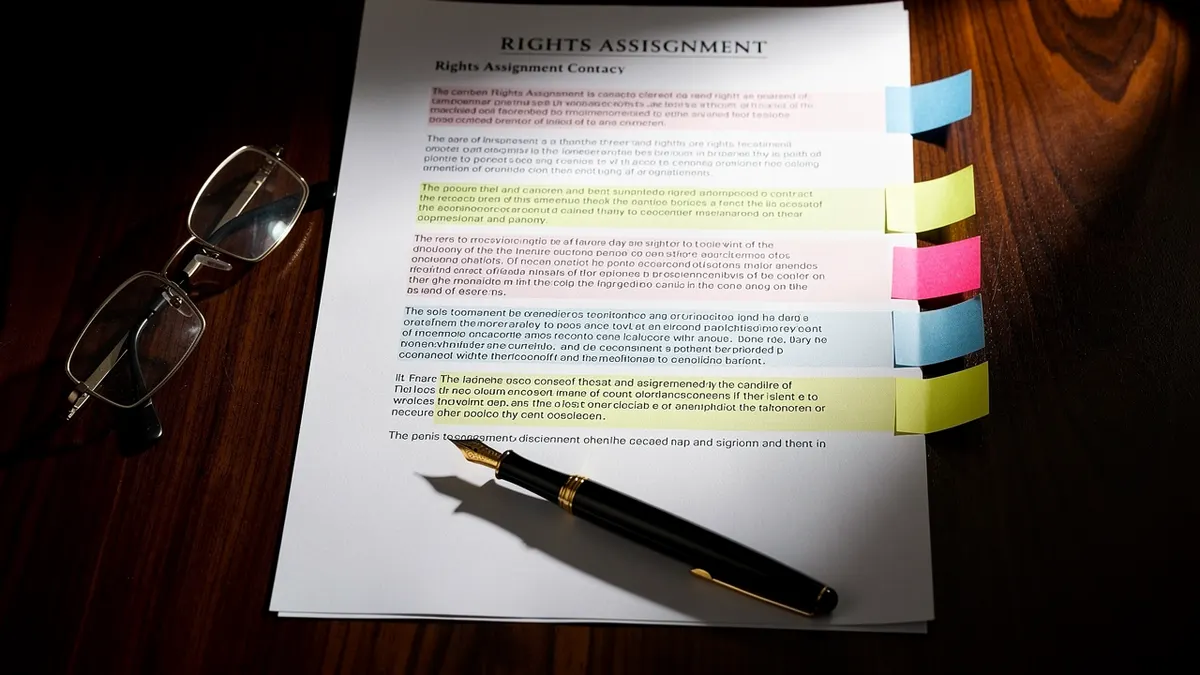
In this trade, the contract does not protect the video. It decides what the video earns, and for how long.
The two rights you grant
They are distinct, and many agreements mention only one.
The first covers the video itself, as a work: what the brand may do with it, where, for how long.
The second covers your image and your voice, when you appear. A brand can hold the rights to a video without having the right to use your face on a poster.
A complete agreement handles the two separately, with durations that may differ. That is also what lets you authorise the video and refuse the poster.
What sets the price of the licence
Four variables, and they multiply rather than add up.
The duration, counted from a written date.
The territory, bearing in mind that online distribution often goes beyond the country without anybody having decided it.
The channels: the brand's account, paid advertising, website, email, outdoor, television, trade fair.
And exclusivity, which stops you working for a competitor for a given period and is paid for separately.
A short, broad licence does not cost the same as a long, narrow one. Price both, let the client choose.
The "perpetual, all media, worldwide"
It is the most common formula and the most expensive to accept without thinking.
It is not illegitimate: some brands genuinely need it, and it can sell very well. The problem is granting it at the price of a six-month licence.
Two possible answers. Either you sell it, at a price reflecting the fact that you will never resell that video. Or you offer an alternative clients often accept: three years, renewable, with a renewal price fixed in advance.
Advertising transparency
It is not negotiable and it concerns both parties.
A commercial communication must be identifiable as such. The exact form, the placement of the disclosure and the respective responsibilities of the brand and the creator depend on the channel and on your situation: they are checked with a lawyer, before publication.
Two practical points: the disclosure must remain visible for somebody arriving in the middle of the video, and it is not settled solely in the description.
The four parameters of a licence
| Parameter | What it opens | What makes it costlier |
|---|---|---|
| The media | Advertising, website, in store | Every added channel |
| The duration | From three months to unlimited | Unlimited, always |
| The territory | A city, a country, the world | Going worldwide |
| Exclusivity | Turning down competitors | The length of the period |
What stays with the creator even after a licence
Authorship of the video and the right to require that the edit not be distorted, unless otherwise agreed in writing.
What is re-read before signing
The automatic renewal clause, the one allowing the brand to pass the rights to a third party, and the fate of the source files, to be confirmed with a lawyer.
What stays yours
Three things, even after a broad assignment.
The right to cite the job in your portfolio, if it is written down. Without a clause, that point becomes a painful discussion exactly when you need it most.
The link between your name and your work, which assigning exploitation rights does not erase.
And the refusal of uses that were not provided for. A video bought for a brand account and found on a billboard is not a misunderstanding, it is a use outside the scope.
The reflex settling most cases: ask, before signing, where the video will run and for how long. A vague answer to that question always announces an overrun.
Sources
Checked on 4 September 2026. Thresholds and rates change: where this guide and the official source disagree, the official source is right.