Does a creator need a permit to film in a national park? Until 2025 the honest answer was that it depended on whether the filming was commercial, and a paid deliverable usually was. The EXPLORE Act changed that. Signed into law on 4 January 2025 as Public Law 118-234 and codified at 54 U.S.C. 100905, its section 125 changed how the National Park Service manages filming, photography and audio recording in park areas, and the Service's own page states the new rule: in most cases, permits and fees are not required for filming, still photography or audio recording that involves eight or fewer individuals, provided the activity meets five conditions.
What to film in a landscape belongs to the brief, and what the day is worth belongs to this cocoon's rates guide, which prices the license rather than the shoot; the city guides describe the markets where outdoor shoots are the local work. This guide is about the American rule a creator meets at the trailhead: what the law now exempts, what it still requires, and what a brand should know before it asks for a shot in a park.
What the new law says
Eight or fewer, and five conditions
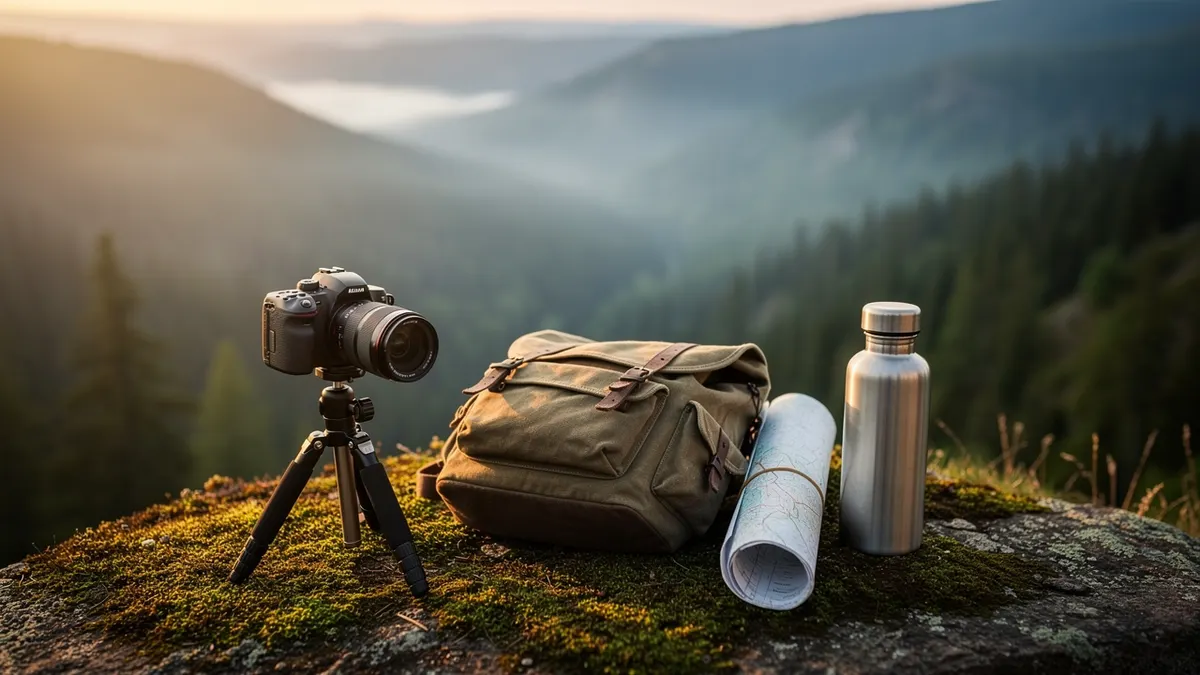
The five conditions are cumulative, and the Service's page lists them: the activity occurs in areas open to the public; it uses hand-carried equipment only; it does not require exclusive use of a site; it does not adversely impact park resources, values or other visitors; and it is not likely to result in additional administrative costs for the National Park Service. Meet all five with a group of eight or fewer, and no permit and no fee are required. Miss any one of them, or bring a group larger than eight, and the page says a permit may be required, in which case the Service will charge location fees and fees to recover its costs of administering the permit, including application fees.
Commercial or not, the same rule
The sentence that matters most to a creator is the one that removes the old question. All filming, still photography and audio recording is treated the same under the new law, the page says: it does not matter whether it is commercial, non-commercial, for content creation, by a student, or conducted by media or for news gathering. A paid brand deliverable filmed with a phone or a small camera, alone or with an assistant, sits in the same box as a visitor's holiday video.
What the exemption does not cover
The page keeps three things outside the exemption. Permits and fees are never required for filming associated with an activity or event already authorized under a written instrument, such as a wedding, a sporting event or a demonstration; that is a relief, not a burden. But individuals and groups filming remain subject to all other laws and regulations applicable to visitors, including those requiring permits for certain activities and those prohibiting disturbance or other negative impacts to natural or cultural resources. And entrance or recreation fees that apply in a park area are still owed even when no permit is required.
| What the shoot looks like | What the Service's page makes of it | What the creator does |
|---|---|---|
| One creator, a phone or small camera, on a public trail | Eight or fewer, hand-carried equipment: no permit, no fee | Pay the entrance fee, film, follow the park's other rules |
| Creator plus an assistant holding a reflector | Still within eight, still hand-carried | The same |
| A tripod-mounted setup that blocks an overlook for an hour | Exclusive use of a site, likely an impact on other visitors | Ask the park before the day |
| A ten-person crew, or a generator and a cart | More than eight individuals, equipment not hand-carried | A permit, with location and administrative fees |
| A drone shot over the canyon | Not addressed on this page, which is about filming, still photography and audio recording | See this cocoon's drone guide, and contact the park, which the Service's page asks for anyway |
| A paid photography workshop run inside the park | A different activity: the page points to a commercial use authorization | Contact the park before selling places |
| A shoot the creator wants covered in writing anyway | The page says a permit may be requested even when none is required | Ask, knowing the request brings location and administrative fees with it |
What this changes for a creator's quote
The practical effect is that the outdoor shot a brand asks for is usually available without a permit line in the quote, and that the variable to watch is not the payment but the footprint. Eight people is a generous ceiling for creator work; hand-carried equipment is the real constraint, because it rules out the cart, the generator and the rig that needs a vehicle. A creator who prices an outdoor day now prices the drive, the entrance fee, the light and the walk, and reserves the permit question for the shoot that grows a crew.
What usually stops a creator from taking the park job is the memory of the old commercial-filming rule, whereas the page now says the commercial question is not asked. The one habit worth keeping from that era is the phone call: the Service's page says to contact the park you are visiting for more information, and to contact it before the activity if you believe your filming may require a permit.
What a brand should know before asking
A brand briefing a shoot in a park is briefing a public place with its own rules, and two lines in the brief cover it. The first names the footprint the creator is expected to keep, because the exemption depends on it. The second says who checks with the park, and when. The creator program guide in this cocoon describes the file a brand keeps of what it asked for; a shoot on federal land belongs in it, with the entrance fee on the invoice rather than a permit fee nobody budgeted.
The brief for filming in a park
- Keep the group to eight or fewer and the equipment hand-carried, because those are the two facts the exemption turns on.
- Film in areas open to the public, without taking exclusive use of a site, and move when other visitors need the spot.
- Budget the entrance or recreation fee, which is owed whether or not a permit is required.
- Contact the park before the day when the shoot is bigger, needs a closed area, or looks like it could affect resources or other visitors.
- Treat the park's other rules as part of the shoot, because the filming exemption does not touch them.
Sources
Checked on 22 September 2026. This guide is not legal advice. Where this guide and the official source disagree, the official source prevails.