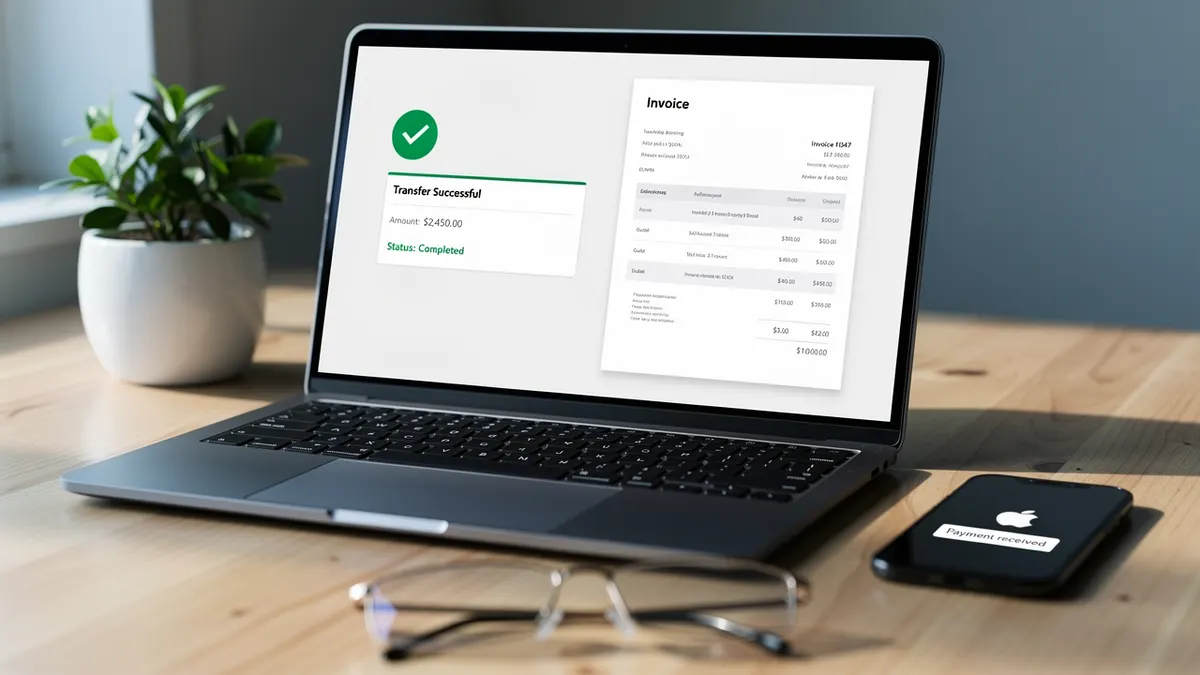
People think getting paid is a matter of chasing. It is mostly a matter of dates.
In many companies invoices are not processed as they arrive: they are settled in batches, on fixed days of the month. An invoice arriving the day before that run goes out with the batch. The same one, sent the following day, waits for the next cycle.
Ask for the processing day, it costs nothing
One question, asked once, at the moment of the order: "which day of the month are your payments processed?"
Nobody refuses to answer, and you have just gained several weeks of cash flow without negotiating anything.
Then always issue a few days before that date, never after. It is the most profitable action in the whole commercial relationship, and it takes thirty seconds.
A deposit is not a mark of distrust
It is common, accepted, and it settles two things at once: it protects you, and it commits the client.
A deposit on ordering, the balance on delivery, written into the offer itself. A job that starts with nothing paid is a job that can be cancelled at no cost to the other side.
For a first collaboration it is also a test: a client who pays the deposit without discussion will pay the balance.
What the invoice must carry
The compulsory mentions depend on your situation, and the competent administration remains the reference for the exact list. Check it once, properly, rather than copying the template of another creator whose status is not yours.
Then add what concerns you: the order reference given by the client, the detail of what is delivered, and the due date written out in full.
A clear invoice gets paid faster, not out of goodwill, but because it does not ask anyone to hunt for missing information.
Chasing in three steps
On the due date, a short neutral message with the invoice attached. No reproach: in most cases nobody decided anything, the file simply stayed pending.
A week later, a message asking who it should be forwarded to. You are looking for a person, not a payment.
Two weeks later, a call. It is the one moment when the telephone beats writing, because it identifies the blockage in two minutes.
When not to start
When the client refuses to give an order reference although their company uses them.
When nobody can say who approves the spending.
And when you are asked to start "while the purchase order is being signed". That is the situation producing the most unpaid invoices, and it is settled in one sentence: you hold the dates, you start when the document arrives.
The client who does not pay
Stop delivering, immediately, including the original files. It is not a punishment, it is the only pressure you have.
Write a clear, dated formal notice. For the exact form and the remedies, an adviser or the competent body will tell you what applies to your case.
And note that client in your register. The real cost of an unpaid invoice is not the sum lost, it is the second unpaid invoice with the same client because nobody kept a record of the first.
What decides the payment date
| Element | Effect | Where to set it |
|---|---|---|
| Deposit | Locks the date | Quote |
| Order number | Triggers the internal circuit | First exchange |
| Written receipt | Starts the clock | Delivery message |
What is prepared before delivery
The invoice, the mention of rights granted, a reminder of the term and a viewing-quality version.
What to do at the first delay
Check the wording, confirm receipt, restate the term in writing and suspend the transfer until payment.
What protects over time
A systematic deposit above a certain amount. A due date written into the offer. An order reference obtained before the shoot.
Three habits, no negotiation, and almost every payment problem disappears.