The steps that really count: first videos, status, rates and first paying clients.
Step 1: understand what you are selling
Three things, and the audience is not one of them.
A video file, delivered in the formats requested, usable by the brand.
Usage rights, defined by channel and duration.
And reliability: a date kept, a brief respected, a clean delivery.
One direct consequence: your follower count determines nothing, and there is no reason to wait for one before starting.
Step 2: shoot your first three videos
Three pieces, on products you already own.
A demonstration, with no cut during the action.
A piece to camera, two minutes maximum, with one acknowledged flaw.
And a problem solved: the situation first, the product next.
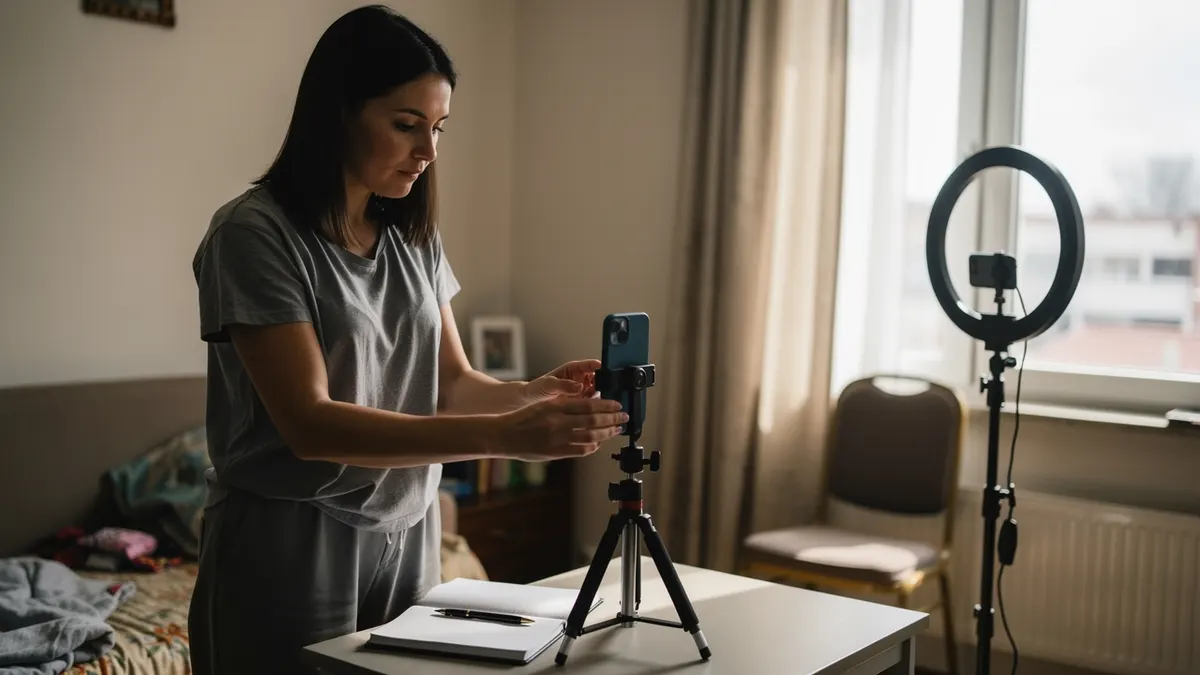
Two production rules. Sound before picture: a clip-on microphone changes more than a better phone. And the text written before filming, read aloud to spot the sentences that cannot be said.
One useful clarification: an example not commissioned presents itself as such, clearly, without suggesting an existing collaboration.
Step 3: settle the administrative side
Four points, to handle before the first invoice.
The regime under which you operate, with what it implies in contributions and obligations.
The threshold beyond which your situation changes, and what happens when it is crossed during the year.
How to issue a valid invoice, including for a client abroad.
And the systematic setting aside of a share of every payment received, in a separate account.
Those four points are checked with an accountant, once, at the start. The rules change, and one session costs less than a correction.
Step 4: set your price when nothing is at stake
Three blocks, separated from the first quote.
The production: preparation, shooting, editing, versions.
The rights: channels, duration, territory.
The constraints: short deadline, travel, a second person on screen, a regulated category.
One local rule avoiding nasty surprises: when the quote is denominated in a foreign currency, write on which date the rate applies, and who bears the transfer charges. The tax treatment of those operations is checked with an accountant.
Step 5: land the first clients
Four entry points, in order of ease.
The shops near your home, which have no video.
The resellers and online shops, whose product pages are empty.
The brands whose product you bought in the last three months.
And the foreign brands selling here and looking for a local face.
One rhythm that is enough: fifteen targeted messages a week, each with an example, a price and a date. Two follow-ups a week apart, then move on.
The first four weeks
| Week | What you do | What you get |
|---|---|---|
| 1 | Two videos with products already at home | The start of a portfolio |
| 2 | A complete profile and a price | A page you can send |
| 3 | Ten messages to active brands | The first replies |
| 4 | One order, however small | A real sample |
What is decided before writing to anyone
A category, a city, two formats, a price. Without those four answers, every exchange costs one more round and the brand picks someone else.
What you do not pay for in the first year
A website, a logo, expensive gear. Three sharp videos are worth more, and are made with what you already have.
Step 6: turn it into recurring work
Three moves, after every delivery.
Ask for a written review and permission to use the video in your file.
Propose the next reference, with a price for a batch of three.
And note the rights end date, with a reminder thirty days before.
One last marker: regularity is worth more than visible talent. Three clients ordering every quarter make a business; ten clients ordering once make a pleasant year and a second start from scratch.
Sources
Checked on 26 August 2026. Thresholds and rates change: where this guide and the official source disagree, the official source is right.