It is the format buyers look for and brands fear. Here is how to compare honestly without naming a competitor.
Comparing without naming
Three methods, all usable without citing anybody.
Comparison with a category: this product against products of this type, with no visible brand.
Comparison with the previous version of the same product, which poses no problem and interests people enormously.
And comparison with the usual method: the product against what people do today without it.
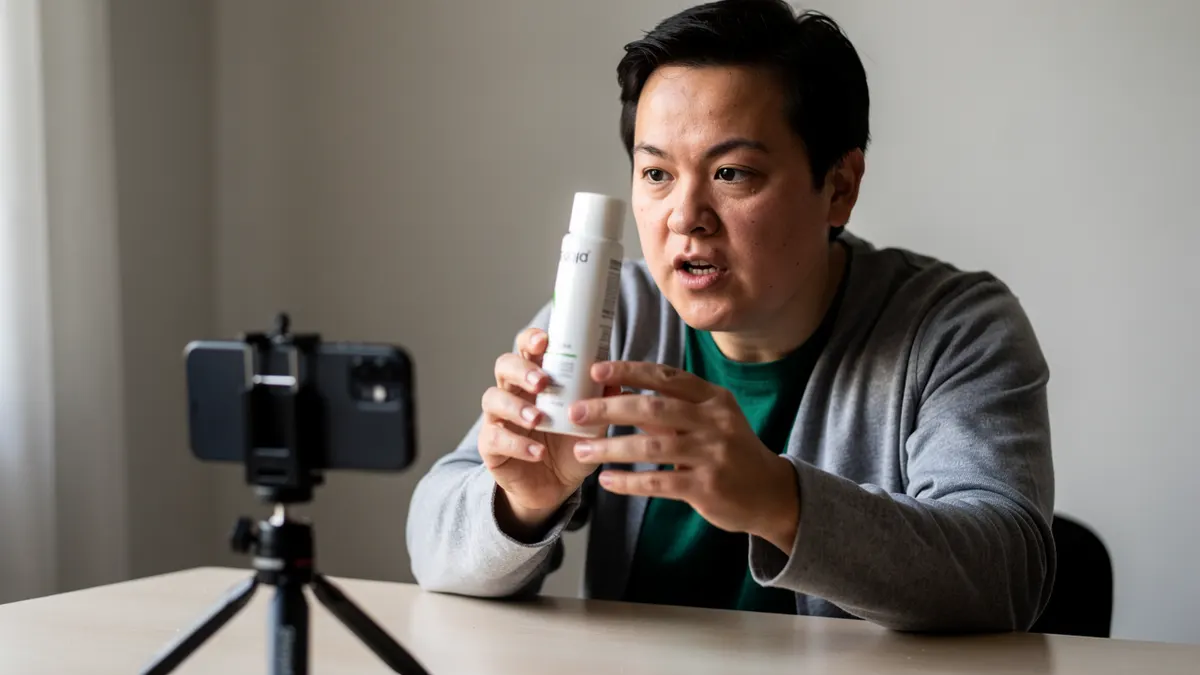
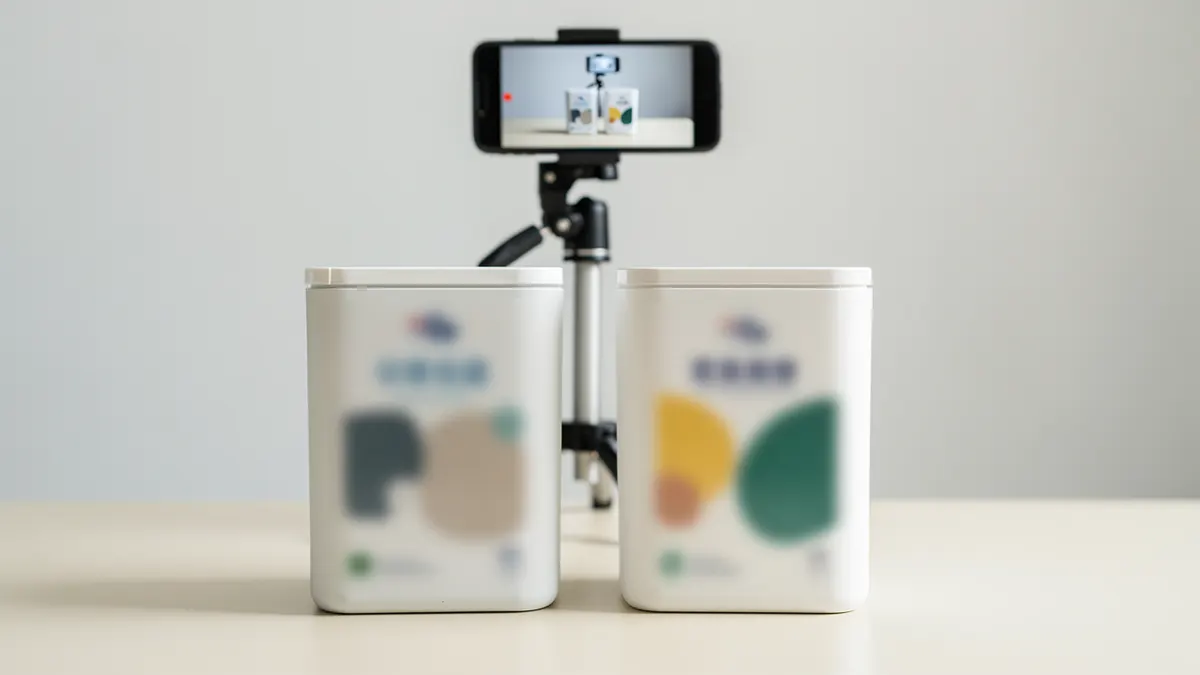
Three shooting precautions. Remove or mask labels, logos and distinctive shapes. Say no name, even by mistake, even laughing. And do not show a recognisable package in the background.
When naming is possible
There are cases, and they require preparation.
Naming a competitor in a comparison is regulated: the comparison must cover verifiable, objective, relevant characteristics, and must not mislead.
Three practical conditions before considering that route. A documented measurement, carried out in identical conditions. Written approval from the brand, with the exact wording. And prior legal advice, because the risk is not the video, it is the other brand's response.
The rules applicable to comparative advertising are checked with a lawyer before publication, with no exception.
Honesty makes the format work
Three elements, and they are counter-intuitive.
Say what the other solution does better: that is the sentence making everything else credible.
Show a close result when it is close, instead of choosing a test that crushes.
And give the case where your product is not the right choice: cheaper elsewhere, too big for a small home, unnecessary for occasional use.
A comparative video winning on every point reads as an advert, and it convinces nobody.
Shooting format
Five rules, and they make the comparison readable.
A single fixed shot, with no cut during the measurement.
Both products in the same frame, at the same distance, in the same light.
The stopwatch or the instrument visible on screen.
The result read aloud, exactly as it appears.
And no music: the real sound is part of the proof.
What makes a comparison usable
| Rule | What it imposes | Without it |
|---|---|---|
| Same conditions | Same room, same hour, same settings | A worthless result |
| Same use | The same task on both products | A rigged demonstration |
| Same duration | The same testing time | An artificial advantage |
What is said before comparing
What could not be made identical. One product bought and the other given, a newer version, a longer use: saying so does not weaken the video, it makes it credible.
What is refused in a comparison
Naming a competitor to disparage it, comparing an entry model with a higher one, or generalising from a single trial, to be confirmed with a lawyer.
What to prepare
Four elements, gathered before filming.
Both products bought at the normal price, with the receipts kept.
The written protocol, in three lines, approved by the brand.
The complete rushes, archived, including the failed attempts.
And a context sentence: the comparison was made on such a date, with such a version, in such conditions.
Those four items take an hour to assemble. They serve no purpose as long as nobody challenges anything, and they are the only thing that counts the day somebody does, which, in this category, always ends up happening.