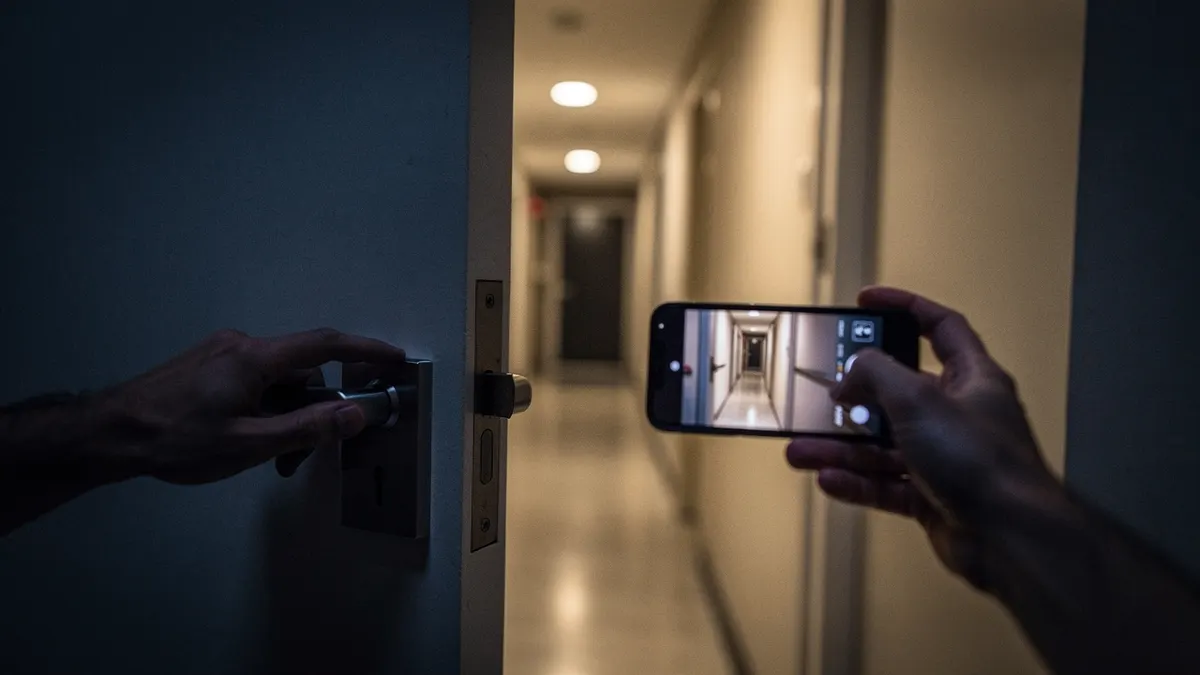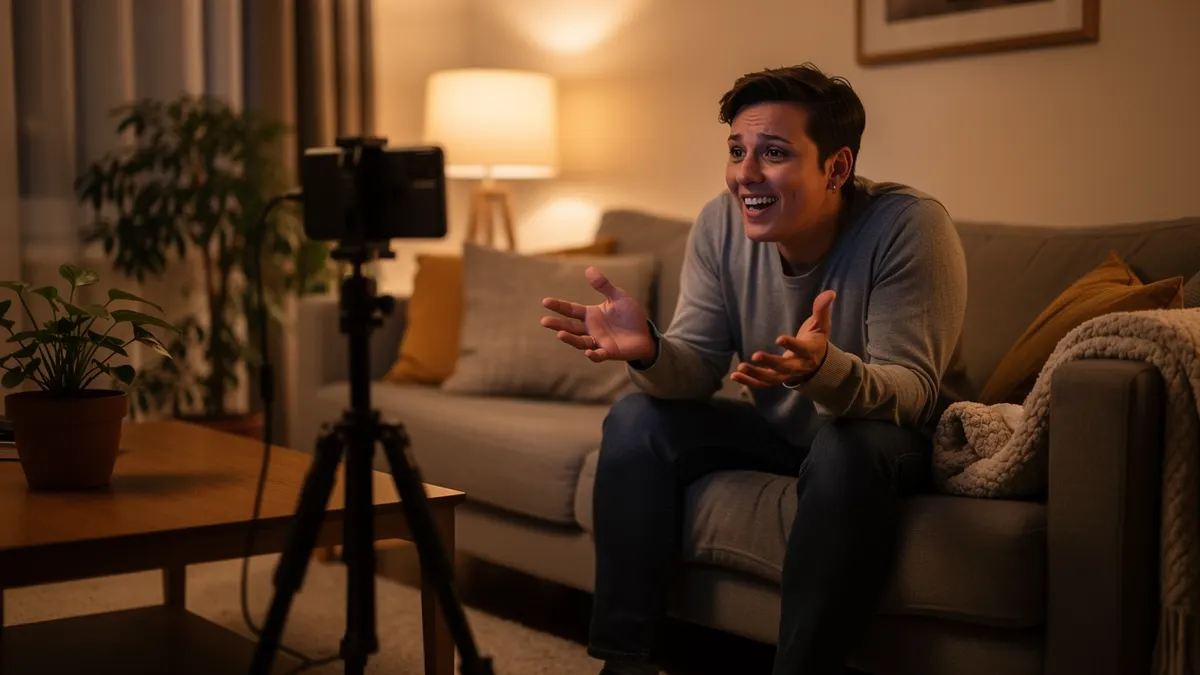
It is the most watched and most badly used format. A story holds attention longer than any demonstration, on one condition that can be checked in ten seconds.
What the format actually brings
Attention time, and nothing else.
A demonstration holds eight seconds, a story holds forty. That extra time lets you say things an advert has no room to explain: a context, a hesitation, a comparison, a limit.
That is why the format mainly serves products that need explaining, not those understood at a glance.
The structure that sells
Four beats, and the third is the one people miss.
The situation, said in one sentence, with something real at stake. The problem, told with a concrete and awkward detail. The moment when something changes. Then what happened afterwards, in the past tense, with no moral conclusion.
The third beat fails when it becomes a demonstration. It has to remain a moment of the story, not a product sequence.
Where the product comes in
As late as possible, and never in close-up.
It appears as an element of the scene, held, set down, used, while you are talking about something else. The viewer notices it without being shown it, and that is exactly the intended effect.
A product arriving at the tenth second in a static shot turns the story into an announcement, and the view counter shows it.
What breaks the format
A story that is too perfect.
No hesitation, no useless detail, no moment of self-contradiction: the viewer then recognises a written text, and stops listening. Leave the rough edges, the restarts, the details that serve no purpose. They are what prove somebody is telling.
Length and editing
Between forty and ninety seconds, in one take if possible.
Fast cuts kill the format: they signal an edit, therefore an intention. A single take, with its pauses, holds better than a rhythmic sequence.
Add subtitles, but supplied as a separate file, never burned into the image.
What must never be told
An invented story presented as lived.
A fabricated testimonial, an experience that did not take place, a result attributed to the product without having been observed. Those three things fall under precise rules on advertising and claims, and are checked before going live.
Add to that the transparency obligations about the commercial nature of the post, which depend on the channel and the agreement: they are checked the same way.
The structure that holds for thirty seconds
| The beat | What it does | Its length |
|---|---|---|
| The opening situation | Setting a recognisable problem | 3 to 5 seconds |
| The turn | Introducing the product without a slogan | 10 to 15 seconds |
| The resolution | Showing the concrete result | 5 to 8 seconds |
What makes a story lose its audience
Too long a set-up. A viewer leaves if nothing happens within eight seconds, so the problem is stated in the first sentence and the context is told during the action, never before.
What must stay true in a commercial story
The fact being told. An invented anecdote describing an unproven benefit becomes an advertising claim like any other, and commits the brand in exactly the same way.
How to order it
Do not give a script.
Give a theme, an objection to address and a length constraint, then let the person tell what they experienced. Then ask for a second, shorter take of the same account: it is almost always the better one, because it keeps the essentials and loses the filler.