The subject of your video cannot read the brief. Every other shoot has a person you can ask for another take; here the lead actor has decided the session is over, and the clock is on you.
What really makes it different
Three things. The subject does not understand the instruction and does not start again on request. The result depends on a factor nobody controls, the mood of the day. And the animal's safety comes before the video, which means being able to stop a paid shoot with no discussion.
Quote for time, not for videos
That is the direct consequence of the above. Invoicing three videos means promising a result the animal may refuse. Invoicing a session, with a number of expected shots and the possibility of a second session, protects both parties. Brands understand that argument perfectly well once it is explained.
Preparation removes most of the problem
Three questions to ask at quoting stage
Seven questions in fact, all useful.
Is the animal used to the camera and to lights.
What is its calm hour in the day.
Is there a word or a gesture it responds to.
What does it eat, and when.
Can somebody call it from off camera.
Which behaviours are impossible to obtain.
And which signs mean you have to stop.
The owner is your crew
They are the person who gets the reactions, not you. They know how the animal reacts, they can call it, reassure it, reposition it. A successful pet shoot looks like two-person work, where the creator frames and the owner directs.
Record continuously, choose afterwards
The classic mistake is starting and stopping the recording at every attempt, and missing the only moment that mattered. In this field you record continuously through the whole window, and sort afterwards. Storage costs less than a second session.
The safety decision is yours
Six situations where you stop, with no discussion.
The animal avoids the camera or hides.
It pants, yawns or licks its lips repeatedly.
It is being handled to hold a pose.
The set presents a risk, a cable, a height, a slippery floor.
The product does not suit its species or size.
And the owner asks for a break, whatever the reason.
What you must not claim
Six claims to avoid, all to be checked by category.
A health benefit, which falls under a particular framework.
A behavioural improvement presented as certain.
A comparison with another named product.
A dosage indication, which is not the creator's to give.
A promise of a result within a specific time.
And advice that would replace a vet's opinion.
How to build the set beforehand
Six moves that save the useful window.
Putting the product and the set out two hours before, to get the animal used to them.
Setting the light on an object, never on the animal.
Placing the camera at its height, and not moving it afterwards.
Providing a neutral background that does not interest it.
Removing anything off camera that might distract it.
And doing a sound test, pet shoots being noisy.
Seven shots that almost always work
Seven ideas to keep in reserve.
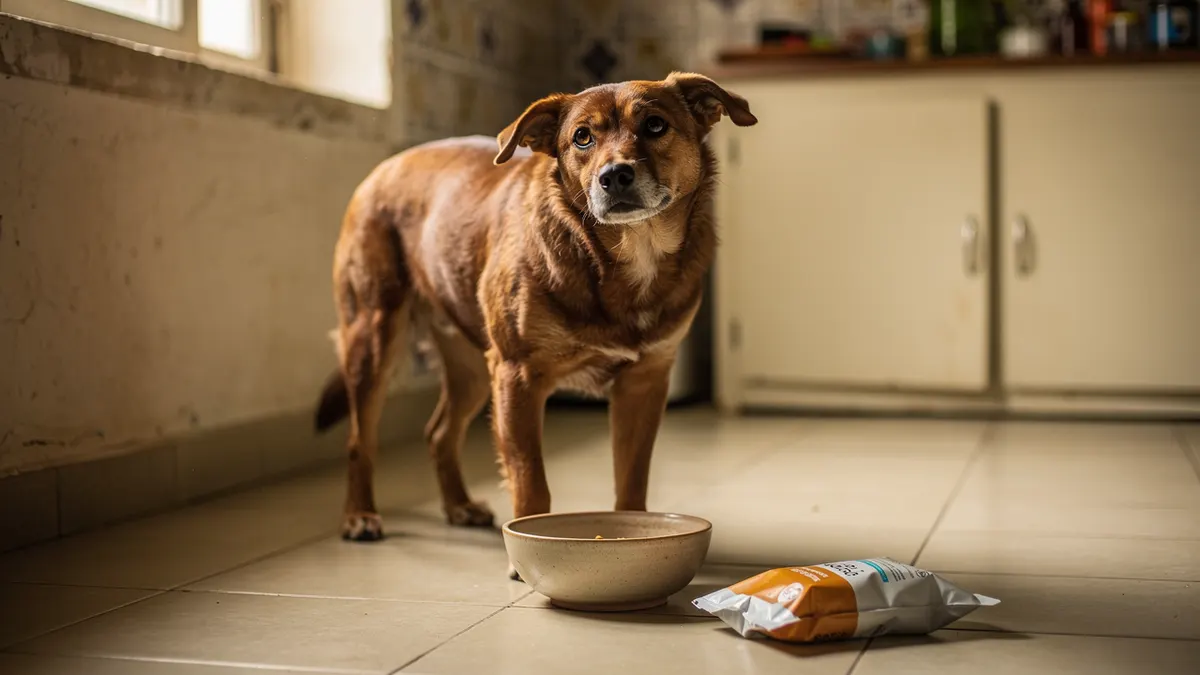
The animal hearing the packet open, filmed head-on.
The first mouthful, in a slow close-up.
The toy dropped and picked up again.
The return home, filmed from floor level.
The sleep that follows the meal, on a static shot.
The hand filling the bowl, with no face.
And the look towards the camera, kept in the edit even if brief.
How to deliver a pet session
Six elements in the delivery.
The selected shots, named by behaviour.
A vertical version and a square version.
A version with no music.
The rushes, if the licence includes them.
A note saying what could not be obtained, and why.
And a proposed date for a second session, if needed.
Why this suits the Portuguese market
The rate of households with animals is high, brands in this sector produce a lot and regularly, and competition between creators is lower than in beauty or fashion. It is a niche where a patient, well-organised person who owns an animal used to the camera builds a recurring client base within a few months.
What is filmed with an animal
| Sequence | What it proves | Real time needed |
|---|---|---|
| The product presented | Spontaneous interest | Two minutes of waiting |
| Use in context | Comfort or palatability | Five minutes |
| The calm afterwards | No discomfort | One minute |
What makes a shoot acceptable for the animal
Short sessions, a familiar place, no physical restraint, and stopping the moment it turns away. A missed shot is always better than a stressed animal, and stress shows on screen.
What is never said without professional advice
An effect on a condition, a dosage, a guaranteed improvement or a timeframe. Any animal-health claim is confirmed with a vet and the manufacturer before the shoot.
The most frequent mistakes
Six reflexes that cost a session.
Filming at the hour that suits the client, dealt with above.
Using food as the only way to get a shot.
Starting with the hardest shot.
Changing the set in the middle of the window.
Making the animal wear an uncomfortable accessory for a single shot.
And promising the brand a specific behaviour before having met the animal.
One last marker: in this category the video is won before the shoot. Two hours of preparation, a respected window, an owner on the crew, and you get in twenty minutes what three hours of insisting will never give.