Photography sells the shelf, video settles the doubt. Here is which line to cut when you cannot pay for both.
What photography still does best
Three things, and video will not replace them.
Fast comparison: in a list of results, the buyer sweeps past dozens of images in seconds and opens only two listings.
Reading a detail: a fabric, a finish, a connector read better on a still image that can be enlarged.
And catalogue consistency: a hundred products photographed the same way make a readable shelf, which no video produces.
What only video can do
Four things, and they decide the purchase.
The real scale, shown by a hand handling it.
The operation, proven in one take with no cut.
The sound: the noise of a mechanism, a fabric, a motor.
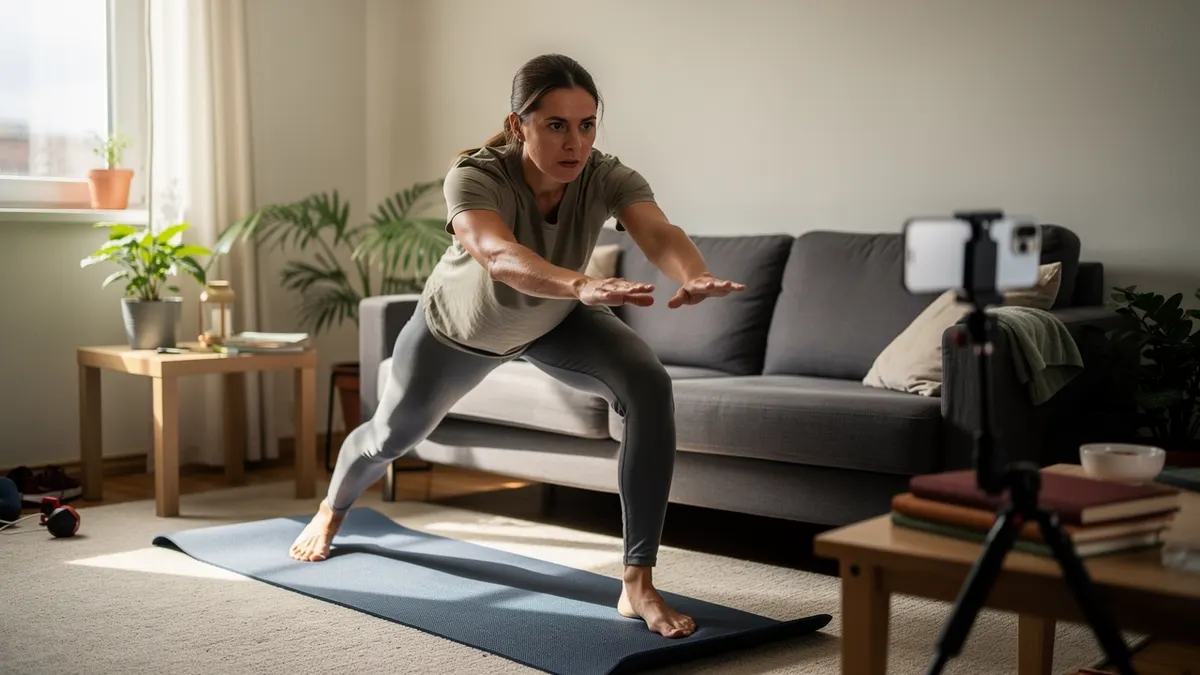
And the gesture: what folds, what opens, what stores away, what resists.
A simple rule for deciding: if the doubt is about appearance, you need a photograph. If the doubt is about a movement or a handling, no photograph will settle it.
The marketplace factor
That changes the decision more than the budget does.
On a listing, the video is only seen by visitors who have already arrived, whereas the main photograph decides who arrives.
Three practical consequences. Never sacrifice the first photograph. Never put a video in place of the opening image. And check the accepted format and weight before producing anything, since those requirements change regularly.
The pragmatic split
A division that works for almost every catalogue.
Photographs for every reference: that is the base, non-negotiable.
Video for the twenty per cent of products making most of the turnover, and for those generating the most questions and returns.
And for the rest, a generic range video showing the gesture common to several references.
What each format proves
| Buyer's question | The photo | The video |
|---|---|---|
| What does it look like | Enough | Enough |
| How big is it | Difficult | Immediate |
| How is it used | Impossible | The gesture shown |
| How is it assembled | Impossible | The full assembly |
What stays a photo, whatever happens
The main image of the listing. It loads instantly, reads as a thumbnail and remains the first point of contact, even when a video is available.
What is produced in the same session
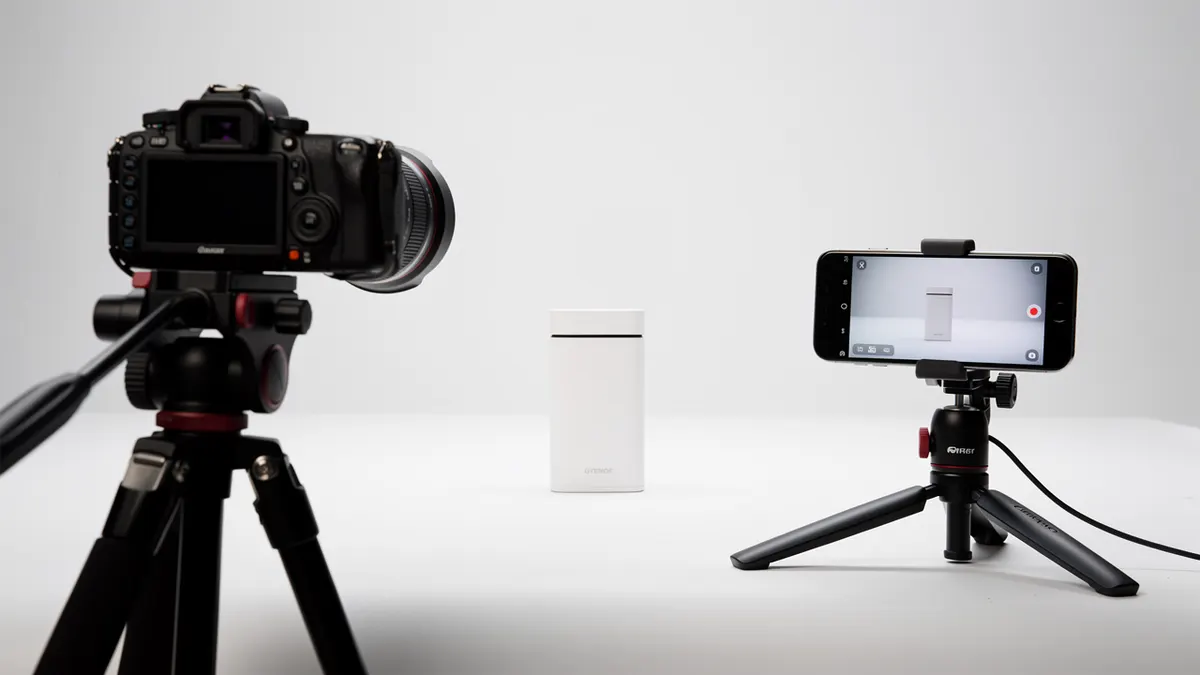
Both. One set, one light, a still take for the photo and a moving take for the video. Doubling the session costs thirty minutes, not a day.
What costs the most
Three items, and none is the one people imagine.
Travel and setup: half a day spent preparing a table and a light costs more than the take itself.
Redoing: reshooting a series because the packaging changed, because the background does not suit, or because the format was wrong.
And coordination: the approval rounds, counted in internal hours and appearing on no invoice.
The practical consequence fits in one sentence: batch it. A session covering ten products, with photographs and videos taken in the same hour and the same setting, costs less than half of ten separate sessions, and gives a visually consistent result, which is worth as much on a listing or a shelf as the quality of each image taken on its own.