Three days that fund a year of content, provided somebody prepares the shooting plan before the doors open.
Plan beforehand, do not improvise on site
That is the difference between a profitable show and three days of exhaustion.
Five decisions to take before the opening.
The list of people to interview, contacted in advance, with a proposed slot.
The shooting spot: an identified corner, away from noisy aisles, with a neutral background.
The minimum equipment: a clip-on microphone, a stand, a power bank, and nothing else.
The day's schedule, in fifteen-minute slots.
And the person who greets and keeps people waiting, because nobody can interview and organise at the same time.
One rule that saves the second day: shoot in the morning. In the afternoon everybody is tired, the noise rises, and quality drops.
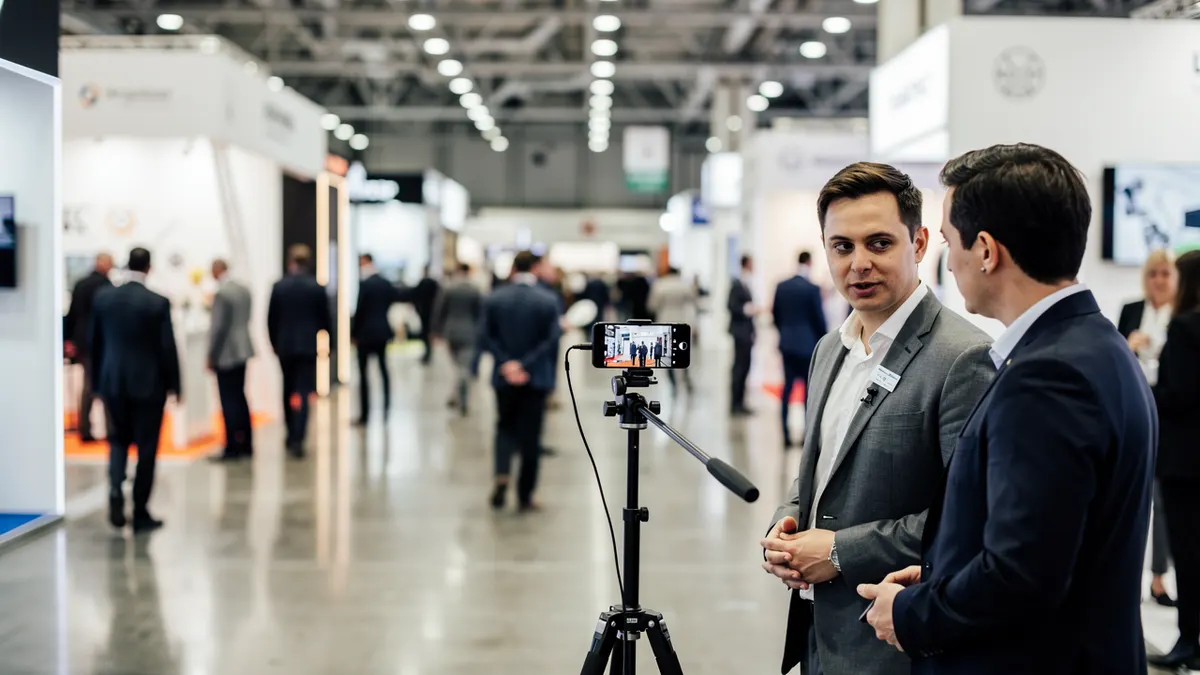
The short interview is what pays most
Three reasons, and they come from the format.
A forty-second answer publishes on its own, gets re-edited into a longer film, and is reused on a product page.
It requires no preparation from the person interviewed, which allows many of them.
And it ages slowly, because it talks about a trade rather than an event.
Two shooting rules. Vertical framing, at eye level, with a wall behind. And a clip-on microphone systematically: the ambient sound of a show makes half the recordings made without one unusable.
Permissions and faces
That is the part deciding what you will be able to publish.
Three levels to distinguish.
The people interviewed, who give written permission, by channel and duration, signed on site.
The people visible in the background, who agreed to nothing: prefer a tight frame, and avoid identifiable faces.
And the stands, logos and works on display, which belong to somebody and whose appearance is handled with the same care.
Two precautions. The event's rules often state what is allowed, and they are read before arriving. And the exact scope of those permissions is checked with a lawyer, especially if the videos will run as paid advertising.
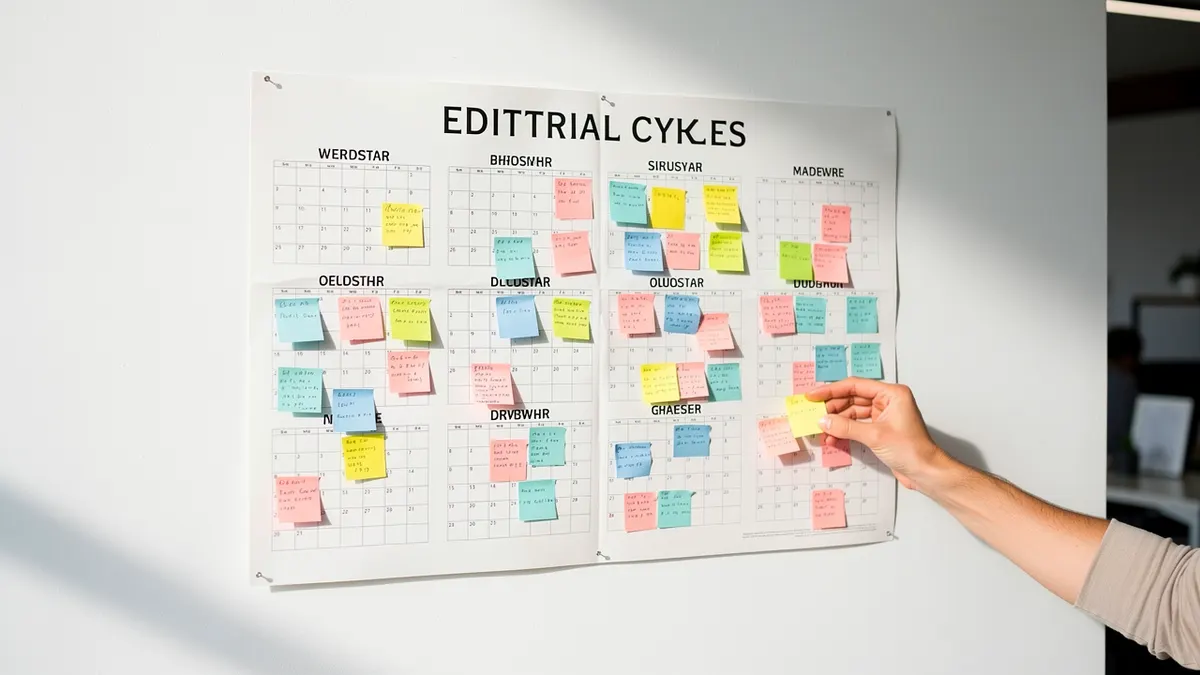
Spreading the material across the year
That is the commonest mistake: publishing everything in the same week.
Four uses spread over time.
The week of the event: two or three short pieces, to be present while the subject exists.
The following month: the interviews, one a week, each with its question.
The quarter: the explanatory sequences, edited with the footage shot on site.
And the following year, before the same show: the film showing what is to be seen there, exactly when people decide whether to go.
What is filmed at a trade show
| Moment | What you film | Window |
|---|---|---|
| Before opening | The stand empty and clean | Thirty minutes |
| During | The demonstrations, the hands | All day |
| After closing | The interviews, in quiet | One hour |
What is prepared the day before
Two batteries, a lapel mic, a list of six shots and the organiser's written permission. At a show, noise and crowds cannot be negotiated on the spot.
What is blurred in the edit
Visitors' faces without consent, name badges, documents left on tables and screens showing data. An uncleaned shot is dropped.
What to shoot that nobody shoots
Four sequences, free since you are already there.
The stand being built, the day before, and taken down at the end: that is what companies considering exhibiting watch.
The real journey: entrance, badge, map, distance to the stand.
What happens between two visitors, when nobody is playing a part.
And the technical demonstration by the person who does it every day, filmed in one take, with no commentary.
One last practical point: name and file the material the same evening, on site, with the person's name and the question. An unsorted three-day folder becomes unusable within two weeks, and that is the only real loss in this kind of operation.